
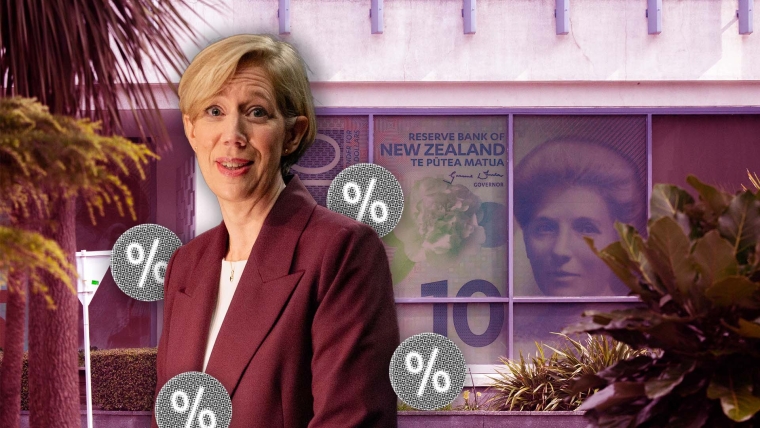
As widely anticipated, the Reserve Bank (RBNZ) has left the Official Cash Rate (OCR) unchanged at 2.25%, but has signalled the holding period is coming to an end and hikes are on the horizon.
Governor Anna Breman delivered her third OCR decision on Wednesday and said the global economic backdrop “remains uncertain” as supply chain disruptions, higher prices for petrochemicals and a more fragmented global trading environment are impacting NZ’s inflationary outlook.
“On balance, the OCR will most likely need to increase sooner and by more than envisaged in the February Monetary Policy Statement. The pace of OCR increases will depend on the relative influence of persistent wage and price setting behaviour versus weaker economic activity on medium-term inflation pressures,” the RBNZ said.
Breman's casting vote needed
The May Monetary Policy Statement (MPS) is the first statement from the central bank to make the votes of committee members public when consensus is not reached over OCR decisions.
On Wednesday, the RBNZ said the three RBNZ Monetary Policy Committee members (Anna Breman, Karen Silk and Paul Conway) voted to leave the OCR on hold, while the three external members (Carl Hansen, Hayley Gourley and Prasanna Gai) voted for a 25-basis point increase. In this instance, the chairperson – Breman – had a casting vote, meaning the OCR remains on hold at 2.25%.
Breman, Silk and Conway saw that holding the OCR at 2.25% was appropriate because core inflation and wage growth remained contained and medium-and long-term inflation expectations were still around 2%. They also noted that tighter financial conditions and economic uncertainty were already weighing on household and business sentiment and reducing consumption and investment.
However, Hansen, Gourley and Gai wanted to raise the OCR by 25 basis points, to 2.5%, due to concerns that the first round of indirect price increases from the impacts of the US-Iran conflict could become more broad-based, feeding through to a greater risk of second round price increases.
“These members noted that monetary conditions remained accommodative. Further, inflation in New Zealand’s trading partners could increase faster than expected due to both the Middle East conflict constraining supply and AI-related spending boosting demand,” the RBNZ said.
Hansen, Gourley and Gai also viewed “moving earlier” as preferable, given upward pressure on neutral rates and the view that raising the cash rate now could also limit the “overall magnitude” of the increase in the OCR.
The Reserve Bank said Hansen in particular emphasised that raising the OCR at this meeting would also create optionality for further monetary policy tightening in July.
According to the May Monetary Policy Statement, all Committee members agreed that increasing the OCR at upcoming meetings would likely be necessary to ensure higher near-term inflation does not feed through to higher medium-term inflation.
The RBNZ said the Committee is still focused on ensuring inflation returns to the 2% mid-point of its target range over the medium term.
Severe disruption
NZ bank economists forecast last week that the central bank would be reluctant to raise the OCR until they had a stronger sense of where inflation was heading, given how much of an effect the US-Iran War in the Middle East has been having on medium-term inflation in NZ.
On Wednesday, the RBNZ said near-term economic activity is likely to be weaker than assumed in the February Statement because of how the Middle East conflict has “severely disrupted” the supply of oil, gas and other petroleum products transiting through the Strait of Hormuz.
So far, the decline in oil supply has been mitigated through inventory drawdowns, rerouting, increased production elsewhere and demand adjustment in some countries. But the RBNZ said while this had helped “contain” oil price increases over April and May, despite no resolution to the conflict, the prices for petroleum products had still increased “substantially” since the conflict began.
“Higher fuel prices are increasing costs, lowering profit margins for many businesses, and reducing real incomes and household purchasing power,” the central bank said.
“With weaker consumption and investment, annual GDP growth in 2026 is now expected to be 0.9% lower than assumed in the February Statement. These forecasts indicate a slower economic recovery in the near term, with the pace of economic growth increasing by the end of the year.”
The RBNZ now expects inflation to peak in the September quarter at 4.3% and to return to the 2% target midpoint in mid-2027. The RBNZ still expects annual inflation to reach 4.2% in the June quarter, unchanged from the April monetary policy review.
The central bank’s target inflation range is 1% to 3%, with a midpoint of 2%.
In the March quarter, annual inflation, as measured by the Consumer Price Index (CPI), came in at 3.1%, slightly above the RBNZ’s projections of 3%. Electricity was the largest contributor to the annual inflation rate in the March quarter – up 12.5%. Higher petrol prices contributed the most to the quarterly inflation rate, up 3.5% in March.
The RBNZ previously forecast in November 2025, a low point for the OCR of 2.55% in March 2026 and 2.2% as of June 2026. The OCR began 2025 on 4.25% and ended the year 2.25%.
This is the statement from the Reserve Bank:
The Monetary Policy Committee today voted to hold the OCR at 2.25 percent.
Annual consumers price inflation was 3.1 percent in the March quarter. The Middle East conflict is increasing near-term inflation and weakening economic activity. Inflation is expected to peak at 4.3 percent in the September quarter and to return to the 2 percent target mid-point in mid-2027. Currently, core inflation, wage growth, and medium- to long-term inflation expectations remain consistent with inflation returning to the 2-percent target mid-point over the medium term.
The global economic backdrop remains uncertain. Supply chain disruptions, higher prices for petrochemicals, and a more fragmented global trading environment are impacting the outlook. Growth will vary across countries, reflecting differences in energy intensity, fiscal support, and exposure to AI investment. On balance, New Zealand’s trading partners are expected to see weaker growth and higher inflation.
Domestically, business contacts and surveys indicate weaker confidence and spending. For some firms, rising costs are squeezing profit margins and curbing investment and hiring intentions. Consumer confidence has fallen sharply, and the housing market remains weak. Economic conditions continue to differ across regions and sectors, with high commodity prices supporting incomes in regional New Zealand.
The outlook for medium-term inflation pressures is also uncertain. These could remain elevated if households and businesses expect higher costs in future and build those expectations into price- and wage-setting decisions today. However, weak demand and elevated unemployment will dampen medium-term inflation pressures.
The Committee remains focused on ensuring that increased costs do not lead to elevated inflation over the medium term, while avoiding unnecessary economic volatility. On balance, the OCR will most likely need to increase sooner and by more than envisaged in the February Monetary Policy Statement. The pace of OCR increases will depend on the relative influence of persistent wage- and price-setting behaviour versus weaker economic activity on medium-term inflation pressures.
Summary of Monetary Policy Committee meeting:
The ongoing conflict in the Middle East is weakening economic activity and increasing near-term inflation. The Committee remains focused on ensuring that higher costs do not lead to elevated inflation over the medium term, while avoiding unnecessary economic volatility. A prolonged period of weak economic growth and elevated unemployment is expected to dampen medium-term inflationary effects. The Committee judges that the balance of risks is to the upside for inflation and to the downside for growth.
Conflict in the Middle East is disrupting global supply chains
The Middle East conflict has severely disrupted the supply of oil, gas and other petroleum products transiting through the Strait of Hormuz. The decline in oil supply has so far been mitigated through inventory drawdowns, rerouting, increased production elsewhere, and demand adjustment in some countries. This helped contain oil price increases over April and May, despite no resolution to the conflict. Nevertheless, prices for petroleum products have increased substantially since the conflict began, increasing prices for fuel and other petrochemical-intensive inputs such as plastics and fertilisers.
The Committee noted that the outlook for energy prices depends on how the conflict evolves, the extent of damage to energy infrastructure in the Middle East, and the speed with which global supply chains adjust. Members noted that these events will encourage firms to permanently reconfigure their supply chains to reduce exposure to the region. Along with stronger global demand for renewable energy, this may place further upward pressure on global energy prices in the near term.
Pricing in oil futures markets is consistent with a resolution to the conflict over coming months and shipping resuming through the Strait of Hormuz. However, given damage to energy infrastructure and the need to rebuild inventories, oil prices are expected to remain elevated over the medium term.
Trading partner inflation is increasing
The Committee noted that higher energy prices have increased headline inflation in many of New Zealand’s trading partners in recent months. Trading partner inflation is expected to increase further as the direct and indirect effects of higher costs emerge. Members noted that the pass-through of higher costs to near-term inflation will vary across economies, depending on factors such as energy intensity, price controls, subsidies, or tax changes. Differences in current economic conditions, including the degree of capacity pressure, will influence the extent of medium-term inflation pressures across trading partners.
The Middle East conflict poses downside risks to global economic activity. High-frequency indicators suggest that higher petrochemical prices are weighing on sentiment and real incomes in many economies. The impact is expected to be largest for economies with greater reliance on imported energy and energy-intensive manufacturing, including many of New Zealand’s Asian trading partners. In some cases, these headwinds may be partly offset by continued strong demand for artificial intelligence exports and fiscal support.
The New Zealand economy was recovering prior to the conflict
The Committee noted New Zealand was in the early stages of an economic recovery. GDP growth of 0.2 percent in the December 2025 quarter was lower than expected, but timely indicators suggest the economy continued to expand in the March 2026 quarter. For example, strength in retail spending broadened across industries and businesses reported increasing capacity constraints, consistent with the economic recovery gaining momentum.
There has been significant spare capacity in the New Zealand economy for some time. This is reflected in a range of indicators, with the output gap estimated to be -1.3 percent of potential output in the March 2026 quarter, broadly in line with the estimate in February.
The labour market was stabilising, with employment growing modestly and annual wage inflation remaining at 2 percent in the March 2026 quarter. Net migration has increased materially since late 2025. Unemployment remains elevated, indicative of spare capacity in the labour market.
Annual headline inflation remained at 3.1 percent in the March 2026 quarter, which was higher than expected in the February Statement largely due to fuel price increases over March. Underlying inflation has continued to gradually ease, with measures of core inflation declining on average to 2.3 percent.
Near-term inflation is expected to increase and economic growth to weaken
First round direct and indirect effects from higher petrochemical prices will increase inflation this year. Direct effects, through higher fuel prices for businesses, are expected to occur slightly faster than the indirect effects of higher prices of petrochemical-intensive inputs. Intelligence from business engagements indicates that some firms have implemented temporary fuel surcharges, although the extent of this varies across sectors. Some businesses are absorbing cost increases into margins given weak demand, while others are embedding higher costs into price changes.
The Committee noted elevated uncertainty around its near-term inflation forecast. The forecast incorporates current oil futures pricing, which assumes Dubai oil prices fall to USD96 by the end of the year. Annual headline inflation is expected to increase to a peak of 4.3 percent by the September 2026 quarter and to return to the target mid-point in mid-2027. While shorter-term inflation expectations have increased, medium- to longer-term expectations remain close to 2 percent.
Near-term economic activity is likely to be weaker than assumed in the February Statement because of the Middle East conflict. Higher fuel prices are increasing costs, lowering profit margins for many businesses, and reducing real incomes and household purchasing power. High frequency data, including electronic card transactions and measures of business and consumer confidence, are pointing to weak demand in the near term. With weaker consumption and investment, annual GDP growth in 2026 is now expected to be 0.9 percentage points lower than assumed in the February Statement. These forecasts indicate a slower economic recovery in the near term, with the pace of economic growth increasing by the end of the year.
Financial conditions have tightened
Market expectations for central bank policy rates have increased, both domestically and abroad. The Committee discussed how differences in economic starting points, fiscal and structural policy responses to higher fuel prices, and reliance on imported energy will influence the monetary policy response required to contain medium-term inflation across countries.
The Committee noted that financial conditions in New Zealand have tightened through higher wholesale interest rates passing through to higher fixed-term mortgage rates and, to a lesser extent, term deposit rates. The average interest rate on outstanding mortgages declined to 4.9 percent in March but is expected to increase to 5.3 percent over the next 12 months.
Global financial market volatility increased materially in March because of the Middle East conflict but declined following the ceasefire in early April. Global risk appetite has subsequently improved, in part due to strong upward revisions to earnings growth among US technology firms pushing up global equity prices. There has been some volatility in the trade-weighted New Zealand dollar exchange rate, but it is currently little changed since the start of the year.
The Committee was also briefed on financial system stability and agreed this poses no material trade-off to meeting its inflation objective.
The Committee discussed risks to the inflation outlook
Members noted uncertainty around the scale and duration of the global economic consequences of the Middle East conflict and how the shock will propagate through the New Zealand economy and influence medium-term inflation pressures.
The Committee discussed the risk of higher near-term inflation feeding through to medium-term inflation. Members noted that firms’ price-setting behaviour could be more persistent because of generally elevated inflation since the pandemic and the cost-push nature of the current shock. This would lead to stronger second-round inflation effects than currently assumed. This risk is accentuated by low profit margins for some businesses given weak activity and higher costs, limiting the degree to which they can absorb further cost increases. Wage pressures could also arise from labour shortages in some sectors and regions. However, if the recent increase in net migration continues, this would help to offset this risk.
Members noted that spare capacity in the domestic economy and weaker global demand could constrain firms’ ability to pass on higher costs by more than assumed in the central projection. Lower spending by households in response to lower real income growth, persistently elevated unemployment, a weak housing market, and reduced resilience due to repeated shocks collectively pose downside risks to domestic economic activity. However, economic activity could recover faster than assumed if a resolution to the Middle East conflict leads to lower domestic fuel prices.
The Committee discussed risks to the global growth outlook. To the downside, members noted that high and increasing global government debt ratios, alongside greater geopolitical fragmentation, could push up long-term bond yields, tightening financial conditions and weighing on global growth. The Committee also noted that earnings expectations and valuations in US equity markets remain elevated and that if revenues from AI products fail to meet expectations, this could lead to a shock that would pose downside risks to global growth.
To the upside, members agreed that demand for New Zealand’s exports could remain stronger than expected if our Asian trading partners continue to benefit from strong manufacturing investment. Greater investment from large technology firms, alongside stronger investment in economic and military security, may also continue to provide a tailwind to the global economy through stronger economic activity in Asia, Europe and the US.
The Committee noted the three alternative scenarios in the May Statement. These informed the trade-offs influencing the Committee’s discussions and decisions. The scenarios represent just three of many plausible paths for the domestic economy and inflation. In practice, monetary policy decisions depend on a broad range of factors, including prevailing economic conditions, the outlook for medium-term inflation pressure, and the Committee’s secondary objectives of avoiding unnecessary instability in the economy while having regard to financial system stability.
The Committee voted to leave the OCR unchanged at 2.25 percent
The Committee emphasised that it remains focused on ensuring core inflation, wage growth and medium- and long-term inflation expectations remain consistent with inflation at 2 percent over the medium term. It discussed the monetary conditions required to achieve the medium-term inflation mandate. Members noted that financial conditions have tightened materially this year, helping to guard against the risk of second-round price effects.
All Committee members agreed that the central projection for the OCR was appropriate and a good reflection of the trade-offs currently faced. However, members differed in their preferred timing for the initial increase in the OCR.
Three members (Anna Breman, Karen Silk, Paul Conway) judged that holding the OCR at 2.25 percent was appropriate at this meeting. These members emphasised that core inflation and wage growth remain contained and medium- and long-term inflation expectations remain around 2 percent. Indicators of economic activity have deteriorated, in some cases more quickly than anticipated. Tighter financial conditions and economic uncertainty are already weighing on household and business sentiment, which is reducing consumption and investment. Spare capacity in the economy is likely to dampen second-round inflationary pressure.
With inflation pressures increasing in coming months, these members agreed that OCR increases would be required to ensure inflation returns to target over the medium term. These members noted the wide range of estimates for the neutral interest rate, making it difficult to assess the extent to which current monetary conditions are accommodative. They emphasised that the timing of OCR increases should depend on the evolving data, the outlook, and the balance of risks. Close attention needs to be paid to global developments, supply chain normalisation, core inflation, wage dynamics, and inflation expectations. These data, as well high-frequency indicators, will clarify whether stronger second-round inflation effects are emerging.
Three members (Carl Hansen, Hayley Gourley, Prasanna Gai) preferred to increase the OCR by 25 basis points, to 2.5 percent at this meeting. These members emphasised that, given the breadth of critical inputs that have been impacted by the conflict, first round indirect price increases could become more broad-based, feeding through to a greater risk of second round price increases. These members noted that 2-year inflation expectations have risen across a range of surveys. Firms may reset prices based on a shared belief about the persistence of the shock and prices would remain elevated even if the shock were to fade. In addition, should domestic fuel prices decline faster than expected it may lead to stronger demand as confidence responds more quickly. These members noted that monetary conditions remained accommodative. Further, inflation in New Zealand’s trading partners could increase faster than expected due to both the Middle East conflict constraining supply and AI-related spending boosting demand.
These members judged that removing stimulus now, while observing domestic economic developments, would help reduce medium-term inflation risks. Moving earlier was viewed as preferable, given upward pressure on neutral rates and that it may also limit the overall magnitude of the increase in the OCR and the negative impact on output. One member (Carl Hansen) emphasised that raising the OCR at this meeting would also create optionality for further monetary policy tightening in July.
All Committee members agreed that increasing the OCR at upcoming meetings would likely be necessary to ensure higher near-term inflation does not feed through to higher medium-term inflation. The Committee judges that this is a proportionate response to bring inflation to target in a reasonable timeframe without creating unnecessary volatility in output. The pace of OCR increases will depend on the relative influence of persistent wage- and price-setting behaviour versus weaker economic activity on medium-term inflation pressures.
On Wednesday 27 May, three Committee members (Anna Breman, Karen Silk, Paul Conway) voted to leave the OCR on hold and three members (Carl Hansen, Hayley Gourley, Prasanna Gai) voted for a 25-basis point increase. In this instance, the chairperson has a casting vote, meaning the OCR remains on hold at 2.25 percent. The Committee remains focussed on bringing medium-term inflation back to target and expect that OCR increases will be required this year.
We welcome your comments below. If you are not already registered, please register to comment
Remember we welcome robust, respectful and insightful debate. We don't welcome abusive or defamatory comments and will de-register those repeatedly making such comments. Our current comment policy is here.