
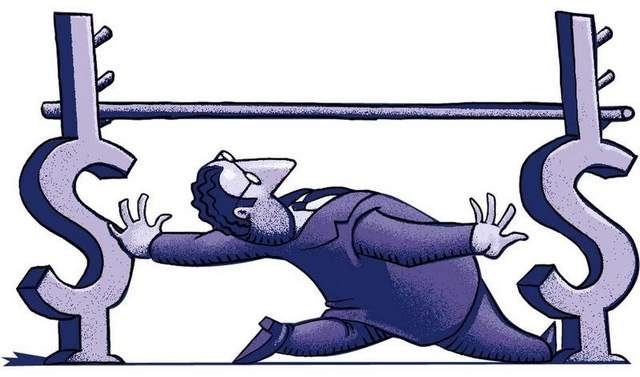
Economists at ANZ, the country's biggest bank, are now picking the Reserve Bank (RBNZ) will cut the Official Cash Rate (OCR) by 50 basis points next April to -0.25%.
In a report ANZ economists Sharon Zollner and David Croy say New Zealand is still experiencing the early stages of the economic impacts from the COVID-19 epidemic.
"We are now forecasting the RBNZ to cut the OCR by 50 basis points to -0.25% in April 2021. Beyond that, further easing is possible, but there are constraints on the OCR going below -0.75%," Zollner and Croy say.
"The RBNZ has ruled out changing the OCR before March 2021, but expressed a preference for a package of a lower OCR and a bank ‘funding for lending’ programme, should they conclude that further stimulus is required at that point. We think they will. We see a further increase in the large-scale asset purchase (LSAP) programme in November as likely, perhaps to $120 billion. The programme in its current form will have largely done its dash by that point."
Previously ANZ had expected the OCR to remain at 0.25% for the foreseeable future.
ASB economists also said they were formally changing their OCR forecast, and now expect the RBNZ to cut the OCR to -0.50% in early 2021. They see it staying there until the COVID-19 storm passes, potentially in late 2022, and no OCR return above zero until 2024.
The RBNZ last week increased its LSAP, or quantitative easing, programme to $100 billion from $60 billion and left the OCR at 0.25%, where it has been since March when the RBNZ pledged to keep it there for 12 months. The RBNZ has asked banks to be technically and legally ready to handle a negative OCR by the end of the year.
Zollner and Croy say the lockdown starting in late March caused a huge dent in economic activity, but was followed by a vigorous bounce-back as pent-up demand and a collective sigh of relief saw spending rebound sharply.
"The Government’s balance sheet appropriately took the lion’s share of the hit, with enormously expensive wage subsidies and other business support measures meaning the overall scarring to the business sector from the first lockdown was looking less severe than many feared," the ANZ economists say.
"As we write we are battling a second outbreak, but it appears to be limited to one cluster – albeit a big one – and optimism is rising that we will be successful in containing it relatively quickly and eliminating COVID-19 from our shores once again. Both business and consumer confidence will have been dented by the popping of any illusion that we could be 100% secure in our defences, but a rapid re-elimination may at least boost confidence that we can avoid the fate of Melbourne or the US, and the attendant severe economic damage that comes from uncontrolled spread of the virus."
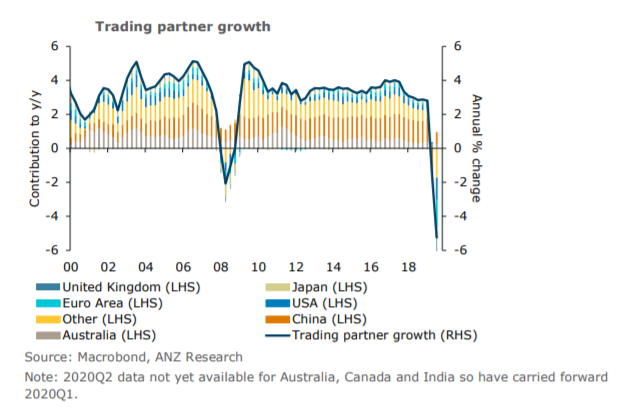
But, they say, two other factors are only starting to make themselves felt. These are the missing international tourists and students, and the dire global economic outlook.
"The flow-on into retail and hospitality makes the hole bigger; the inability of kiwis to travel overseas reduces it. But on net, New Zealand with a closed border is an economy that is around 5% smaller. Because of the extreme seasonality of tourism, the blow will fall most heavily from October to March. Specialised labour shortages will also dampen output to some extent," Zollner and Croy say.
"Global growth is looking dreadful. While people have to eat, they don’t necessarily have to fork out a bit extra for New Zealand’s premium, high-quality produce. Food supply disruptions globally are providing price support, but also logistical headaches. On the whole, New Zealand’s commodity prices are holding up pretty well, but downside risks are evident, and non-commodity exporters are finding the going very tough. In addition, the robust NZ dollar is doing our exporters no favours."
'Into the twilight zone we go'
Zollner and Croy say they are now reviewing their Gross Domestic Product forecasts following Auckland's move to COVID-19 Alert Level 3, and the rest of the country moving to Level 2 from Level 1.
"The basic theme will remain the same: that the more persistent economic pain will start to be felt in summer. There is a significant risk that despite the significant fiscal and monetary stimulus already delivered, both inflation and employment will look set to undershoot the RBNZ’s targets for a prolonged period, and the RBNZ is very unlikely to stand idly by in that instance."
Zollner and Croy say they are not fans of negative interest rates, holding deep reservations about the long-term financial and societal implications of prolonged extremely low interest rates. Furthermore they point out the difficulty of exiting unconventional monetary policy has been demonstrated overseas during the past decade.
"But we’re not fans of deep recessions either. The RBNZ has clear inflation and employment mandates, and unless instructed otherwise, will feel duty-bound to do what they can to deliver on those mandates over the medium term. Long-term risks of unconventional policy are so blurry that of course the natural tendency is to focus on the nearer-term, more easily identifiable and quantifiable risks. Time will tell, though we may have to wait for the economic history textbooks written thirty years from now for the full story. For now, the path forward has been laid out clearly. Into the twilight zone we go," the ANZ economists say.
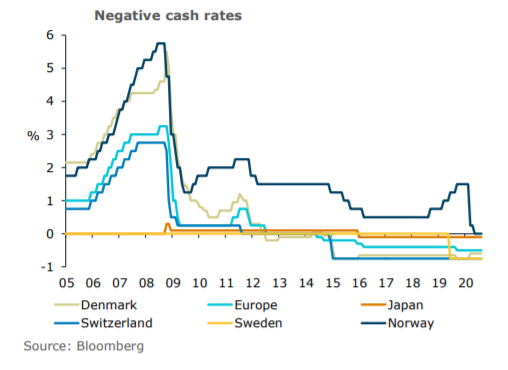
In terms of their view of constrains on taking the OCR below -0.75%, Zollner and Croy argue that at some point, a lower OCR would encourage cash hoarding and break down the transmission of monetary policy.
"This point is known as the 'physical lower bound' and it is thought to be around -0.75% or slightly lower. No countries have attempted to take their cash rates lower than this."
ASB sees negative OCR until 2024
ASB's economists say they have "pencilled in" a "large one-off OCR cut" of 75 basis points in April 2021. They had also previously expected the OCR to remain at 0.25%.
"The OCR would remain at -0.50% until the economic outlook had sufficiently brightened so as to warrant OCR hikes. This is assumed to be until at least late 2022, with the RBNZ erring on the side of caution to make sure the recovery is well established before slowly raising the OCR. We do not expect the OCR to move above 0% until 2024," ASB's economists say.
"The extent the OCR could fall and how long it would remain there would depend on the economic outlook, the effectiveness of other policy options (particularly the LSAP programme), and the ability of banks to continue to attract funding from depositors. Our observation is that across the globe, retail deposit rates don’t tend to fall below zero when wholesale rates are negative. A limit we currently identify for the OCR was around -1%, as this was the level that would likely keep deposit rates positive."
"Even at -1%, however, the OCR will need mates, with the amount interest rate stimulus to pull the economy out of its slump. We are hopeful that the FLP [Funding for Lending] and LSAP will provide further support needed, but much of the onus of policy support will fall on fiscal policy, with fiscal settings remaining highly supportive over the next few years," the ASB economists say.
Whether a negative OCR will work is the $64,000 question, they add.
"We have remained guarded on whether the benefits of a negative OCR outweigh the costs, given the international central banking community appears to be split. Our concern was that negative interest rates can interfere with the functioning of banking systems reliant on deposit funding and impair the ability of some banks to supply credit – the opposite of what monetary easing aims to do."
A key factor, ASB argues, will be the rollout of an FLP, which the RBNZ says it would link to a lower OCR. They expect an FLP would offer banks stable, low cost and long-term funding by borrowing directly from the RBNZ.
"A poorly designed FLP would significantly diminish the potency of a negative OCR. It is also unclear how easy it will be for an economy to extricate itself from a negative policy interest rate environment. The experience in Europe does not inspire a lot of confidence," ASB says.
We welcome your comments below. If you are not already registered, please register to comment
Remember we welcome robust, respectful and insightful debate. We don't welcome abusive or defamatory comments and will de-register those repeatedly making such comments. Our current comment policy is here.