

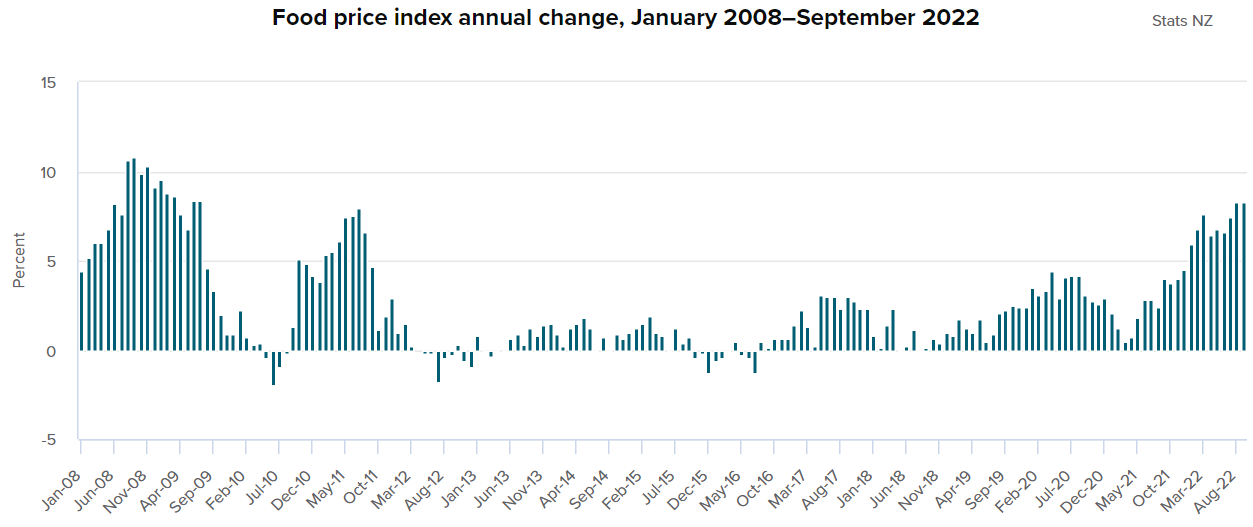
Annual food price inflation has stayed at a 13-year-high for September of 8.3%. This is much higher than economists were expecting.
The figure is very significant coming ahead of the release of Consumers Price Index inflation figures next Tuesday. The expectation is that our annual inflation figure will have fallen from a 32-year high of 7.3% as of the June quarter to perhaps 6.5% - but these food price figures may cast some doubt on that.
On a seasonally adjusted-basis food prices have risen between 0.9% and 1.0% in each of the past five months.
National’s Finance spokesperson Nicola Willis was quick to respond, saying that rising food prices were "continuing to slam Kiwi budgets".
"It’s impossible to get ahead under Labour. Food is up, rent is up, and petrol is up. With wage growth lagging inflation so significantly, it’s no surprise that Kiwis are getting pummelled."
The Green Party said the Government needed to "urgently" increase support for people struggling to put food on the table.
"The Green Party will keep saying it: the Government needs to immediately increase support so people can afford nutritious food for them and their families," Ricardo Menéndez March, spokesperson for commerce and consumer affairs, said.
Statistics New Zealand said in September 2022, the annual increase was due to rises across all the broad food categories measured.
Compared with September 2021:
- grocery food prices increased by 7.7%
- fruit and vegetable prices increased by 16%
- restaurant meals and ready-to-eat food prices increased by 6.9%
- meat, poultry, and fish prices increased by 6.7%
- non-alcoholic beverage prices increased by 4.8%.
Grocery food was the largest contributor to this movement.
"Increasing prices for yoghurt, two-minute noodles, and tomato-based pasta sauce were the largest drivers within grocery food," Stats NZ's consumer prices manager Katrina Dewbery said.
The second-largest contributor to the annual movement was fruit and vegetables. The items within this group that influenced this movement the most were capsicums, tomatoes, and broccoli.
In terms of the monthly food prices they were 0.4% higher in September 2022 compared with August 2022.
However, crucially, after adjusting for seasonal effects, they were up 0.9%.
Fruit and vegetable prices are expected to fall at this time of the year due to better seasonal availability.
And they did fall in price - but just by 0.1%.
After seasonal adjustment, however, the fruit and vegetable prices actually rose a whopping 3.9%.
"This seasonal movement for fruit and vegetables indicates that based off previous patterns a larger fall in fruit and vegetables for the September month is more typical," Dewbery said.
"This helps explain why the overall seasonally adjusted movement is higher than the unadjusted increase."
Non-alcoholic beverages had the largest impact on the 0.4% monthly rise. This was led by increases in the cost of large bottled soft drinks (up 3.4%), instant coffee (up 5.2%), and poured soft drinks for example, at cinemas or fast-food outlets (up 2.2%).
The second largest contributor to the overall monthly movement was restaurant meals and ready-to-eat food, which rose by 0.6%. This was driven by rises in the price for hamburgers (1.7%) and takeaway pizzas (2.0%).
We welcome your comments below. If you are not already registered, please register to comment
Remember we welcome robust, respectful and insightful debate. We don't welcome abusive or defamatory comments and will de-register those repeatedly making such comments. Our current comment policy is here.