

Mortgage and deposit rates are expected to keep increasing this year, despite the Official Cash Rate (OCR) remaining the same.
ANZ economists, in their latest Market Focus publication, say the spike in rates is likely to “persist”, due to higher wholesale rates, a turn in the credit cycle and the need for banks to close a funding gap.
This will buy the Reserve Bank (RBNZ) some time before it raises the OCR from 1.75%.
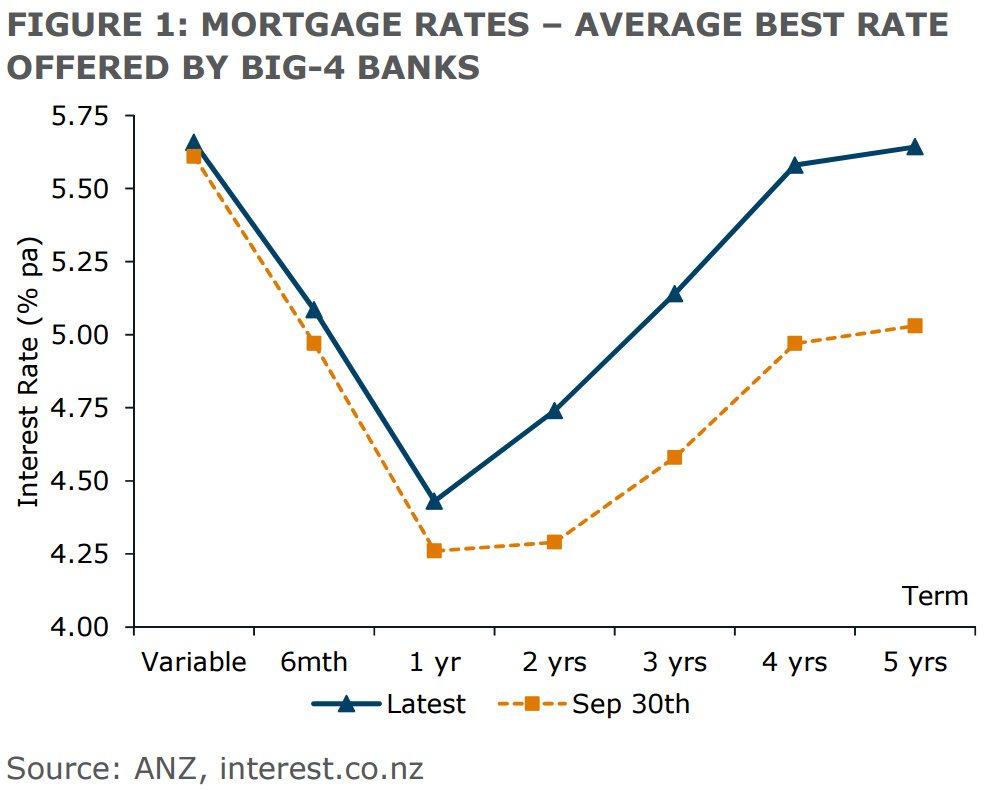
ANZ economists explain average fixed mortgage rates across the major lenders have increased by 0.1-0.6% points since the end of September, with some floating rates also rising.
Term deposit rates (longer than 12 months) have increased by about the same amount.
Funding gap has narrowed but is still too large
“While some of the movement can be put down to higher wholesale rates and shifting perception towards the RBNZ (from potentially cutting to hiking), the moves, especially most recently, have occurred largely independently of shifts in wholesale interest rates,” ANZ economists say.
“In fact, local swap rates fell over the holiday period, largely following the retracement off highs seen in global interest rates more generally.
“This disconnect will partly reflect timing (swap rates spiked pre-Christmas) and typical lags at play (mortgage rates do not bounce around as quickly or reactively as petrol prices for instance), but also reflects other influences.
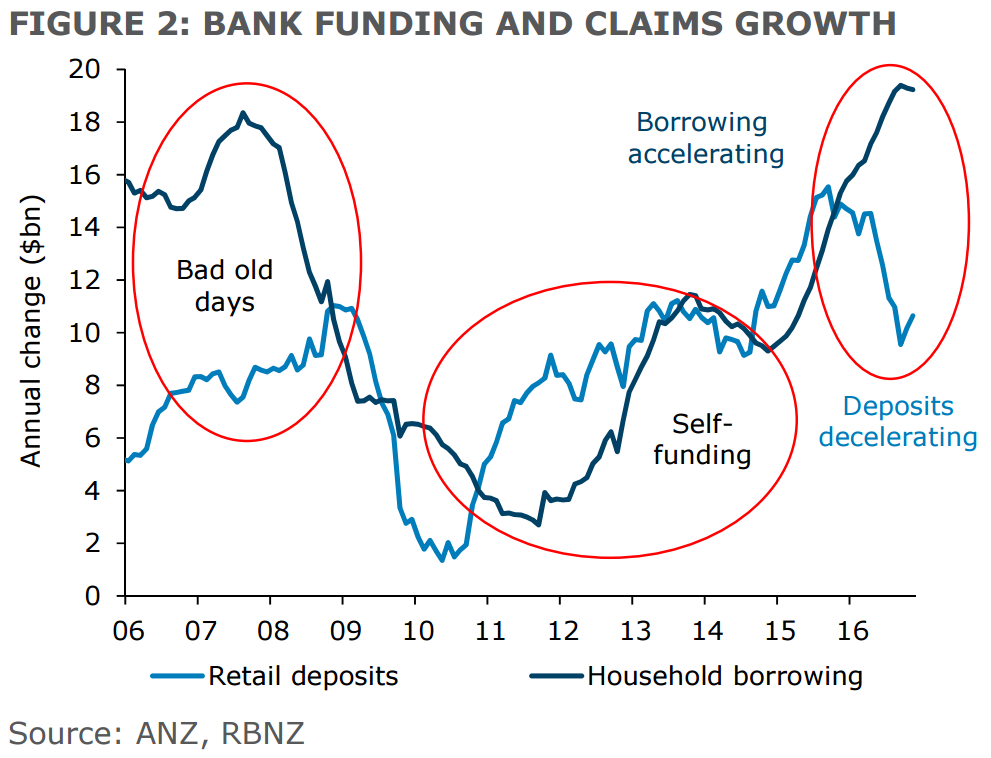
“In particular, higher retail interest rates also reflect the funding gap facing banks.
“We noted extensively over the latter part of 2016 that the large gap between bank deposit and credit growth was unsustainable, and that without a further ramping up of banks’ offshore borrowing (which would not be desirable from a financial stability perspective), higher deposit rates and increased credit rationing would result. We are now clearly seeing that.
“And while RBNZ data from November showed the gap between credit and deposit growth has now started to narrow, it is still wide. That flags more pressure on retail interest rates to rise to a) attract more deposits and b) slow lending.”
‘RBNZ officials should feel quietly satisfied’
With retail banks raising rates, this will take pressure off the RBNZ to act. “Banks are implicitly doing the central bank’s job for it,” ANZ economists say.
“RBNZ officials should feel quietly satisfied watching retail rates move up.”
While the official line is they don’t see the OCR moving until June 2018, ANZ economists say there’s a risk of a move sooner.
The New Zealand dollar is strengthening again, there are growing capacity pressures, there’s been a turn in the domestic and global inflation cycles and growth activity is continuing to be strong.
Credit crunch to dampen spending across the board - even housing
However ANZ economists maintain rates rises will slow credit growth, which will dampen demand. This is expected to see GDP growth of 3½-4% ease towards 3% over the year.
They also believe a credit crunch will constrain house building in Auckland, intensifying the shortage.
That said, the economists note the Auckland housing market is cooling slightly, and “activity is unlikely to get back to its dizzy mid-2016 heights in a hurry”.
“Falling mortgage rates, together with prudential restrictions, and a likely more active Government response lifting supply, is a significant combined set of headwinds in our eyes.”
As higher rates sees the pendulum swing towards saving, as opposed to spending, ANZ economists also believe households will start closing their wallets.
“The sharp acceleration in consumption growth and deterioration in household saving seen over the middle of last year will not persist…
“Supporting our case, the latest Electronic Card Transaction figures pointed to a softer end to the year for household consumption than was seen over Q2 and Q3.”
We welcome your comments below. If you are not already registered, please register to comment
Remember we welcome robust, respectful and insightful debate. We don't welcome abusive or defamatory comments and will de-register those repeatedly making such comments. Our current comment policy is here.