
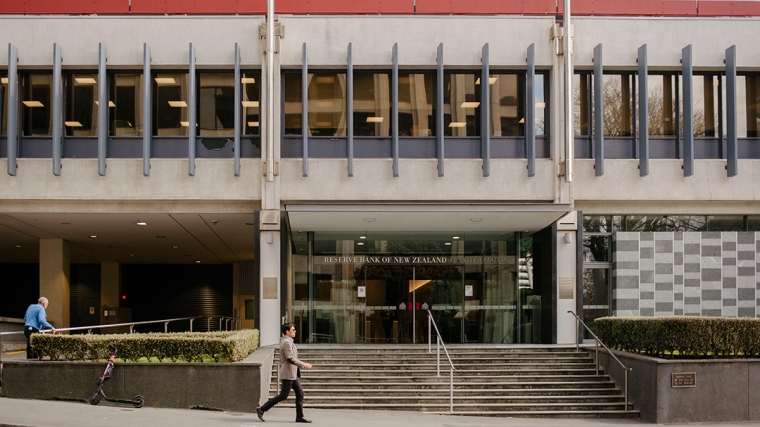
A research note published by UBS warns traders that the Reserve Bank (RBNZ) has not cut interest rates while domestic inflation has been this far above target in over two decades.
Headline inflation in the June quarter was 3.3%, slightly outside the target band, but this was largely driven by lower prices for imported products. Non-tradable inflation remained historically high at 5.4%, compared to a pre-COVID average of about 2.6%.
Non-tradables are a category of prices in the Consumers Price Index (CPI) basket that do not face international competition. Housing costs and household utilities together make up 29% of this category.
The rest includes health and education services, recreation and culture, communication services, household items, vehicle purchases and servicing, insurance, local authority rates, and certain food and drink items that do not compete with imported products.
Policymakers and economists often focus on non-tradable inflation because it better reflects local cost pressures and economic conditions compared to headline inflation.
Nic Guesnon, an economist at UBS, said the RBNZ is focused on non-tradable inflation and is unlikely to cut interest rates based solely on lower international prices.
The RBNZ's monetary policy committee may be hesitant to predict a continued drop in tradable inflation, as prices might rise again due to a recent increase in freight costs, he said.
The Official Cash Rate's currently at 5.50% where it has been since May last year.
Not so fast
Many bond traders expect the central bank to preempt falling inflation and start cutting rates as early as next month, when it delivers its next monetary policy statement.
In a note to clients, Guesnon said his analysis of the RBNZ’s past policy responses suggested it is more likely they will wait until November before easing rates.
“In the last 20+ years, the RBNZ has not started cutting rates when [annual] non-tradables CPI available at the time of their meeting was as high as Q2's outcome of 5.4%,” he said.
There have been times when non-tradable inflation was relatively high at the time of a cut—such as in 2011 when GST was hiked and the Christchurch earthquake occurred—but never above 5%.
The RBNZ will update its forecasts next month, but in May it expected non-tradable inflation to drop to 4.7% by December 2024, which would only be confirmed in January's data release.
Guesnon said it may be difficult for the Monetary Policy Committee to ease its policy when domestic inflation is widespread and slightly above the RBNZ’s forecast for the June quarter.
“When the RBNZ digs into the details, they are unlikely to feel comforted by the breadth of price increases domestically. Practically all CPI groups rose above the RBNZ's target band…”
The groups least affected by monetary policy—such as insurance, property rates, alcohol and tobacco, and health—saw the largest price increases, with some items rising by over 9% annually.
“However, what we found surprising was how many other groups, which should be more sensitive to the weak economy, were still rising rapidly in [the June quarter],” he said.
This includes housing (excluding property rates and charges) at 3.8% annually, transport at 9.2%, communication at 4.0%, and recreation and culture at 5.7%.
Domestic debate
Other economists have identified a few inflation hotspots that are keeping non-tradable inflation above target. ASB argued that some “cost-driven” increases should be ignored as they won’t significantly impact wages and other prices.
“Stripping out some of these cost increases suggests that annual underlying CPI inflation is already well below 3%, and it looks set to continue to cool,” they wrote earlier in July.
ASB now expects 25 basis point rate cuts in both October and November, based on the assumption that core inflation has fallen to its lowest level since the spike began in mid-2021.
Kelly Eckhold, chief economist at Westpac NZ, forecasts the first rate cut in November, but is much less optimistic about domestic inflation.
In a recent note, he reminded clients that non-tradable inflation has consistently exceeded the RBNZ’s forecasts, including in the most recent quarter.
Additionally, non-tradables excluding the so-called problematic hotspots (such as housing, insurance, and taxes) remained very elevated at almost 6% year-on-year.
Core inflation is falling, and headline CPI was likely to slip below 3% in the September quarter, he said, but lingering strength in non-tradables means 2% was “still a long way away.”
With domestic inflation pressures elevated, there might be no case for the RBNZ
to cut rates this year, except that most economists believe inflation will fall quickly from here.
Guesnon said non-tradable inflation should ease “more noticeably” in the next two CPI releases, given that the local labour market has been loosening.
Other leading indicators suggest the NZ economy has been contracting, with an unusually high number of firms laying off workers.
Since monetary policy operates with a long delay, the central bank may need to lower interest rates before reaching the 2% target midpoint to avoid unnecessarily harming the economy.
We welcome your comments below. If you are not already registered, please register to comment
Remember we welcome robust, respectful and insightful debate. We don't welcome abusive or defamatory comments and will de-register those repeatedly making such comments. Our current comment policy is here.