
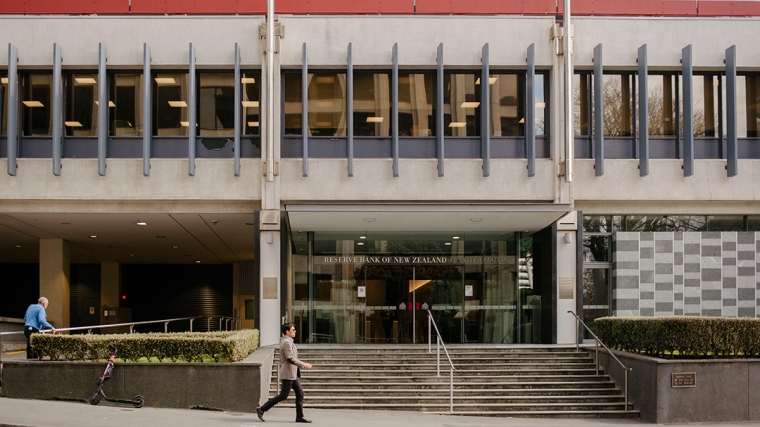
UBS still anticipates the Reserve Bank’s Monetary Policy Committee (MPC) will increase the Official Cash Rate (OCR) in July, with the vote potentially shifting towards a unanimous one.
The Reserve Bank (RBNZ) held the OCR at 2.25% in May, unchanged since November last year, but signalled cash rate hikes were probably on the horizon. The MPC needed RBNZ Governor Anna Breman’s casting vote to confirm the hold after the committee was tied by a 3-3 split vote on whether to raise the OCR or not.
UBS economist Stephen Wu said analysing the past three years of RBNZ meetings showed consensus or unanimous MPC decisions have become less frequent.
“There have been only four meetings where a decision was made without consensus, but three of those occurred last year,” he said.
“Moreover, in the three meetings where MPC members disagreed on the direction of the OCR, the subsequent meeting's OCR decision was unanimous and aligned with the previous minority view. With the May MPS meeting the most split, we anticipate the MPC to hike in July, and the vote could shift towards unanimous.”
UBS expects the RBNZ’s MPC members who voted for a hike in May to repeat that decision in July, with other MPC members also shifting towards a tightening mindset.
The three RBNZ MPC members – Breman, Karen Silk and Paul Conway – voted to leave the OCR on hold, while the three external members – Carl Hansen, Hayley Gourley and Prasanna Gai – voted for a 25-basis point increase.
Annual inflation came in at 3.1% in the March quarter, with electricity the largest contributor to the annual inflation rate. Economists expect it to top 4% in the June quarter.
“The case for early and pre-emptive hikes is that inflation is too high, and hence monetary stimulus needs to be removed,” Wu said.
According to Wu, New Zealand’s inflation over the past five years has averaged a “very high” average inflation rate of approximately 4.5% year-on-year. This is the highest trend since central banks moved to an inflation targeting framework in the early 1990s, he said.
“Compared with the RBNZ's target of between 1% to 3%, this outcome is very far above their mandated goals and, cumulatively since the early 1990s, is an upside error of an extremely large ~14%.”
Wu said there isn’t a lot of data being released between the May and July MPC meetings. UBS saw Budget 2026 as neutral for the RBNZ, while the Gross Domestic Product (GDP) data for the first quarter of the year was “dated”.
“Meanwhile, monthly data have not been definitive. Consumption indicators have improved, fuel prices have fallen, and momentum in the labour market may be weakening. However, there is a longer-than-usual gap between the July and September meetings of 2 months,” he said.
“In our view, such a long gap heightens the risk of holding in July, if inflation expectations become de-anchored. Instead, if a hike is delivered in July, the RBNZ can become more data dependent for subsequent hikes.”
‘Less contentious than May’
On Thursday, Westpac NZ economists Kelly Eckhold, Satish Ranchhod, Darren Gibbs and Michael Gordon reaffirmed Westpac’s view that the OCR will be held at 2.25% at the upcoming July meeting.
“Indeed, we expect this decision to be far less contentious than in May, and don’t rule out that this decision is made by consensus and so without a vote,” the economists said.
“We also affirm our view that the RBNZ will begin to tighten at the September MPS. However, beyond September, we now expect just one further tightening this year – rather than two – which will probably occur at the December MPS meeting.”
There are four more OCR reviews left in 2026, occurring in July, September, October and December.
While the Westpac economists have left their OCR take unchanged, they have adjusted their inflation and economic activity forecasts.
The economists said a review of the most recent data suggests that the economy had “held its ground” through the peak of the oil price shock in April and May and fared slightly better than Westpac had assumed in its last forecast update.
“We now see headline inflation peaking at 4.0% in the June quarter this year and ending 2026 at 3.5% – possibly lower if the most recent fall in oil prices is sustained,” they said. Westpac had previously forecast that headline inflation would peak at 4.5% in the June quarter.
Westpac also anticipates that the June quarter GDP will fall by just 0.1%, a smaller decrease from its last forecast of a 0.3% drop.
“We expect quarterly growth to pick up to 0.6% and 0.7% in the September and December quarters, from 0.4% and 0.6% previously. Altogether, that would see the economy grow by 2.0% over the course of this year, compared to our previous forecast of 1.5%,” the economists said.
“That’s still some way below the 3.3% growth that we were expecting this year prior to the Iran conflict, which will still prove to be a significant setback to the momentum that was otherwise building in the economy.”
We welcome your comments below. If you are not already registered, please register to comment
Remember we welcome robust, respectful and insightful debate. We don't welcome abusive or defamatory comments and will de-register those repeatedly making such comments. Our current comment policy is here.