
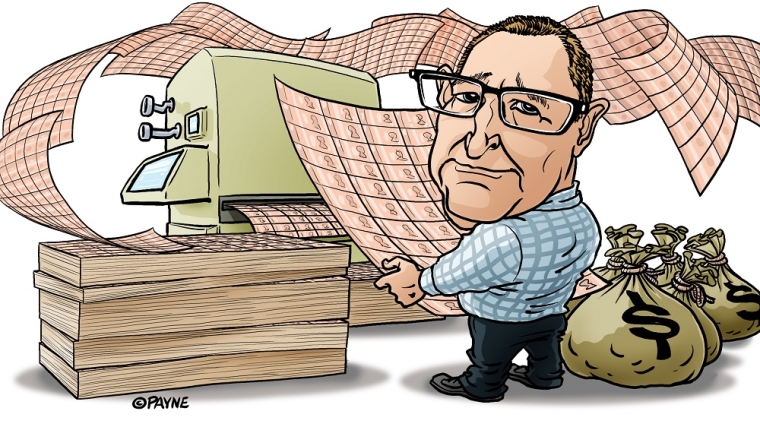
The Treasury expects the Reserve Bank’s (RBNZ) quantitative easing, or Large-Scale Asset Purchase (LSAP) programme, to directly cost $5.1 billion.
When the programme, designed to lower interest rates and soothe dysfunction in the bond market, was launched in early-2020, the Treasury expected it to be cost-neutral over time.
But now that interest rates are rising more quickly than expected, it estimates the net direct fiscal cost will come in at $5.1 billion.
The Treasury unveiled this figure in its 2022 Investment Statement, noting the cost of the programme will only be known once it is completely unwound by 2027.
Background
The LSAP programme saw the RBNZ create money to buy $53.5 billion of New Zealand Government Bonds (debt) on the secondary market between March 2020 and July 2021.
The idea was that by the RBNZ becoming a very active bond-buyer, the price of government bonds would go up. This would lower government bond yields, which would feed through to lower interest rates across the rest of the economy.
The RBNZ wanted to slash interest rates to stimulate the economy and keep inflation and employment buoyed. It launched the LSAP programme, because it didn’t have too much scope to keep cutting the Official Cash Rate (OCR), which was already nearing zero.
This suited the Treasury, because it kept interest costs low on the debt it was issuing to cover Covid-related expenses.
Details
Because interest rates were tracking down in 2020 and early-2021, the government bonds issued earlier in the period were higher-yielding. This made them more valuable.
So, when the RBNZ went about buying the bonds on the secondary market (IE from banks that bought them from the Treasury), it paid a premium. The eligible banks included ANZ, BNZ, Citibank, ASB's parent Commonwealth Bank of Australia, Deutsche Bank, HSBC, JP Morgan, Morgan Stanley, Rabobank, the Toronto Dominion Bank, UBS and Westpac.
The Treasury said the RBNZ paid $7.2 billion more for the bonds than what they were originally issued for. This was recorded as a loss on the government’s balance sheet and resulted in an increase in net debt.
Initially, the Treasury wasn't too concerned about this, arguing the loss would be offset by the LSAP programme lowering interest costs on government borrowing.
Fast-forward less than a year, interest rates are rising more than expected, as the economy is overheating and Russia's invasion of Ukraine is exacerbating inflationary pressures.
The benefits of the LSAP programme aren’t lingering for long enough to offset the upfront cost. Or in the Treasury’s words, “The loss on the government balance sheet and reduction in debt servicing costs are no longer expected to offset each other.
“Based on current interest rate expectations, the net direct fiscal cost from the LSAP programme is currently expected to be $5.1 billion…
“This is calculated as the fair value of the government indemnity to the RBNZ, valued at $5.5 billion in January 2022, less cumulative interest savings to date of $0.4 billion.”
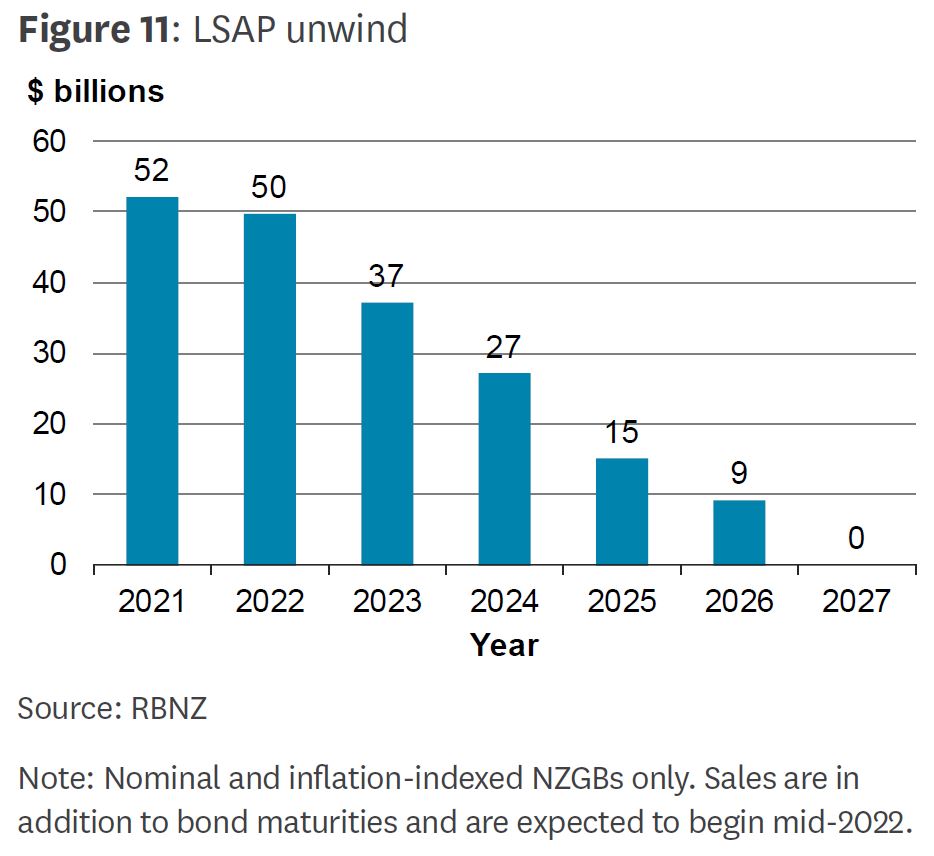
Importantly, the Treasury noted we won’t know the ultimate loss or gain from the LSAP programme until it is unwound in 2027, when the RBNZ is due to have sold the last of its NZ Government Bonds back to the Treasury. The RBNZ is due to start selling the bonds in July.
Change in interest rate risk profile
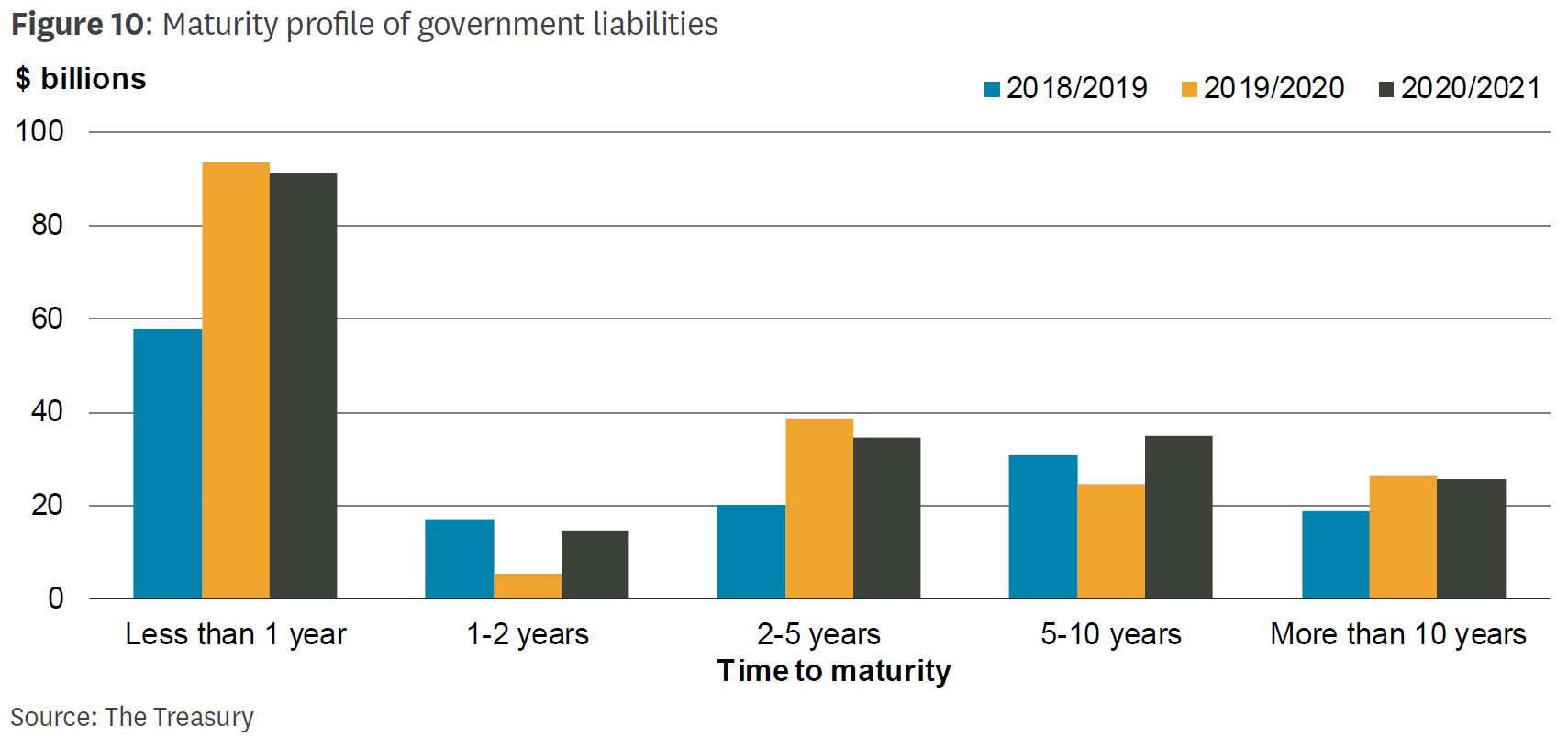
The Treasury made another point. It noted the LSAP programme has made the government’s balance sheet more sensitive to changes in the OCR (which is expected to rise steadily).
This is because the RBNZ is paying banks interest (at the OCR) on the cash they received from the RBNZ when they sold it their government bonds in 2020 and 2021.
As at March 18, the RBNZ was paying interest on $49.1 billion of deposits banks had in their settlement accounts with the RBNZ. In February 2020, the balances of these accounts sat at only $7.4 billion.
Was the LSAP worth it?
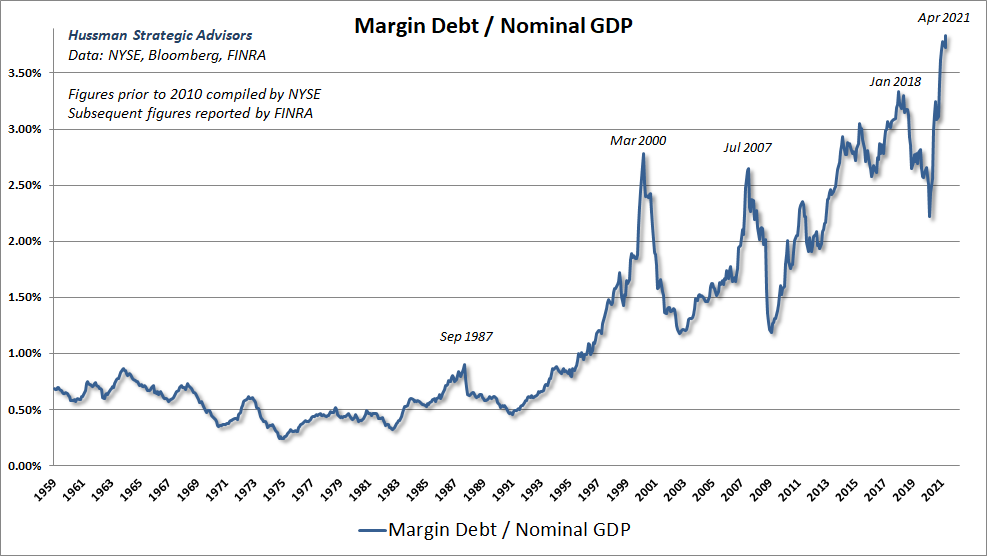
The lowering of interest rates undoubtedly boosted asset prices and supported demand, employment and government tax revenue.
However, it’s difficult to untangle the impact of the LSAP programme from the impact of the other tools the RBNZ used to lower interest rates - the OCR and Funding for Lending Programme.
The Treasury noted the RBNZ in August 2020 estimated NZ Government Bond yields were at least 50 (and potentially more than 100) basis points lower thanks to the LSAP programme.
The Treasury also said the LSAP programme is “expected to have increased tax revenue by supporting broader economic output”.
Former RBNZ manager turned blogger, Michael Reddell, saw the Treasury’s lack of analysis of the benefits of the LSAP programme as an inditement on the RBNZ.
By lowering longer-term interest rates, he said the LSAP programme was designed to benefit the government more than households and businesses, which tend to borrow money on shorter-term rates derived from the OCR.
But still, the Treasury expects the government to suffer a $5.1 billion loss on the programme.
“The bank took a punt, and the punt hasn’t paid off,” Reddell said.
Indeed, the Treasury said, "In establishing the LSAP programme it was understood that uncertainty over the future path of the OCR meant that the programme could result in a material gain or loss."
Reddell recognised that back in March 2020, no one expected the economy to bounce back so quickly. However, he believed the RBNZ could’ve stopped buying bonds sooner than it did, once a recovery was visible.
Post-match review needed
Reddell was also critical of the RBNZ not publishing a proper risk assessment of the LSAP programme, detailing what would happen if interest rates rose.
Infometrics principal economist Brad Olsen likewise noted the lack of scrutiny of the LSAP programme when it was launched in a rush, as bond markets were gumming up and the economic outlook was disastrous.
He said a post-match review was particularly important, as the RBNZ has kept the door open to using bond-buying again in the future.
One of the reasons the RBNZ has given for it deciding to actively sell the bonds it bought, rather than let them drop off its balance sheet as they mature, is that this would clear the decks and make it easier to potentially use bond-buying again in the future.
Nonetheless, the Bank itself has expressed some hesitancy around using the tool to set monetary policy.
It has said the better-understood OCR would be the primary tool it would use to tighten monetary conditions going forward. It didn’t expect the gradual selling down of its bond holdings to have too much of an effect on interest rates, although the jury is still out on this.
Labour MPs on Parliament’s Finance and Expenditure Committee have blocked numerous requests by Green MP Chlöe Swarbrick for a review to be done of the government and RBNZ's economic response to Covid-19.
Swarbrick's concerns largely relate to the distributional impacts of low interest rates - IE the way they've benefited asset owners.
Meanwhile National MP Andrew Bayly has raised concerns in committee meetings about losses related to the LSAP programme.
We welcome your comments below. If you are not already registered, please register to comment
Remember we welcome robust, respectful and insightful debate. We don't welcome abusive or defamatory comments and will de-register those repeatedly making such comments. Our current comment policy is here.