
Summary of key points:
- RBNZ ignoring the impact of the exchange rate on inflation
- RBNZ’s OCR hold decision at odds with their own statement
- Election outcome permutations for the Kiwi dollar
The “cost of living crisis” is the major issue for voters in this election campaign. Typical of New Zealand, all and sundry are very good at describing the problem, however very few are coming up with solutions, apart from bashing the supermarkets for excessive profits and price gauging.
The Reserve Bank of New Zealand (“RBNZ”) are charged with the responsibility of preserving the purchasing power of our dollar and keeping inflation between 1.00% and 3.00% through good monetary policy management.
They are clearly not doing a very good job with that task as inflation has been outside the 3.00% limit for some time. On top of that, the NZ dollar currency value has depreciated, so they are not preserving our purchasing power against the rest of the world.
New Zealand’s sticky, high inflation comes from three primary sources, therefore recognising the root causes of each is important to finding the solutions and cure: -
- Non-tradable/domestic inflation from consistent price increase from an inefficient public sector (central and local government). The new label for this inflation is “administered prices”. Monetary policy is ineffective to stem these price increases as decisionmakers are insensitive to interest rate changes.
- Non-tradable/domestic inflation from the lack of true competition in many industry sectors. Largely caused by New Zealand’s challenging geography and poor “economies of scale”. The list is well known and long - supermarkets, banking, electricity, insurance, domestic air travel and some building products. Price setters in these industries, due to the poor competition, are also insensitive to interest rate changes.
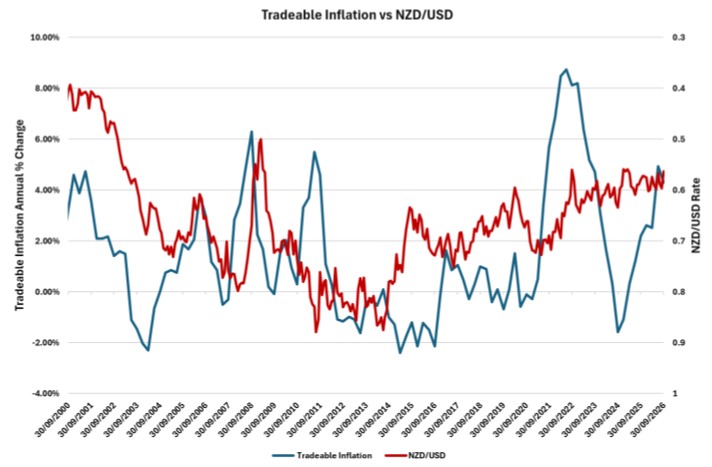
- Tradable inflation due our high reliance on imports and therefore exchange rate and commodity price movements changing local market prices. Our interest rate levels compared to the rest of thew world has a direct impact on NZ dollar value, therefore a direct influence over tradable inflation. Swings up and down in tradable inflation therefore is the dominant determinant of overall inflation levels.
While the above analysis centres on the supply-side of causes of inflation, the demand side is also influenced by interest rate changes. However, as it has been well canvased previously in this column, the fact that 70% of mortgage borrowers always have fixed interest rates, changes to the OCR interest rate to impact on consumer spending is always muted and delayed.
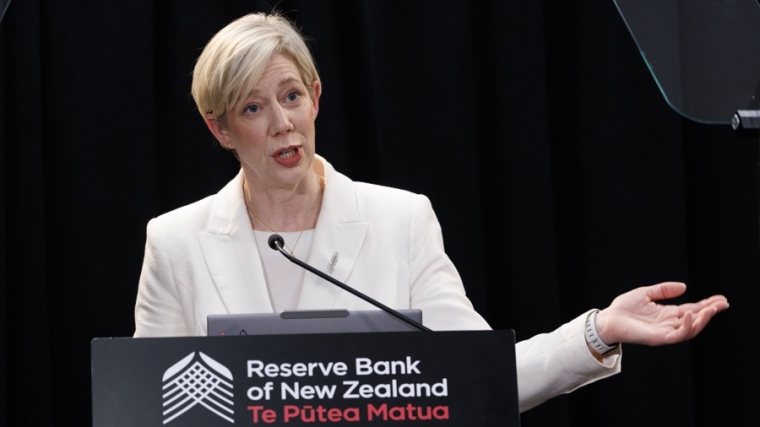
Given New Zealand’s unique economic and structural position of changes to interest rates having the biggest impact on inflation through the exchange rate transmission mechanism, it was very surprising to see RBNZ Governor Dr Anna Breman last week almost dismissing the NZ dollar depreciation as “short-term volatility” that has little medium-term impact on inflation. Depreciation of the NZ dollar has a disproportionate significant impact on pushing up inflation in New Zealand (compared to other economies) through two channels: -
- Direct: Higher import costs transferring through the local prices, typically on a six to nine month lag as most importers hedge the FX risk forward for such periods.
- Indirect: Higher NZD export prices causing higher local prices, as why would food exporters sell for a lower price in New Zealand compared to what they can achieve overseas.
Therefore, when the RBNZ make decisions on monetary policy through interest rate changes, the most significant impact on inflation is what the exchange rate does. The last two RBNZ decisions on interest rates on 2nd September and last week on 28th October resulted in the NZ dollar depreciating. The 2nd September decision was a “dovish hike” as whilst the OCR was lifted to 2.75% from 2.50%, the RBNZ indicated that they would skip the planned OCR increase in October. The financial markets were not expecting that and reacted accordingly. The NZD/USD exchange dropped from 0.5950 to 0.5800 as a result. The 28th October decision was a “hawkish hold” with the RBNZ surprising everyone again with a no change, however stating that interest rates will still need to be increased in the future, just not now for some reason. The NZD/USD exchange rate reducing again in response from 0.5700 to 0.5580. The RBNZ “go slow” strategy on returning monetary policy to neutral is depreciating the NZ dollar on its own account and that in turn increases inflation. The exact opposite of what they want to achieve. Not comprehending the importance of the exchange rate on our inflation rate is why we conclude that the “cost of living crisis” is largely self-inflicted in New Zealand.
Shooting yourself in the foot the first time is perhaps forgivable; shooting yourself in the foot a second time is just plain dumb!
Just why the RBNZ’s Monetary Policy Committee came to a decision to hold the OCR at 2.75%, when all the evidence of a lower NZ dollar value and higher oil prices pointed to inflation risks increasing, is arguably explained by the following: -
- Four members out of the seven-member committee were uncomfortable with deciding to hike without having full set of updated RBNZ economic forecast in front of them.
- Elevated worries from some members that there was a major global shock around the corner (AI investment bubble bursting). It is not appropriate to manage policy on this basis as there is always unknown unknowns somewhere in the globe.
- Perhaps the European-centric influence of the new Governor where change in Europe is always overly cautious snail pace incrementalism. The New Zealand economy is the polar opposite of Europe, we have to be nimble, adaptable, flexible and entrepreneurial.
The transparency of disclosing of how individual members of the Monetary Policy Committee voted is also revealing. The four members voting for a hold (Anna Breman, Rebecca Williams, Carl Hansen and Prasanna Gai) are all economists or academics who have never worked in the business world. The three members who voted for an increase to 3.00% (Hayley Gourlay, Karen Silk and RBNZ Chief Economist Paul Conway) all have some business backgrounds. You have to wonder whether there is an appropriate balance between academic economic theory and real-world business experience on this committee.
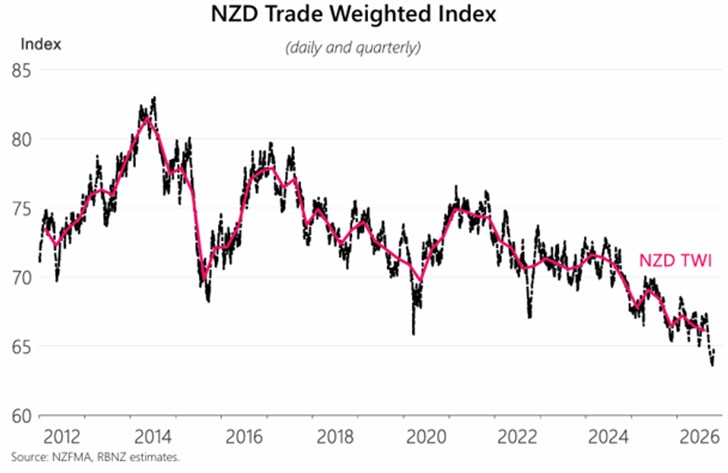
The overall value of the NZ dollar, as measured by the TWI Index, has consistently depreciated over the last two years due to New Zealand’s interest rates being below US interest rates. The NZ dollar has been out of favour with currency traders and investors for this reason and we have not attracted sufficient capital inflows to fund the permanent Current Account deficit. A lower exchange rate is the direct result. The TWI has depreciated 11.3% from 72.00 two years ago to 63.85 today due to our interest rates being below the US. The TWI has depreciated 4.70% from 67.00 to 63.85 since the RBNZ statement on 2nd September. It is not short-term currency volatility that does not mean much Governor Breman, it is a permanent currency slide caused by the RBNZ slashing interest rates to 2.25% in late 2025 and now going slow on interest rate increases in late 2026. The key to controlling inflation back down below the 3.00% limit is returning New Zealand interest rates to equal or above US interest rates. Previous RBNZ Governors understood this well, recent regimes have cut our interest rates to low levels for economic reasons, whereas they should only be doing that when the inflation rate was threatening to go below 1.00%. That was not the case in late 2025.
The first chart below confirms the slide in the TWI over the last two years; the second chart confirms the direct/lagged relationship between the NZD/USD exchange rate (inverted) and tradable inflation.
RBNZ’s OCR hold decision at odds with their own statement
The RBNZ produced a three-page statement (media release and summary record of meeting) with the 2.75% OCR hold last week. Dissecting that statement into the main messages was quite enlightening. As confirmed below, there were 16 sentences (exerts) supportive of a further interest rate hike and nine sentences suggesting an interest rate hold was warranted. It is not a scientific measure of the pro’s and cons of raising interest rates, however on reading the RBNZ statement you could only conclude that an interest rate hike was clearly warranted. The inconsistency between the statement and the committee’s decision to hold (albeit a wafer-thin majority) was impossible to reconcile.
| Exerts supporting an interest rate hike (16) | Exerts supporting an interest rate hold (9) |
However, core inflation measures have increased to around the top of the Committee’s 1 to 3 percent target band, and price increases have become more broad-based across the economy. Global events are adding to near-term inflation pressures in New Zealand. Fuel prices have risen further because of ongoing disruptions in global energy markets, and the exchange rate has fallen by around 3 percent since early September The Committee is focused on returning inflation to the 2 percent target mid-point over the medium term, discounting temporary disturbances to inflation and avoiding unnecessary economic instability. The longer inflation remains high, the greater the risk of higher costs feeding into inflation expectations and price- and wage-setting behaviour, making inflation more persistent. All Committee members agreed on the overall outlook for inflation Price increases have become more broad-based since the June quarter. Disruptions to global oil supply, loss of refining capacity, and shipping disruption due to ongoing conflicts are putting further upward pressure on international refined fuel prices. The New Zealand dollar trade-weighted index has declined approximately 3 percent since the September MPS. Although global interest rates have increased, the decline likely reflects a confluence of factors in a highly uncertain environment. Sustained higher refined fuel prices and exchange rate depreciation could risk larger indirect effects on inflation. It could also increase the potential for second round price effects through wage- and price-setting behaviour. Inflation is also increasing in many economies. Some central banks have increased policy rates in response and market expectations for higher global policy rates have risen. Pass-through could occur later and be larger, particularly if higher global energy, shipping and food costs are sustained. Administered price inflation is also likely to remain elevated. Members noted that the increase in global long-term yields may partly signal a higher global neutral interest rate, due to higher inflation expectations, war destruction and demand for capital to support AI investment. If domestic pricing pressures fail to moderate sufficiently or broaden beyond what costs and normal pass-through can explain, this could warrant further tightening. These members emphasised that core inflation has been above levels consistent with headline inflation at the target mid-point for some time These members put more weight on the fact that aggregate growth has been resilient despite challenges for many businesses and households | To date, wage growth has been subdued, and medium-term inflation expectations have remained stable. Members differed in how much weight they placed on various risks and the timing of the monetary policy response. The pass-through of the initial surge in global prices to domestic price categories has so far been less than previously assumed. Impacts on short-term pricing behaviour appear to have been contained and medium-term inflation expectations remain well anchored. Household consumption has been weak, and the aggregate saving rate is estimated to be 3.7 percent, above the 10-year average of 1 percent. Employment intentions remain weak, pointing to continued slow recovery in the labour market. Members noted that the indirect effects of the initial increase in fuel prices and second round price effects have been smaller than expected so far. To date, wage growth has been subdued, and medium-term inflation expectations have remained stable. On the other hand, subdued pricing pressures could require holding at future meetings. Actual inflation was lower than expected, reflecting smaller indirect effects of higher fuels prices, and medium-term inflation expectations and wage growth remain consistent with returning inflation to the target mid-point |
The argument that subdued wages growth would not lead to inflation is defensible. However, the second key reason for not hiking was that increased business costs from higher energy prices and a lower exchange rate were not being fully passed through into price increases, does not stack up. Business confidence and manufacturing surveys all point to expectation of price increases from rising costs. The RBNZ still see weak consumer demand as a reason why business firms cannot pass through all their cost increases and are compressing margins. However, consumer demand is very uneven with strong demand in the regions and weak demand only in some suburbs of Auckland.
In summary, the RBNZ summary was a lot of “what if” scenario painting, pontification and introspection (in our considered view). What is needed is decisive bold action to return New Zealand’s interest rates to above US interest rates to get the currency up and to get inflation down. It is not that complicated!
Election outcome permutations for the Kiwi dollar
Local importing and exporting companies will already have protection and positioning FX hedging strategies in place for whatever the general election outcome this Saturday throws up in terms of resulting Kiwi dollar movements. Because the political opinion polls are so close and the nuances/vagaries of the MMP voting system, preparedness for “anything could happen” is a prudent course of action.
Before rating the probability of each permutation and the likely NZ dollar response, some general personal (likely biased) comments and questions: -
- New Zealander’s seems to like to be bribed with their own money with promises of free everything from some political parties. Nothing is free in this world; you pay for it through higher taxes or higher debt that your grandchildren will need to pay back.
- How does the Labour Party have a chance of leading a collation government after they were so comprehensively voted out just three years ago? Short and fickle memories from many.
- New Zealand should have an independent body to accurately cost all political parties’ economic policies and what it means for future Government tax and debt.
- Why hasn’t the National Party used clear charts to communicate the improving trends in the economy?
- The Opportunity Party fail to achieve the 5% party vote threshold, despite the polls indicating that they will.
Election outcomes for the Kiwi dollar: -
- National/NZ First/Act majority (50%) = NZ dollar appreciates on relief and pro-business/growth.
- Labour/Greens/Te Pati Maori majority (35%) = NZ dollar depreciates on higher deficits/debt and disinvestment.
- The Opportunity Party (TOP) holds the balance of power on election night (15%) =
- TOP negotiates with National if they are the highest polling party = NZ dollar immediately depreciates on the sheer uncertainty of how long it will take to form a government. The NZ dollar recovers back up if TOP go with the National-led coalition.
- TOP negotiates with Labour if they are the highest polling party or negotiations breakdown with National = NZ dollar depreciates.
Whatever the result, it should be remembered that the Government does not run the economy. Their job is to set the rules for the playing field and allow everyone to get one with it without too much interference!
Daily exchange rates
Select chart tabs
*Roger J Kerr is Executive Chairman of Barrington Treasury Services NZ Limited. He has written commentaries on the NZ dollar since 1981.
We welcome your comments below. If you are not already registered, please register to comment
Remember we welcome robust, respectful and insightful debate. We don't welcome abusive or defamatory comments and will de-register those repeatedly making such comments. Our current comment policy is here.