

New lending dipped by close to $1 billion in the month of April but was still higher by almost $2 billion compared to the same period last year.
There was $14.2 billion of new lending during April, down 6.4% from $15.1 billion in March. Compared to April 2025, total new lending was up 15.5% from $12.3 billion.
The Reserve Bank’s new lending fully secured by residential mortgage data series shows new residential lending edged down from $8.7 billion in March to $8.3 billion in April. On a yearly basis, the total monthly new residential lending was up just 3.5% from $8 billion in April 2025.
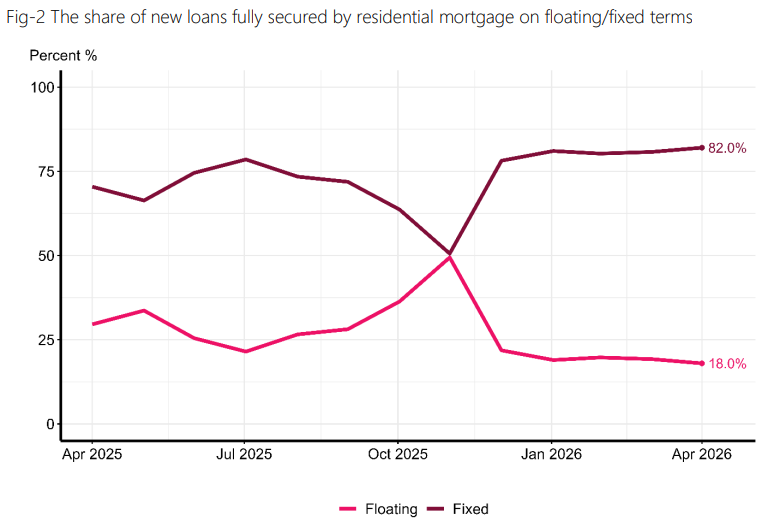
The Reserve Bank said the share of total new residential lending on fixed interest rate terms increased to 82% in April, up 1.2% from March.
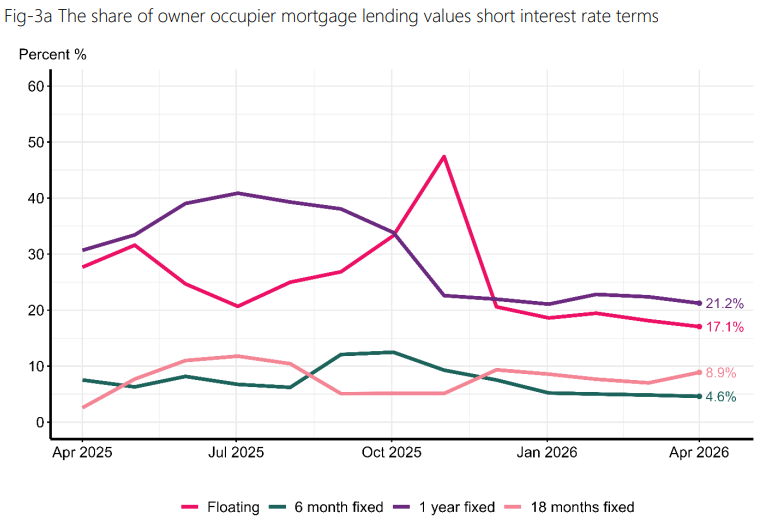
New lending on an 18-month fixed term accounted for 8.9% of all new lending, up from 7% in March.
On the floating mortgage front, the share of floating term new lending decreased from 18.1% to 17.1% in April, with the share of one-year fixed terms decreasing from a 22.4% share in March to a 21.2% share in April.
New owner-occupier lending fell back to $5.9 billion in April, down from $6.1 billion in March, with a preference for two-year fixed-term lending, the Reserve Bank said.
According to the central bank, April’s data showed owner-occupier lending shares decreased for all terms except 18-month, two-year and four-year fixed terms. The share of owner-occupier new lending on two-year fixed terms increased by 1.6% from 29.1% in March to a 30.7% share in April.
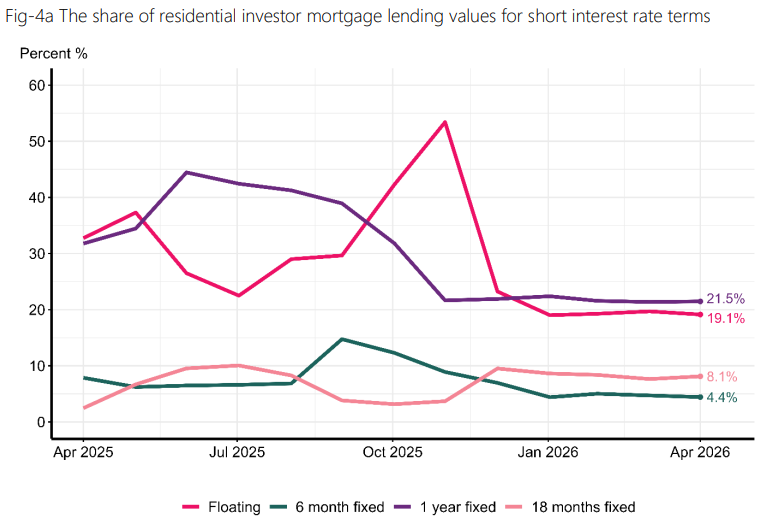
New residential investor mortgage lending lowered from $2.4 billion in March to $2.2 billion in April. Two-year fixed terms accounted for 30.8% of new lending, up 2% from 28.8%, the Reserve Bank said.
Total monthly new residential lending decreased to $8.3 billion in April, down from $8.7 billion in March. Compared to April 2025, the total monthly new residential lending was up 3.5% from $8 billion.
The Reserve Bank said the share of new residential investor lending increased for one-year, 18-month and two-year fixed terms in April. Two-year fixed terms accounted for 30.8% of new lending, up 2% from 28.8% in February.
In April, 83.9% of investor new lending was on floating or at fixed rates under two years, the RBNZ said. The share of three-year fixed terms decreased to a 13.5% share in April, down 0.9% from 14.4% in March.
Rising mortgage rates will ‘dampen house price growth’
The Reserve Bank noted in its May Monetary Policy Statement (MPS) that rising mortgage rates are expected to dampen house price growth, which will in turn reduce the incentive to build new houses.
“If mortgage rates increase over time, consistent with current market pricing for wholesale rates, then mortgage holders will likely be refixing onto higher rates on average by March 2027,” the RBNZ said.
“The average interest rate on outstanding mortgages declined to 4.9% in March but is expected to increase to 5.3% over the next 12 months.”
The Reserve Bank’s Monetary Policy Committee held the Official Cash Rate (OCR) at 2.25% at its May meeting, despite three out of its six members voting to raise the OCR.
It was the first statement from the central bank to make the votes of committee members public when consensus is not reached over OCR decisions.
The Monetary Policy Committee members (Governor Anna Breman, Karen Silk and Paul Conway) voted to leave the OCR on hold, while the three external members (Carl Hansen, Hayley Gourley and Prasanna Gai) voted for a 25-basis point increase.
The cash rate stayed at 2.25% because Breman had the casting vote as chair of the committee.
However, the Reserve Bank has signalled that the OCR will most likely need to increase sooner and by more than the RBNZ had previously envisioned earlier in the year when it released its February MPS.
Most economists are anticipating a hike to the OCR at the next Monetary Policy Committee meeting in July.
We welcome your comments below. If you are not already registered, please register to comment
Remember we welcome robust, respectful and insightful debate. We don't welcome abusive or defamatory comments and will de-register those repeatedly making such comments. Our current comment policy is here.