

You can lock them up but you can't tie the New Zealand house buying public down for long.
The latest Reserve Bank residential mortgage lending by borrower type figures show that nearly $6.6 billion was advanced in mortgages last month - which is the highest figure for a July since the RBNZ started bringing this information together in 2013.
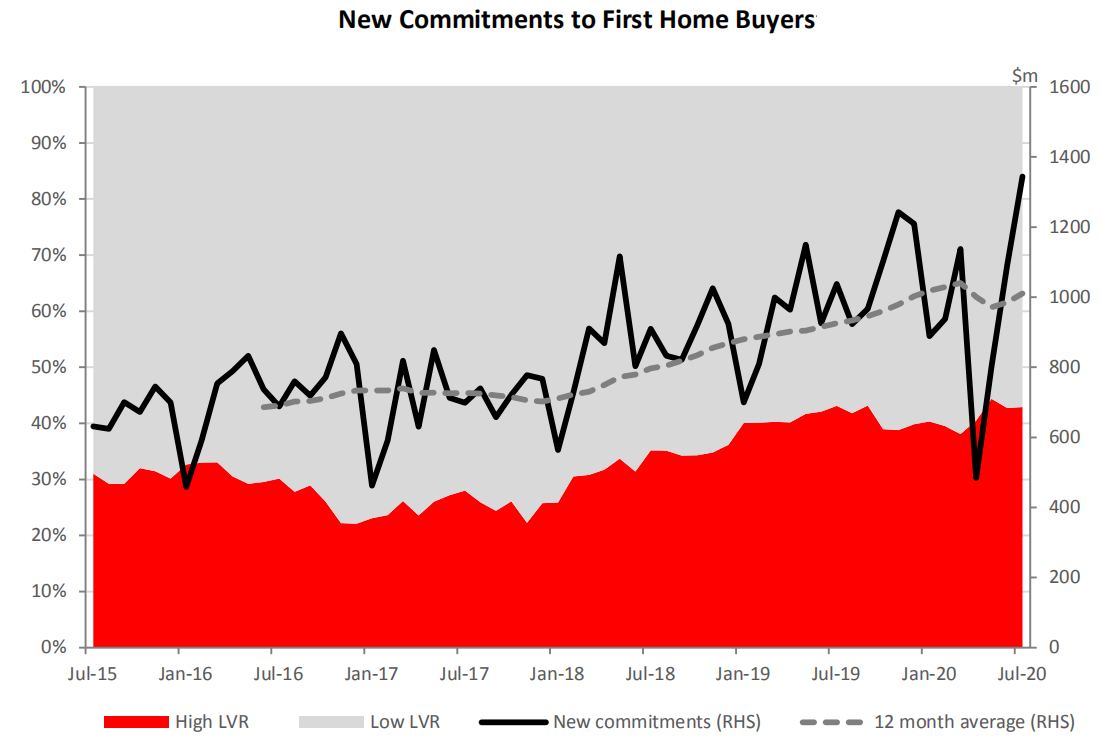
And the first home buyers are continuing to march.
The FHB group borrowed $1.344 billion in July - the highest monthly total by this grouping since the start of this data series, beating the previous record of $1.243 billion borrowed in November 2019.
Additionally, the 20.4% share of the month's mortgage money for the FHBs was that group's highest proportion - just edging past the 20.3% share the FHBs recorded in June 2020.
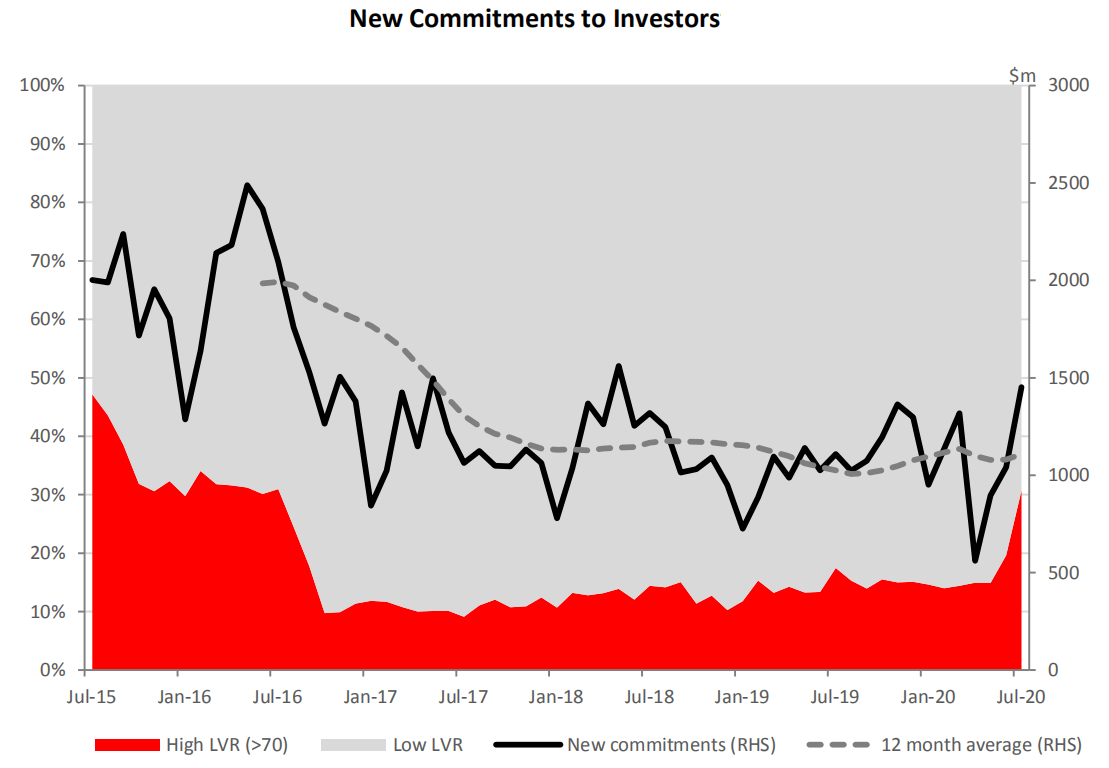
Of interest also is the fact that the share of lending taken by the investor grouping rose to 22% from 19.4% in June.
That's historically low when you compare it with the circa 35% that the investors were taking in the very bull days of mid-2016, but it does show something of a rekindling of interest. And perhaps interest is the point - given that returns on conventional investments such as bank term deposits are now so low.
In fact, the $1.451 billion borrowed by investors in July was the biggest monthly total borrowed by this grouping since May 2018.
The other key point to remember in all this is that the RBNZ from May 1 this year removed - at least for 12 months - its limits on high loan to value ratio (LVR) lending. That means it is now totally at the discretion of banks how much high LVR lending they do.
High LVR lending to investors (bearing in mind that this means above 70% LVR specific-to-investors) more than doubled in July compared with June, to $446 million.
LVR limits were in place from 2013, initially having a disproportionate impact on FHBs and their ability to compete with cashed up investors. That started to change hugely in 2016 when the RBNZ clamped tough special limits on investors, requiring them to have 40% deposits, which was eventually eased to 30% prior to the removal of the LVRs altogether this year.
The below graphs highlight the sharp rises in lending to FHBs and investors. Note the RBNZ definitions on LVRs at the bottom of this article.
Here's some of the highlights of the month's mortgage figures as detailed by the RBNZ:
- Total monthly new mortgage commitments were $6.6b in July – the highest July figure since the survey began in 2013. This is an increase of $1.2b (22.8%) from June 2020 and up 11.4% from July 2019.
- New mortgage commitments to first home buyers increased from $1.1b in June to $1.3b in July and other occupiers increased from $3.2b in June to $3.7b in July.
- First home buyers accounted for 20.4% of new mortgage commitments, up from 20.3% in June. Investors accounted for 22.0% of new mortgage commitments, up from 19.4% in June.
- The year-on-year increase of 11.4% in new mortgage commitments was driven by the increase in annual growth outside of Auckland. In Auckland, new mortgage commitments were up 3.9%, while new commitments outside of Auckland rose 17.6%.
- The nationwide year-on-year growth in value of new mortgage commitments to first home buyers was 29.6%, while new commitments to investors was up 31.0%.
- Monthly new mortgage commitments with high loan-to-valuation ratio have increased since the restrictions were removed in May 2020. High LVR new mortgage commitments to investors more than doubled in July compared with June 2020.
The RBNZ gives these LVR definitions:
High LVR [for FHBs and other owner-occupiers] means monthly value of committed residential mortgage lending, where the loan-to-valuation ratio (LVR) is above 80%. Low LVR means monthly value of committed residential mortgage lending, where the loan-to-valuation ratio (LVR) is 80% or below.
For investors, high LVR means monthly value of committed residential mortgage lending, where the loan-to-valuation ratio (LVR) is above 70%. Low LVR means monthly value of committed residential mortgage lending, where the loan-to-valuation ratio (LVR) is 70% or below.
We welcome your comments below. If you are not already registered, please register to comment
Remember we welcome robust, respectful and insightful debate. We don't welcome abusive or defamatory comments and will de-register those repeatedly making such comments. Our current comment policy is here.