
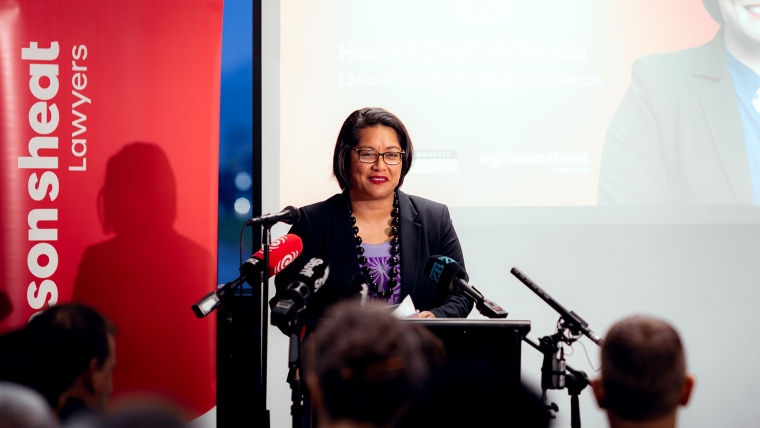
The spending cuts required to cover the cost of recent tax reductions will leave New Zealand poorer and less productive, Labour’s finance spokesperson says.
Barbara Edmonds made this argument in a speech to the party’s conference in Christchurch on Saturday, which set the scene for a fresh set of policies after last year’s election loss.
She said Finance Minister Nicola Willis had chosen tax breaks for landlords over hiring nurses and that her fiscal policy amounted to “austerity”.
“And forging on with unaffordable tax cuts just to keep her job, that is selfish economic vandalism,” she told party supporters.
Getting the operating balance back into surplus was a “moot point” if Kiwis were not getting the healthcare they needed and other economic investments weren’t being made.
“It’s like making extra repayments on your mortgage when your kids are sick and hungry, and your house is falling apart all around you”.
In a tweet, Willis said Labour’s reckless spending had fuelled a cost of living crisis without improving any outcomes.
“Barbara Edmonds says that letting Kiwi workers keep more of their hard-earned money is wrong, and that racking-up more taxes and extra debt is the way to go.”
“That’s what I call economic vandalism,” she wrote.
Edmonds said she would be a “pragmatic steward of the public purse” but being pragmatic might mean more—not less—spending on nurses, school buildings, ferries, and hospitals.
Unmentioned in her speech was the prospect of tax increases which may come with these choices to limit debt increases.
The NZ Herald has reported the party membership will vote to continue developing a capital gains or wealth tax policy, while stopping any work on other proposals.
Tax on the floor
In an interview prior to the conference, Edmonds wouldn’t comment on any specific tax proposal that would be debated by members over the weekend.
“Tax will always be [debated] on the floor for Labour, in the respect that we want to see how we can make things more progressive, equitable, and plug some gaps, so to speak — but it’s one small part of [the policy platform],” she said.
The second term MP has held the finance portfolio for less than 10 months and has been reluctant to support any particular tax policy. This is despite having a successful career as a tax lawyer, and even serving a short stint in Cabinet as Minister for Revenue.
She told Interest.co.nz her role was to be a “steward” or advisor, who could help the wider party identify the pros and cons of different policies, and not be the final decision-maker.
Edmonds has spent much of her spare time travelling around New Zealand and meeting with business leaders, who have mostly seemed impressed by her.
For this reason, it is easy to speculate that she might prefer to broaden existing capital gains taxes, rather than set up an unconventional wealth tax.
Remember, that she was given the revenue portfolio while in Government after David Parker resigned the job after then-Prime Minister Chris Hipkins vetoed his wealth tax proposal.
However, Edmonds herself won’t be drawn on taking a public position and the party plans to keep both options on the table until much closer to the election.
Fiscal challenges to meet
While she didn’t talk about tax in her speech, the finance spokesperson said there was “no doubt” New Zealand was facing a serious fiscal challenge.
“By 2060, 10% of our GDP will be spent on health care, and 7% on Superannuation. That is a hefty burden on our economy and we need to start making choices now that prepare us for that challenge,” she warned.
The Treasury has warned in multiple speeches that current tax revenue will not be enough to support these rising costs, and some sort of reform will be needed in the next decade.
“The path we are on of austerity and cuts does not make us a richer country. We need to be ready to invest in our people. That is what will make our country grow and become more productive,” Edmonds said.
She said she would focus on supporting businesses to innovate and adopt new technologies which could boost the productive capacity of the economy, but was sceptical of deregulation as a way to grow the economy.
We welcome your comments below. If you are not already registered, please register to comment
Remember we welcome robust, respectful and insightful debate. We don't welcome abusive or defamatory comments and will de-register those repeatedly making such comments. Our current comment policy is here.