
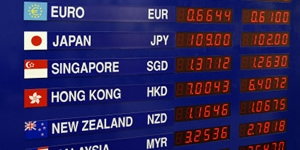
In the absence of major newsflow, market movements have been modest overnight. Oil prices are slightly lower amid positive vibes around the Middle East conflict. NZD/USD is trading around 0.5725, recovering from fresh lows yesterday afternoon.
Brent crude fluctuated between USD97.50 and USD102 per barrel overnight and currently trades with a USD98 handle, down modestly. Saudi Arabia is preparing to restart its key East-West pipeline and resume crude exports from its Red Sea port by the end of the week. There were plenty of headlines overnight on diplomatic efforts to reach a deal between the US and Iran. Trump noted that US officials met with Iran’s delegation at the UN for three hours.
Media commentary on President Trump’s speech at the UN highlighted his threat to “annihilate” Iran, although less biased outlets noted the full quote, which was more balanced: “Will a deal be made with Iran that lets them rebuild and create a far greater country than it ever was before – maybe one of the greatest in the Middle East or even the world – or do I annihilate the Islamic Republic and do it quickly?” He also added that he believes a deal will come “right after” the midterm election, saying, “they’re waiting to see how I do”.
US 10-year Treasury yields are currently flat around 4.96%, after trading an overnight range of 4.92%-4.98%. The 2-year rate traded at a fresh two-year high of 4.785%. The Fed Funds market is pricing in three full rate hikes by the middle of next year, spread over the next six meetings.
US equities have shown modest movements. The S&P 500 is currently flat, while the Nasdaq index is up 0.5%, trimming earlier gains that saw it trade at a fresh record high.
The USD is broadly stronger overnight, although moves have been modest. NZD/USD is trading around 0.5725, relatively flat from this time yesterday. The NZD traded down to about 0.5695 early yesterday afternoon, a fresh two-month low, in what looked like a liquidity vacuum before rebounding with some support from an RBNZ press release (see below). At the same time, the AUD fell through 0.71, although that did not prevent NZD/AUD from hitting a fresh 13-year low of 0.8006 before recovering sharply. The AUD is trading back above 0.71, while the NZD/AUD cross is around 0.8050. Most of the price action in all NZD crosses occurred yesterday afternoon, with only small moves overnight.
The RBNZ released a statement under the guise of various MPC members’ visit to Dunedin, including comments on recent data and economic conditions. The RBNZ seemed to be trying to deliver a clear message to the market, but we are just not sure what it was! There was a mix of soundbites that could be interpreted as either dovish or hawkish, depending on one’s disposition.
The market seemed to latch on to the comment noting that higher oil prices, if sustained, “are expected to result in somewhat higher near-term inflation than we assumed in the September Statement”. Of note, the RBNZ’s statement followed a critical report highlighting the mistakes it made in the wake of the COVID-19 pandemic. A key conclusion of the review was that greater emphasis should be placed on real interest rates when assessing and communicating the stance of monetary policy, while near-term inflation developments should receive greater focus.
Applying these recommendations to the current situation, NZ’s real interest rates remain clearly stimulatory against a backdrop of headline CPI inflation that is on the verge of breaking up through 4%, while core inflation could easily breach 3%. On this basis, while the RBNZ has been tightening policy, there remains significant heavy lifting to do.
Domestic rates showed a flattening bias, with higher short-term rates in response to the RBNZ’s comments against flat long-term rates. The 2-year rate closed up 4bps to 4.04%, just shy of its recent multi-year high, while the 10-year rate was unchanged at 4.65%. Short-end NZGB yields rose 3bps against a flat 10-year rate and a 1bp fall in ultra-long bonds.
On the economic calendar, global PMIs across Europe and the US are released tonight, with consensus estimates pointing to only modest changes in the early-September indicators compared with August.
Daily exchange rates
Select chart tabs
Jason Wong is the senior Markets Strategist at BNZ Markets.
We welcome your comments below. If you are not already registered, please register to comment
Remember we welcome robust, respectful and insightful debate. We don't welcome abusive or defamatory comments and will de-register those repeatedly making such comments. Our current comment policy is here.