
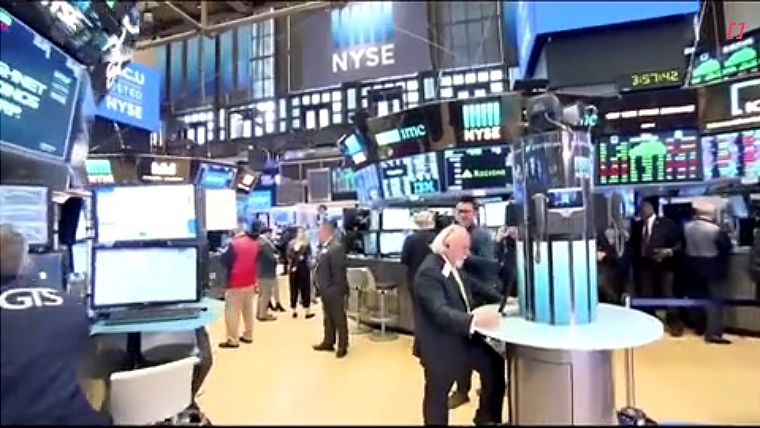
Global rates are notably higher overnight, with the market focused on how much tightening the Fed may need to do to contain high inflation. US equities are flat, with most attention drawn to the scandal surrounding Nvidia’s CEO and his affairs. Against a strong USD, major currencies have traded at fresh lows, with the AUD struggling, while the NZD has fallen below 0.5550.
US Treasuries have been battered, with another sharp lift in rates across the curve following the Veterans Day holiday. The move reflects further spillover from the higher CPI print earlier in the week, as well as hawkish Fed comments.
Chicago Fed President Goolsbee offered more hawkish comments, noting that the hot inflation report was not a one-off. He saw signs of old-fashioned demand overheating. Cleveland Fed President Hammack, who dissented in October in favour of a hike, outlined how inflation was moving in the wrong direction but said she did not believe the Fed was currently behind the curve on policy. She favoured smaller, steadier movements in rates, as these would be less disruptive than sharper, more aggressive moves, a nod to a 25bps rather than 50bps move next month.
The market ignored second-tier data. US existing home sales plunged 5.5% m/m in October to a 16-year low, further evidence of a housing market experiencing very tough conditions in the face of higher mortgage rates and a lack of affordability. Initial jobless claims, up 9k to 200k last week, remain at a historically low level.
Although Waller appears to be the only FOMC member in favour of a possible 50bps hike next month, the market still prices some chance of a jumbo move, with 28bps priced. Pricing for later meetings has increased, with a cumulative 89bps of hikes now priced at the peak, just under a year away. The Treasuries curve has flattened, with the 2-year rate up 12bps, the 10-year rate up 12bps and the 30-year rate up 9bps relative to the pre-holiday close. Since the NZ close yesterday, the 10-year rate is up 12bps to 5.11%.
While the correlation between Treasury yields and oil prices has weakened recently, higher oil prices have not helped. Oil prices are modestly higher, with Brent crude just under USD94 per barrel. Prices rose after President Trump posted on social media, asking VP Vance to focus his complete and total attention on corruption in Democrat-run cities and states rather than on a deal with Iran, which is not needed. The comment dampened expectations for a deal, as the WSJ reported yesterday that Trump had told aides he was open to Vance resuming direct discussions with Iran to broker a deal. Iran claimed that another two oil tankers were struck on Thursday while attempting to cross the Strait of Hormuz.
Despite higher rates and a chunky fall in Nvidia’s share price, US equities are modestly higher. Nvidia’s CEO Huang resigned after his position became untenable, having been outed for a second extramarital affair, this time with an employee. A series of investigations overhangs the company following his affair with an alleged Chinese spy. The share price opened down 14% before recovering and is now down less than 5%. European equities are slightly higher, with the Euro Stoxx 600 index up 0.1% to a fresh record high.
Net currency movements have been modest, but some are worth highlighting given the backdrop of solid USD support. Overnight, USD/JPY briefly rose above 160 before gapping lower to just above 159.30, a suspicious fall that quickly reversed to 159.75. The open-mouth operation delivered yesterday by Japan’s chief currency official Mimura was entirely predictable as USD/JPY approached 160, and traders are jittery around these levels. The AUD briefly fell below 0.68 overnight to reach its lowest level since January, and it is currently just over that figure.
The AUD is unloved at present, given the horror stories facing the Australian housing market regarding house prices, credit demand and bad debt provisions, and a growing belief that the RBA might need to reverse rate hikes from the second half of next year. The NZD has fallen below 0.5550, but the low recorded earlier this month, just below 0.5530, has still held. NZD/AUD has nudged up to 0.8145.
For the European currencies, it is a case of further modest weakness in the face of USD support, with the EUR making fresh lows below 1.1050 and the GBP edging lower as well. There was little market reaction to the solid Q3 UK GDP showing an expected 0.7% q/q gain, which can only encourage BoE hawks that raising rates again remains the preferred course of action.
Domestic rates were modestly lower yesterday. There was strong demand at the weekly bond tender, with a bid-cover ratio of 7.5 for the 2037s and 4.5 for the 2031s on offer. Strong bidding interest could well be an ongoing feature under the reduced tender size of $350m. NZGB and swap rates were marked down 3-4bps across the curve. The Australian 10-year bond future is up 6bps in yield terms since the NZ close, so rates are expected to open higher.
NZ card spending data, as measured by Statistics NZ, fell 1.2% m/m in October, with retail spending down 0.7%. We have been sceptical of these official series for some time, and that scepticism also applies to this print, considering that ANZ, Westpac and BNZ card spending data all showed solid gains for October.
In the day ahead, NZ’s manufacturing PMI is released this morning. It has been tracking well above average recently, so there will be some interest in whether this pace can be sustained. US PPI data are released tonight, and we will also hear from NY Fed President Williams, who sits at the dovish end of the rate-setting committee.
Daily exchange rates
Select chart tabs
Jason Wong is the senior Markets Strategist at BNZ Markets.
We welcome your comments below. If you are not already registered, please register to comment
Remember we welcome robust, respectful and insightful debate. We don't welcome abusive or defamatory comments and will de-register those repeatedly making such comments. Our current comment policy is here.