
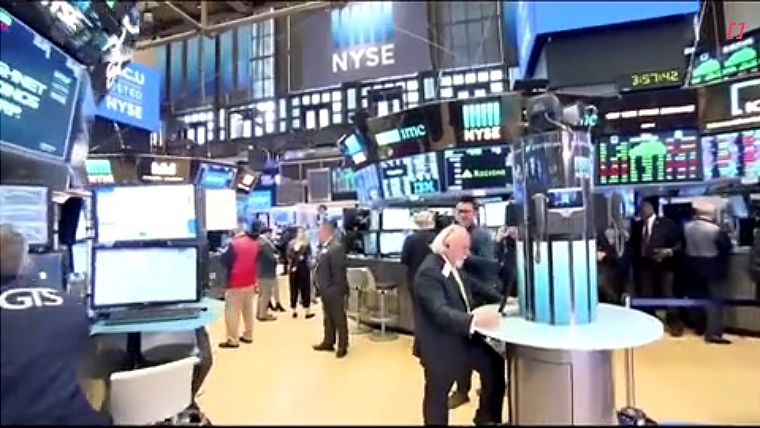
Net changes in rates and currencies have been modest overnight. In US equities, the focus has been on the listing of Anthropic. The stock opened 34% above its $83 IPO price at $111.50, before heading towards $100. The S&P500 was flat just ahead of trading in Anthropic but traded weaker after, with the listing seemingly triggering widespread selling across the broader market. The index is on track to close lower for a sixth consecutive day. European equities fell for a fourth consecutive day, with the Euro Stoxx 600 index down 0.9%.
The historic meeting between Presidents Trump, Xi and Putin had little market implication. In a joint statement, the three countries agreed to engage in dialogue on reducing nuclear risks and preventing nuclear proliferation, with no detail on next steps. They also agreed to increase the supply of refined petroleum products for the benefit of all nations. Following the meeting, Putin promised a “much more painful” response to Ukraine’s bombing of the bridge linking Russia and Crimea, ruling out any prospect of a partial truce.
Oil prices have been range-bound despite reports of ongoing skirmishes in the Middle East, including a Houthi attack that struck the Saudi sovereign wealth fund headquarters. Bloomberg reports that the chances of the US launching another round of mass strikes against Iran appear to have grown in recent days, according to Western officials. Brent crude currently trades near USD93.
US Treasuries have been range-bound, with the 10-year rate trading between 5.05% and 5.10%. Only second-tier data were released. Initial jobless claims rose an insignificant 1k last week to 203k, continuing to track at a historically low level. The Philly Fed manufacturing index fell for a third successive month to a six-month low of 6.3 in November, from 20.9. Price increases were more widespread, with the prices paid index rising to 58.2.
In the currency market, net overnight moves have been small, with a downward swing in the USD reversing over the past few hours. The AUD sustained the fall seen in the wake of the weak labour market report, having reversed that move overnight during the swing in the dollar. Australian labour market data were much weaker than expected, with another chunky fall in employment driving the unemployment rate up two-tenths to a five-year high of 4.9%, despite a lower participation rate. The report triggered a notable fall in Australian rates, with the 3-year bond future down as much as 20bps in yield terms. Any lingering risk of further RBA tightening was swiftly priced out, and the market moved to price in the chance of easier policy from early next year.
The AUD probed fresh 10-month lows around 0.6660 and recovered the entire loss overnight after the USD fell broadly. The USD’s subsequent reversal has the AUD back around 0.6675. The NZD initially benefited from the AUD’s fall as traders closed short NZD/AUD positions. A weaker USD sent the NZD to a high just above 0.5530 overnight, but it has swung back down to around 0.55. NZD/AUD jumped higher after the labour market report and extended the move overnight to 0.8250.
Among the other key majors, a softer GBP, which probed below 1.31 overnight, has pushed NZD/GBP higher, to around 0.42. NZD/EUR is trading above 0.50. NZD/JPY shows a modest recovery to just below 88.
The big fall in Australian yields spilled over into the NZ market. NZGBs were marked down 4-6bps at the close, while swap rates were marked down 6-8bps. The 2-year rate fell 6bps to 3.78%, and the 10-year rate fell 8bps to 4.41%.
The RBNZ released a statement of Governor Breman’s talking points for a speech, which contained a mix of dovish and hawkish soundbites. She acknowledged that inflation was running above target, with elevated underlying inflation and a risk that inflationary pressures could become broader and more persistent. She also noted the uneven economic recovery, challenging conditions for some, weak wage growth and the lift in the unemployment rate to 5.7%. There was little market reaction, and the market remains well priced for a December rate hike.
In the day ahead, Japan CPI data will be released and is expected to show inflation remaining comfortably above target. Elsewhere, there are only second-tier economic releases.
We welcome your comments below. If you are not already registered, please register to comment
Remember we welcome robust, respectful and insightful debate. We don't welcome abusive or defamatory comments and will de-register those repeatedly making such comments. Our current comment policy is here.