
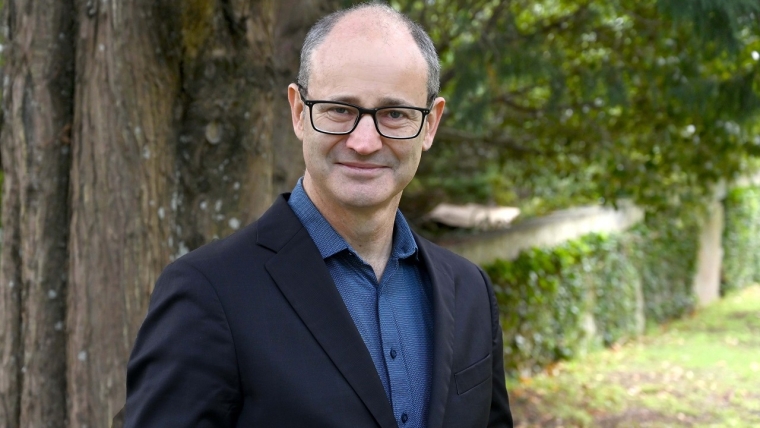
The Reserve Bank (RBNZ) is denying that New Zealand is experiencing 'stagflation' and expects domestic inflation to continue falling as "increasing spare capacity" occurs in the economy this year.
In a speech titled Inflation: the road back to 2% delivered online on Wednesday, RBNZ chief economist Paul Conway said "there’s been a bit of talk" of stagflation (which occurs when prices rise while the economy stagnates).
"I've seen a few headlines to that extent over the last couple of weeks," Conway said.
"New Zealand is not in a stagflationary environment.
"Yes, we are in a slow-to-no-to-negative growth environment but the outlook for growth is slightly more positive going forward and the outlook for inflation is for declines to continue," he said.
New Zealand's GDP contracted in four of the five quarters up to December 2023, with results from the March quarter due for release on Thursday of this week. Economists had mixed views on whether the economy would have expanded or contracted in the quarter. Other recent economic data is suggesting the economy may be going backwards in the current quarter.
Conway said the central bank expects spare capacity to start emerging in the economy over 2024, "after several years of the economy growing well beyond its sustainable rate".
"We expect this spare capacity to feed through strongly into lower domestically generated inflation."
The RBNZ is aiming to get inflation back into its targeted 1% to 3% range by the end of the year. As of the March quarter, inflation as measured by the Consumers Price Index (CPI) was running at 4.0% - after being as high as 7.3% in mid-2022. However, the domestically-generated portion of inflation, the so-called 'non-tradable' inflation has been slower to fall, being 5.8% as of the March quarter.
In conjunction with Conway's speech, the RBNZ released four analytical papers looking at inflation. Conway's speech drew on material from this research.
Conway said the expectation of spare capacity and declining inflation is supported by the research.
"Another study being published with this speech finds that the effect of capacity pressure on inflation, as captured by the Phillips curve, has become stronger over recent years.
"This strengthening in the Phillips curve relationship indicates that excess demand for goods and services and workers from part way through the pandemic was strongly reflected in higher inflation. But it also suggests that remaining inflation could decrease quickly as spare capacity emerges in product and labour markets over 2024."
Conway said that inflation spiked higher during the pandemic due to a range of factors, with a shortage of labour and materials in a period of strong demand being particularly important.
"Broad-based non- tradables inflation has been key in driving medium-term inflation pressures," he said.
"While good progress is being made in bringing inflation back to target, increasing spare capacity in the economy is likely to further reduce inflation pressure going forward. A further easing in the labour market will be a key part of this process. Lower inflation expectations and a lower propensity for firms to make relatively large price increases will help lower inflation persistence," Conway said.
Unemployment as of the March quarter was 4.3%, rising from 4.0% as of the December quarter. The RBNZ is forecasting that it will hit 5.0% by the end of this year.
Conway said that to date, declines in non-tradables inflation have been concentrated in products that are sensitive to changes in monetary policy (including housing-related services). Inflation in this category of non-tradables increased quickly at the onset of the pandemic but is now almost back to pre- pandemic rates.
"We anticipate that disinflation will spread across a wider set of non-tradables that typically take longer to react to monetary policy (such as restaurant meals and ready-to-eat food). Inflation in this category of non-tradables increased relatively slowly over the pandemic and has only recently started to decline. This decline is likely to continue as the labour market continues to ease.
"Some non-tradables respond only slowly, if at all, to changes in monetary policy. For example, inflation in some administered goods prices will fall with a delay; for example, excise tax is indexed to CPI. Prices for other non-tradables in this category – such as insurance – have been slow to respond to restrictive interest rates and the pace of increases may only start to wane once other factors – such as pandemic and weather-related disruptions – have run their course."
Conway said that overall the RBNZ expects to see slowing inflation spread out across a greater share of non-tradables and the extent of large price increases across CPI groups to return to pre-Covid-19 averages.
He said the research published by the RBNZ indicates that excess demand for goods and services and workers from part way through the pandemic was strongly reflected in higher inflation.
"But it also suggests that remaining inflation could decrease quickly as spare capacity emerges in product and labour markets over 2024.
"Second, we expect households and firms to increasingly build lower inflation expectations into their wage- and price-setting decisions. Because inflation expectations can become self-fulfilling, lower inflation expectations will help reduce inflation persistence."
Conway said the RBNZ research had found that above-target inflation over recent years prompted people to pay more attention to recent inflation and to update their inflation expectations more frequently. As high inflation expectations become widespread, workers are more likely to bargain hard for wage increases.
"High actual and expected inflation also makes it easier for businesses to increase their prices. Reserve Bank research finds that businesses are more likely to increase prices by more, and more frequently, when inflation is high.
"These behaviours reinforced upward momentum in headline CPI inflation over recent years. But the opposite could occur as headline inflation continues to fall. Recent falls in inflation expectations are welcome in this regard and will help embed lower inflation persistence going forward," Conway said.

We welcome your comments below. If you are not already registered, please register to comment
Remember we welcome robust, respectful and insightful debate. We don't welcome abusive or defamatory comments and will de-register those repeatedly making such comments. Our current comment policy is here.