
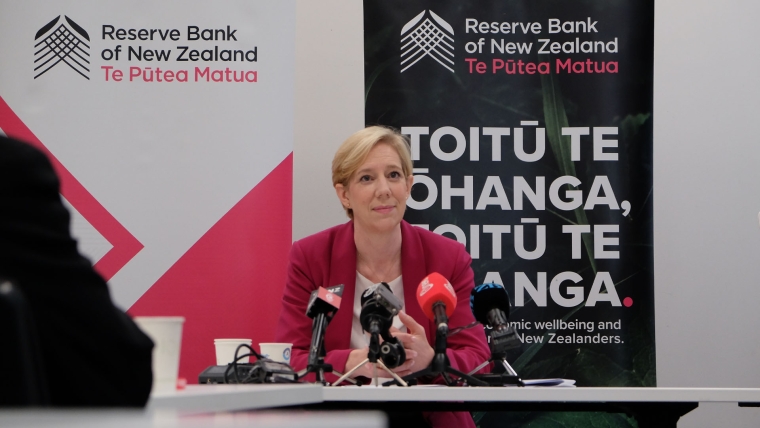
New Reserve Bank (RBNZ) Governor Anna Breman wants to see the RBNZ revert to having eight Official Cash Rate reviews every year rather than the seven it has now.
"I think having seven meetings - we really have to consider moving to eight meetings per year," she said in an interview on RNZ.
"I understand there are reasons why we can't change it very quickly, but I definitely want to have that discussion with my colleagues at the Monetary Policy Committee," Breman said.
A quick comment at this point from the author of this article: The RBNZ in fact used to have eight OCR reviews every year, but reduced the frequency about 10 years ago. This was something I complained about then and have continued to do so. In that article 10 years ago, I remarked that "the real killer for me is the fact that there will now be a glaring three month gap between the last Official Cash Rate decision made in one year and the first in the next".
And, sure enough, this long, nearly three month gap, over summer between OCR meetings has become increasingly contentious because of how much things can change in that time.
And it has required the RBNZ to break its summer silence on occasions.
Breman this week took the most unusual step of issuing a media statement effectively aimed at easing the tighter conditions that had taken hold in financial markets since the last OCR review for the year on November 26, which Breman didn't take part in. While that last review for the year saw the OCR cut again from 2.50% to 2.25% the messaging that accompanied it suggested that the RBNZ was done with cutting rates.
Subsequently there was a sharp rise in wholesale interest rates and some rises in mortgage and deposit rates.
Breman takes part in her first OCR decision on February 18, and clearly decided that was too long to wait to speak to the markets and take the sting out of the rising wholesale rates - which her statement has partially done. Breman has also this week given three media interviews, including the one with RNZ.
Early this year the Government urged the RBNZ to have more OCR meetings. The RBNZ looked at the issue and when setting the next set of OCR reviews - extending into 2027 - it did narrow the gap a little between the last OCR review of one year and the first review of the next. But it still kept just seven reviews a year.
Breman, who started her role at the RBNZ on December 1 told RNZ she would not hesitate to make a statement again. She said transparency was important.
"Given I am new in my role, if I comment on monetary policy, I do want everyone to have that information at the same time," she said.
"I think that what we're seeing now is that New Zealand has had several years with weak growth, a weak labour market, and we're starting to see the economy recovering.
"And from my perspective, given that we see inflation also falling and being low and stable going forward, it's very important now that we see growth that's lasting, that we see that we have a period where growth is coming back. We see stronger labour markets while of course keeping inflation low and stable. So it's very important and that's also why I wanted to stress [in her statement this week] that the cut that the Reserve Bank did in late November that was really to support economic growth going forward."
In an earlier interview with 1News, Breman had said of the rising interest rates in wholesale markets that "if we see a lot of tightening, we have to be very vigilant because we don't want that tightening to reduce the growth that we're starting to see happening right now".
“If the banks hike mortgages and that reduces growth, we have to take that into consideration.”
Asked what her consideration was, she said: “My consideration is that it's a risk that it dampens the growth that we're starting to see."
We welcome your comments below. If you are not already registered, please register to comment
Remember we welcome robust, respectful and insightful debate. We don't welcome abusive or defamatory comments and will de-register those repeatedly making such comments. Our current comment policy is here.