
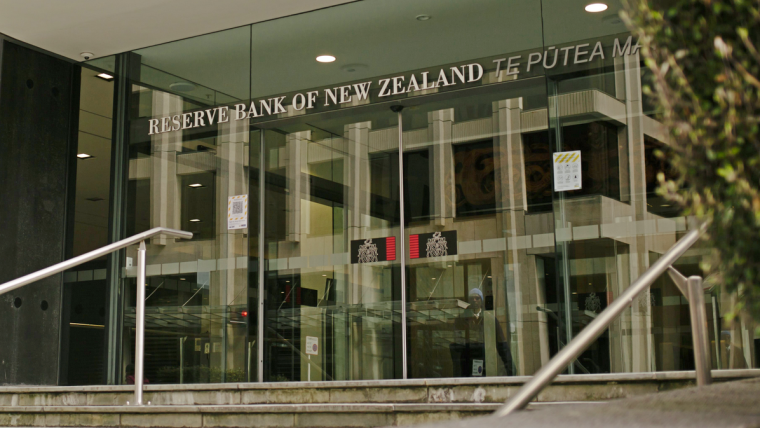
Hot on the heels of the Reserve Bank (RBNZ) raising the Official Cash Rate (OCR) in July for the first time in over three years, a follow-up hike on September 2 appears to be on the cards.
The September Monetary Policy Statement (MPS) is out on Wednesday, with the RBNZ to reveal if its Monetary Policy Committee (MPC) has decided to increase the OCR for a second consecutive review.
Economists at ANZ NZ, ASB, Westpac NZ, BNZ and Kiwibank, the country’s largest banks, all expect the RBNZ to pull a second 25 basis point hike from its OCR hat. This will take the OCR from 2.50% to 2.75%.
It’s unusual to have this level of consensus on the OCR trajectory from NZ's bank economists, as there are often different views and hot takes when it comes to OCR forecasts.
Kiwibank chief economist Jarrod Kerr described the RBNZ potentially taking the cash rate up to 2.75% next week as the “second in a likely 3-step move to 3%.”
“They want to remove stimulatory settings to ensure inflation settles back down near 2%,” he said.
The RBNZ is tasked with maintaining inflation between 1% and 3%, specifically targeting 2%.
“We believe the RBNZ won’t muck around and [will] deliver their third move in October, and pause thereafter. We may disagree with the need to hike, but we agree that this is what the RBNZ have signalled,” Kerr said.
BNZ’s head of research Stephen Toplis said the RBNZ’s OCR modelled peak in its May MPS was 3.28% for June 2029. BNZ thinks the RBNZ will bump this up to 3.3% for September 2029 in next week's MPS.
“What we think the bank will publish and what we think will eventually be the case are slightly different. It is our view the cash rate will rise 25 basis points at each meeting until it reaches 4.0% in May 2027,” Toplis said.
In July, when the RBNZ raised the OCR for the first time in over three years, the central bank signalled in its Monetary Policy Review (MPR) that “further reduction in monetary stimulus” would likely be required before the OCR starts to descend again.
“Future OCR decisions will depend on the Committee’s judgement about how price-setting behaviour and excess productive capacity affect medium-term inflation pressures,” the RBNZ said.
Westpac NZ’s chief economist Kelly Eckhold said the bank sees the RBNZ being “equivocal” about an OCR increase in October, but it’s less sure about another cash rate hike in December.
“[The RBNZ] seems likely to adopt a data-dependent approach to determining whether to continue raising rates in October, given they will be close to the 3% neutral rate level the RBNZ often emphasises, and there is a lot of data due for release over September and October,” he said.
The neutral level for the OCR is the point where the RBNZ believes it's neither stimulatory nor restrictive for the economy.
“The strategy to return the OCR to around 3% by year-end seems clear and uncontroversial. It’s unclear that further increases will be required at every remaining meeting in 2026. The economic recovery remains fragile and significant risks abound. Care should be taken to not take the recovery for granted – especially while the improvement in the labour market remains embryonic,” Eckhold said.
‘Get on with the job’
Alongside the OCR decision next Wednesday, the upcoming September MPS will provide the RBNZ’s latest projections around economic activity.
Since the July OCR review, the two standout pieces of economic data it will have followed closely have been the June quarter’s unemployment and inflation figures.
Annual inflation, as measured by Statistics NZ’s consumers price index (CPI), increased to 4.1% in the June quarter, the highest annual inflation rate NZ has seen since it hit 4.7% in December 2023. The latest annual CPI inflation figure was above the RBNZ’s projection of 3.9% for the June quarter but in line with forecasts from bank economists.
The RBNZ projected in its May MPS that inflation would return to the RBNZ’s 2% target midpoint in mid-2027. The RBNZ is tasked with keeping CPI inflation between 1% and 3% on average over the medium term, with an explicit focus on the 2% midpoint.
Meanwhile, New Zealand’s jobless rate rose to 5.6% in the June quarter, the highest it has been for more than a decade, with 166,500 people officially unemployed.
The headline unemployment rate was above the RBNZ’s forecast of 5.4% in the June quarter, although on the other side of the coin, employment and wage growth figures were also ahead of the RBNZ’s projections.
ANZ chief economist Sharon Zollner said on balance, the dataflow since July had been read as “mildly dovish.”
“We expect the RBNZ to get on with the job at this meeting and the next one, but in a world of such extreme uncertainty, flexibility is very valuable. An OCR track that leaves optionality regarding the October meeting seems sensible,” she said.
“Flexibility is valuable, but it is possible that the RBNZ Committee would strategically prefer to make an October hike a virtual lock to reduce noise and simplify communications just before the [November 7] general election. If they choose that route, the published track will be steeper in the near term but subsequently a bit flatter.”
ASB is forecasting 25 basis points increases to the OCR in the September, October and December monetary policy reviews. According to ASB senior economist Mark Smith, if inflation pressures in NZ remain “stubborn” there is the risk that “more concerted” monetary tightening and a period of restrictive monetary policy settings will be required to deliver the RBNZ’s 2% inflation target on a sustained basis.
“Ultimately, the (highly uncertain) medium-term inflation outlook will determine the monetary policy path. This is, of course, conditional on a host of global and local developments which are fast-changing. We expect the OCR to end 2026 at 3.25% as remaining monetary stimulus is withdrawn,” he said.
We welcome your comments below. If you are not already registered, please register to comment
Remember we welcome robust, respectful and insightful debate. We don't welcome abusive or defamatory comments and will de-register those repeatedly making such comments. Our current comment policy is here.