
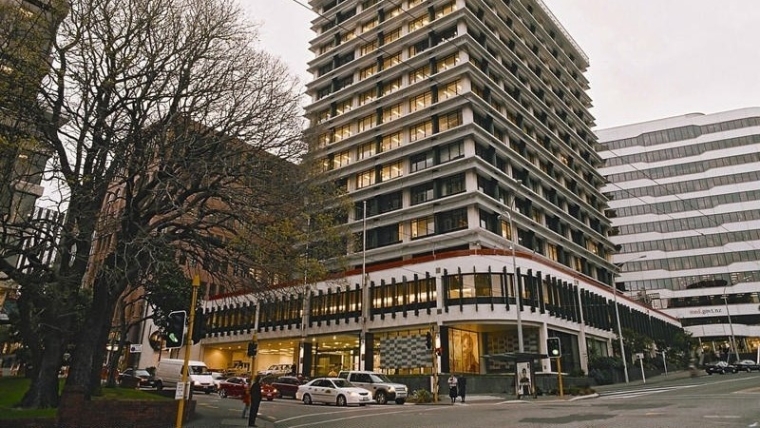
Bank economists are split on whether the Reserve Bank (RBNZ) will raise the Official Cash Rate (OCR) on Wednesday or hit the pause button for the fourth review in a row.
The July Monetary Policy Review (MPR) is out on Wednesday, July 8, with the RBNZ to reveal if its Monetary Policy Committee (MPC) has decided to increase, hold or cut the OCR.
The OCR is the base interest rate set by the RBNZ, and the rate banks earn on any money they hold with the central bank. This means when the RBNZ increases the OCR, banks may pass that hike onto their own customers in the form of higher interest rates. The OCR is also the key tool the Reserve Bank uses to try and meet its inflation target.
The OCR has remained unchanged at 2.25% since November last year when the RBNZ cut the cash rate from 2.5%. It narrowly escaped an increase at the last review in May following a split vote between MPC members.
While external committee members voted to hike the cash rate by 25 basis points, the internal members voted to hold it at 2.25%. Governor Anna Breman had the deciding vote, which is why the OCR was left unchanged.
The RBNZ is focused on bringing New Zealand’s inflation back into its target range of 1% to 3%, with a midpoint of 2%. In the March 2026 quarter, annual inflation, based on Statistics NZ's consumers price index (CPI) reached 3.1%. June quarter CPI will be released on July 21, with the RBNZ forecasting 4.2%.
Getting the hiking cycle on the road
ANZ NZ's economists expect the RBNZ to raise the OCR by 25 basis points on July 8 to 2.5%.
“We expect a relatively short statement that sounds open-minded about what comes next – at this stage there’s little to be gained from sounding more certain than warranted about what the next few months will bring,” ANZ chief economist Sharon Zollner said.
She added that it would be sensible for the RBNZ to “get a hike under the belt”.
“The sharp decline in oil prices reduces the peak for headline inflation in coming months and thereby reduces the risk of persistent inflation emerging from that source. A stronger economy could make firms more confident about passing cost increases through, but that’s likely to be an offset rather than the dominant impact on the medium-term inflation outlook,” she said.
According to Zollner, the MPC’s decision will boil down to what sort of market reaction the RBNZ wants to see.
Going down a more dovish route and holding the OCR at 2.25% could send the wrong signal. But Zollner said if the RBNZ chooses to hold the OCR but leans towards a more hawkish narrative, promising to “hike very soon, but not today”, for the second time in six weeks, this may or may not be seen as credible either.
“It’s hard to envisage the RBNZ wanting to send a signal that doesn’t imply at least two hikes this year, as monetary conditions would ease dramatically,” she said.
ANZ is in favour of a neutral-to-dovish hike, as Zollner pointed out that if the RBNZ goes with a hawkish hike, any disappointing data that comes out post OCR “will make the committee look wrong, at least temporarily.”
“It is inevitable that we are going to continue to see very mixed data in the weeks ahead, given the rollercoaster of the last few months,” she said.
Another split vote?
Zollner added that it was “entirely possible” the MPC votes will be split again, and a Breman casting vote could be required for the second meeting in a row.
“[...] we think it would be easier for the Committee to keep control of the narrative and therefore overall monetary conditions if it gets this hiking cycle on the road,” she said.
BNZ is also forecasting a 25 basis point hike, with BNZ’s head of research Stephen Toplis observing that picking the appropriate settings for monetary policy isn't getting any easier.
“Sure, the war may be over, but the world is hardly stable and domestic fuel prices are still well above where they were at the start of this year,” he said.
“Additionally, it shouldn’t be forgotten that prior to the war, inflation concerns were already building and there was a strong argument for higher interest rates even without an oil price shock.”
Toplis said no matter how it plays out, BNZ is strongly of the view that the cash rate needs to go back to neutral territory “relatively quickly” to ensure stimulatory monetary policy does not add to inflation. A neutral OCR is when it's at a level that's viewed as neither stimulatory or restrictive on economic activity.
“When the cash rate hits neutral then the RBNZ can ponder the nature of the inflationary pressure and determine what needs to be done next,” Toplis said.
“More generally, we think the RBNZ would lose some credibility were it not to raise rates in July. After all, half the committee wanted a rate increase at the last meeting and both they and the other half confirmed they were comfortable with at least three rate increases before the end of this year. In our opinion inflationary pressures could not have dissipated sufficiently to deter the July increase that has been so well signalled.”
The RBNZ emphasised in the May MPS that the Middle East conflict had materially altered NZ’s inflation outlook due to how it had “severely disrupted” the supply of oil, gas and other petroleum products transiting through the Strait of Hormuz.
“So, if there is no longer a Middle East conflict, does the RBNZ throw the car into reverse and go back to its no rate increase until late 2026 stance?” Toplis said.
“Supporting such a view is the fact that it looks like the labour market will be weaker than the RBNZ had assumed and, clearly, inflation, at least in the near term, will be lower than the Bank had anticipated.”
Putting on the handbrake
While ANZ and BNZ think the RBNZ will hike next week, ASB and Westpac NZ are anticipating it will continue to hold the OCR at 2.25%.
ASB had previously forecast the RBNZ would start raising the cash rate in July, but revised that stance last week because of recent US-Iran developments and an expectation the MPC vote will be split again.
However, Westpac is expecting a “far less contentious” OCR meeting in July compared to May and isn't anticipating the MPC to make any changes to the cash rate.
“Much has changed over the past six weeks. Therefore, while three MPC members had voted for a rate hike in May, we think the ‘on hold’ decision may well be reached by consensus,” Westpac’s chief economist Kelly Eckhold said.
“Should a vote be needed, then we expect only a small minority of external members to support an OCR increase in July. We don’t think any of the doves from the May meeting will want to join the hawkish group.”
Investment bank UBS still anticipates the MPC will increase the OCR by 25 basis points, but has also noted that the vote could shift towards a unanimous one.
'Give the economy breathing room'
Kiwibank economists Jarrod Kerr and Alexandra Turcu said the “rosier oil picture” from oil prices returning to pre-war levels had reinforced Kiwibank’s call to hold the OCR at 2.25% and “give the economy breathing room.”
“The RBNZ walks a thin tightrope. Inflation is likely to hit 4.2% this quarter. Tradable inflation, from oil-derived products, is forecast to spike to 5.6%. Domestic, non-tradable, inflation will see a modest lift to 3.3%, as some price pass-through works its way through. We expect most of the spike to reverse, with prices coming back down post-war,” they said.
“The RBNZ has pivoted from having ‘ice in the belly’, to fire in the belly. We prefer ice. We believe this supply shock should be looked-through. There is sufficient disinflationary force from stifled demand and weak wage growth. Demand destruction deflates pricing intentions. And we forecast inflation will ease back to 1.9% in 2027. We expect the economy to begin a cyclical rebound in 2027, essentially delaying the growth we initially forecast in 2026.”
Kiwibank had previously forecast that the RBNZ would start hiking the OCR in February 2027, but the bank brought that forward to July, following the May MPS.
After the July meeting, there are three more OCR reviews left in 2026, occurring in September, October and December.
We welcome your comments below. If you are not already registered, please register to comment
Remember we welcome robust, respectful and insightful debate. We don't welcome abusive or defamatory comments and will de-register those repeatedly making such comments. Our current comment policy is here.