

The tide may well have turned against housing being a one-way bet for a generation of Kiwis, Reserve Bank (RBNZ) chief economist Paul Conway says.
In a speech titled Housing (Still) Matters – The Big Picture to the National Property Conference on Thursday, Conway said that "for several decades, we have traded houses among ourselves at ever-increasing prices in the belief that we were creating prosperity".
However, housing market dynamics in future are unlikely to be the same as in the past. "Given the importance of housing in our economy and national psyche, this will be a huge change."
Now, Conway said, we "need to keep building a new approach to housing and economic prosperity in Aotearoa-New Zealand".
He said that with strong demand and constrained supply, rapid house price growth over the past 20 years or more has meant that residential property, as an investment asset, has delivered strong financial returns for New Zealand house owners.
"With prices having been seemingly always on the up, it is no surprise that New Zealanders hold a relatively large share of their wealth in housing.
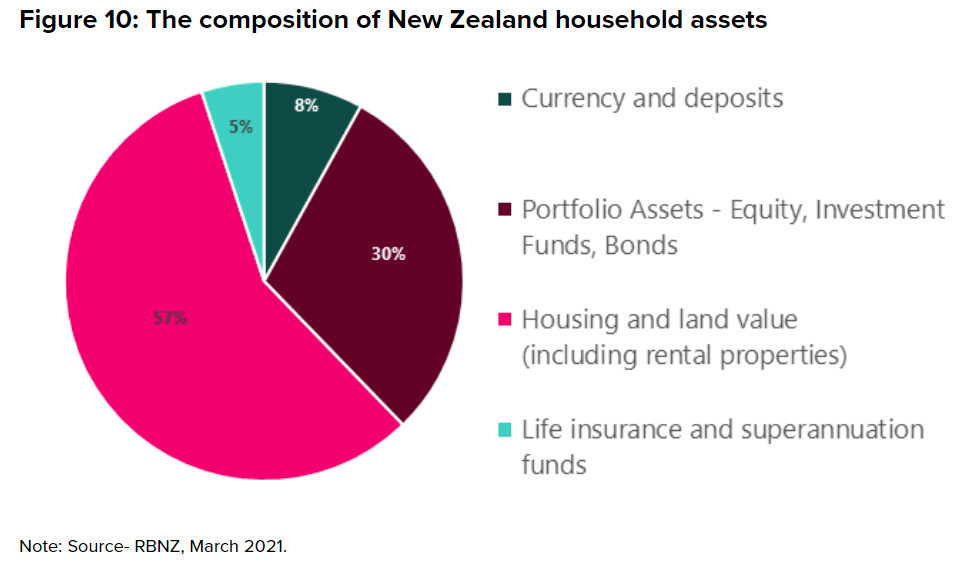
"The proportion of housing wealth in total wealth appears to be relatively high in New Zealand compared to other developed economies."
Given large house price increases, research based on portfolio investment theory shows that investing in residential property has been the logical choice for many Kiwis. In New Zealand, given policy settings, it has been rational for investors to flock into the housing market, Conway said.
Because housing can be leveraged, the flip side of strong investment in residential property is that mortgage lending makes up a larger proportion of commercial bank balance sheets compared to other OECD economies, he said.
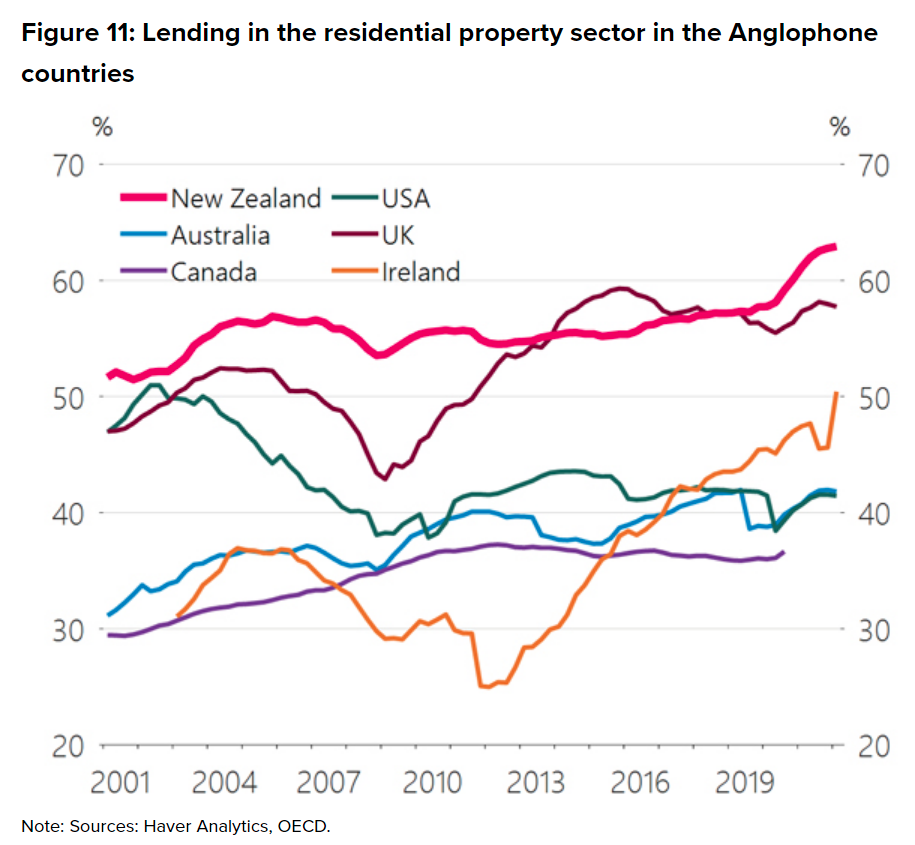
"While investing in housing has been rational, the implications of channelling a very large share of our savings and debt obligations into housing goes beyond optimal portfolio theory. The housing market has become the default savings vehicle for many New Zealanders and the key source of collateral or security for borrowing by households and small and medium businesses.
"It may also be that investing in housing in the hope of perpetually higher house prices may ultimately lead to a potential misallocations of resources that generates relatively little economic value."
He said that over a longer time frame, there are reasons to think that some of the core market fundamentals that determine sustainable house prices may be changing.
"On the demand side, as the pandemic slowly recedes and international travel restrictions unwind, many New Zealanders are heading overseas seeking new experiences. On the other hand, immigration is unlikely to return quickly to pre-pandemic levels, contributing to slower population growth overall."
Conway said over the years, the demand side of the New Zealand housing market was boosted by strong population growth, steadily declining neutral interest rates and a favourable tax system.
"The supply side, however, has been held back by strict land use regulations, and a construction sector prone to boom-bust cycles, while carrying very high building costs. Excess demand led to New Zealand’s experience with some of the highest house prices relative to income in the world."
He also said our tax system may have also contributed to higher house prices over recent decades.
If the tax system had been more ‘neutral’ in its treatment of housing, house price increases "would have been milder over the two decades to 2021 as interest rates fell".
"Figure 6 is taken from the Tax Working Group (2018) and shows that our tax system has historically favoured housing as an investment asset."
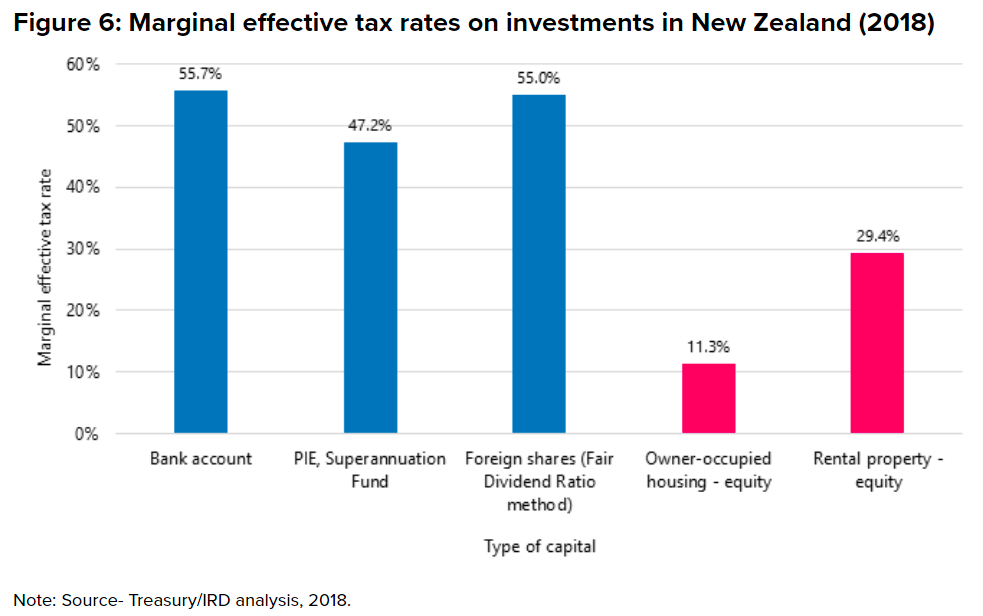
Capital gains on housing are often not taxed, whereas other forms of income are. Imputed rent (the rent owner-occupiers effectively pay themselves) is not taxed whereas other forms of investment income are. And GST is charged as a lump sum when a house is built, rather than on the flow of housing services as they are consumed, be that via rent or owner occupation.
"These tax distortions that favour housing become more potent when interest rates are low, amplifying the effects on house prices. So, as interest rates fell between 2002 and 2021, it is likely that the upward impact of tax settings on house prices increased.
"Of course, a fully non-distortionary neutral tax system is merely an economist’s fantasy; indeed, there are practical considerations that influence the design and implementation of tax systems. Nonetheless, understanding the impacts of tax distortions – and their interactions with other relevant factors such as interest rates – on the housing market is important for understanding house price dynamics."
In looking further at the nature of the housing market here, Conway said "a sense of ever-increasing house prices" – along with a lack of other quality local investment alternatives – may have also distorted the investment options of New Zealanders.
"The share of housing on household balance sheets is very high and commercial banks hold a high share of mortgages on their balance sheets."
Rapidly increasing land prices may have also led to a transfer of wealth to people who owned land as prices were rising from landless younger people and future generations, who have to spend more to buy land. This means that they save less, reducing the amount of alternative capital they own and possibly lowering lifetime consumption and incomes.
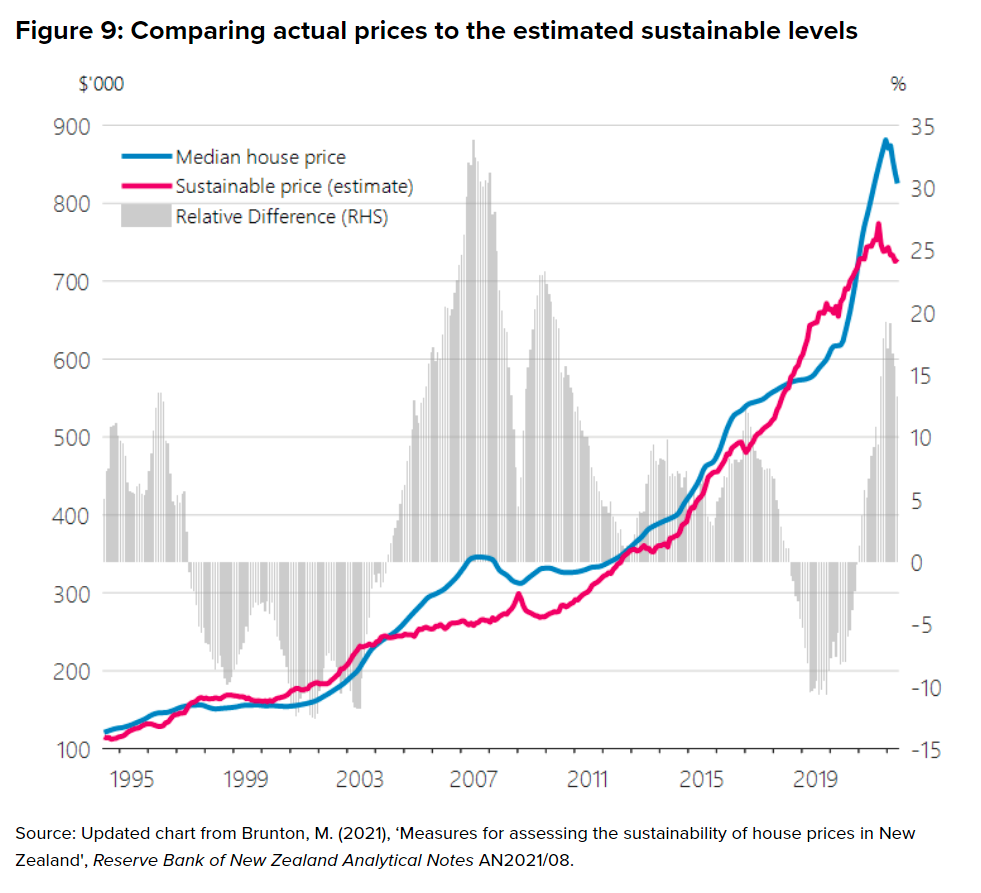
"Are these dynamics likely to continue in future? Since August 2021, the Reserve Bank has been tightening monetary policy, lifting the Official Cash Rate, to rein in inflation. This will likely see actual house prices move back towards sustainable levels that are more in line with market fundamentals. Indeed, in the May Monetary Policy Statement, we forecast a 15 percent decline in house prices from their peak, which would bring them roughly back to sustainable levels."
On tax, Conway said the removal of interest deductibility and the introduction of a capital gains tax on sales of residential property owned for less than 10 years – the ‘bright lines test’ – will have closed some of the gap between the effective tax rate on housing and other asset classes.
"At the same time, urban planning rules are being freed up to unlock more housing supply. The Resource Management Act is being replaced and the National Policy Statement on Urban Development directs councils to remove overly-restrictive planning rules and to enable higher housing density, which is a critical part of the solution.
"In the construction sector, the Commerce Commission is carrying out a market study into whether competition for residential building supplies in New Zealand is working well and, if not, what can be done to improve it.
"These changes are consistent with more houses being built and currently high building consents translating into more actual houses. They also imply that housing market dynamics in future are unlikely to be the same as in the past. Given the importance of housing in our economy and national psyche, this will be a huge change."
Conway said since the beginning of the Covid-19 pandemic in 2020, actual house prices have been above their sustainable level.
"Exceptionally low interest rates coupled with a “fear of missing out” would have contributed to this cyclical surge in house prices. In turn, stronger house prices supported consumer spending over this period through a wealth effect. This additional support to aggregate demand and spending in our economy played a key role in helping us avoid the worst effects of the pandemic on employment and income.
"Importantly, ‘sustainability’ and ‘affordability’ are very different concepts. While sustainability is determined by fundamental drivers in the housing market, affordability is about where the cost of purchasing a house sits relative to the income of the home-buyer. Unfortunately, for many New Zealanders trying to buy a home, the current level of sustainable house prices – determined by market fundamentals – is still by no means affordable."


We welcome your comments below. If you are not already registered, please register to comment
Remember we welcome robust, respectful and insightful debate. We don't welcome abusive or defamatory comments and will de-register those repeatedly making such comments. Our current comment policy is here.