
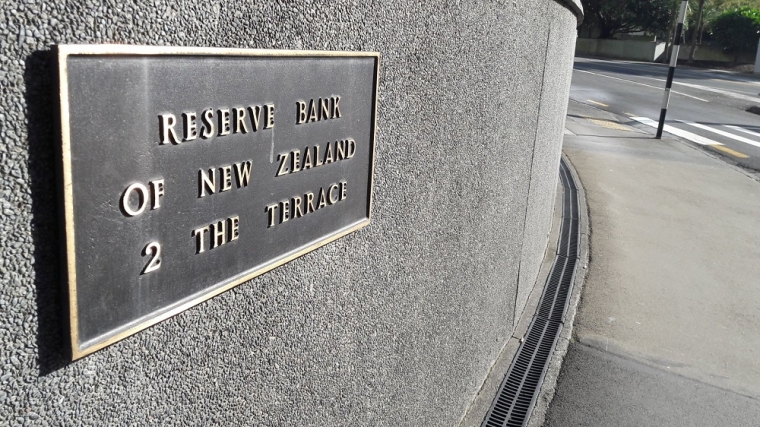
The Reserve Bank (RBNZ) is launching a quantitative easing (QE) programme in an attempt to reduce interest rates and inject money into the economy.
This means it will buy Government bonds owned by investors, up to the value of $30 billion, over the next year. $30 billion is equivalent to 10% of Gross Domestic Product (GDP).
The RBNZ said the "negative economic implications of the coronavirus outbreak have continued to intensify" and its Monetary Policy Committee (MPC) agreed "further monetary stimulus is needed to meet its inflation and employment objectives".
By buying Government bonds, the RBNZ increases demand for these bonds, which in turn reduces their yield interest rates.
Because a number of the interest rates in the economy are calculated off the yield interest rates for Government bonds, a move to reduce these rates will enable retail banks to lower their mortgage and business lending rates.
Investors (including retail banks) also receive a cash injection when they sell Government bonds to the RBNZ.
The MPC saw the need to launch this bond buying programme because financial conditions tightened “unnecessarily” over the past week.
“Heightened risk aversion has caused a rise in interest rates on long-term New Zealand government bonds and the cost of bank funding,” the MPC said.
Its Official Cash Rate (OCR) cut from 1% to 0.25% last Monday wasn't as effective as it should've been in passing through lower interest rates to borrowers.
From bad to worse
The MPC said depreciation in the exchange rate has “helped ease conditions at the margin but not sufficiently”.
It said the Government’s $12.1 billion rescue package (including wage subsidies, tax changes, benefit increases, etc) has delivered “significant spending stimulus” in addition to its OCR cut.
However measures put in place to restrict the spread of the virus - travel restrictions, mass gathering bans, etc - will add to inflation and employment falling below the RBNZ's targets in the near term.
“Globally, the number of people infected with the virus has increased rapidly and measures to contain the outbreak have become more restrictive. Global trade and travel, and business and consumer spending have been curtailed significantly," the MPC said.
“The severity of the impacts on the New Zealand economy has increased. Weaker global activity is affecting the economy through a range of channels, not just reduced trade."
The RBNZ is tasked with keeping inflation between 1% and 3% on average over the medium term, with a focus on keeping future average inflation near the 2% target midpoint. There is no numerical target for employment, with the RBNZ using a range of different indicators to assess the maximum sustainable level.
According to Statistics New Zealand, the December year Consumers Price Index was 1.9%, and December quarter unemployment was 4.0%, but is expected to rise sharply as the economic downturn caused by COVID-19 bares its teeth.
A 'necessary move'
Westpac NZ economists Dominick Stephens and Michael Gordon described the RBNZ action as "a necessary move."
"The response to the COVID-19 outbreak has escalated further in recent days, pointing to an even more severe impact on economic activity. On top of this, dysfunction in the bond market has actually seen a rise in longer-term interest rates since the RBNZ’s 75 basis points Official Cash Rate cut last Monday, hindering its pass through to retail interest rates," the Westpac economists said.
"A $30 billion programme represents about half of the government bonds that are currently available in the market, excluding inflation-linked bonds. But issuance will be ramping up significantly to fund the $12 billion support package that the Government announced last week, and it’s likely that government spending will have to be expanded further. We think that the RBNZ will end up holding about a third of bonds on issue after 12 months.
"At around 10% of annual GDP, the program is similar in size to the quantitative easing programs that other countries announced during the Global Financial Crisis, which were effective in bringing longer-term interest rates down.
"This does not change our forecast of a 3.1% decline in GDP. Rather, it was a necessary step to prevent an even worse outcome."
'An excellent chance of success'
The RBNZ plans to start buying bonds on Wednesday via an auction process, with auctions held every Monday, Wednesday and Friday. ANZ economists point out it's a "front-loaded" move by the central bank.
"At this stage the RBNZ has said that it intends to kick off at a pace of $750 million per week, IE $250 million per thrice-weekly auction. That’s significant as it’s front-loaded, as has been seen offshore," they said.
"Indeed, $750 million per week represents an annualised pace of buying of around $39 billion, which is twice the pace of issuance flagged for fiscal Q2, currently flagged as $5 billion, which is $20 billion annualised.
"The entire package also exceeds the $20 billion to $25 billion in bond issuance that we expect could be coming in fiscal 2021 and 2022 given the degree of fiscal support required.
"The QE package is also large in relation to GDP, around $300 billion, and the overall number of NZGBs [New Zealand Government Bonds] on issue, around $80 billion, and that alone gives the programme an excellent chance of success.
"The low starting point of Crown debt, around 20% of GDP in net terms, and the RBNZ’s small balance sheet by international standards gives enormous flexibility.
"Hypothetically, if the RBNZ did buy every NZGB on issue, it would still have a smaller balance sheet than some of the major trading banks. That’s not going to happen, but it demonstrates how much capacity the RBNZ has.
"Of course, all of this has now dawned on the market. Since the announcement, the 10-year bond yield has fallen from a closing level of 1.47% on Friday to below 1% this morning, and we expect yields to continue falling."
Robertson onboard
Finance Minister Grant Robertson has signed a memorandum of understanding and a letter of indemnity with the RBNZ to enable it to undertake the bond buying programme.
This decision remains an independent one for the RBNZ. But, because the RBNZ is part of the Crown’s balance sheet, it is necessary for an indemnity to be signed by the Minister of Finance.
In addition, a Memorandum of Understanding has been created to establish a framework for this decision, and any future decisions on alternative monetary policy.
The move doesn’t affect core Crown net debt, or the Government’s operating balance other than reducing finance costs for the Government’s borrowing programme
Large Scale Asset Purchases have been widely used by central banks around the world in recent years, including in the United Kingdom, Eurozone, the United States, Sweden and Japan. The Reserve Bank of Australia launched a programme of Government bond purchases on the secondary market last week.
Here is a statement from the RBNZ:
The Monetary Policy Committee (MPC) has decided to implement a Large Scale Asset Purchase programme (LSAP) of New Zealand government bonds.
The negative economic implications of the coronavirus outbreak have continued to intensify. The Committee agreed that further monetary stimulus is needed to meet its inflation and employment objectives.
Globally, the number of people infected with the virus has increased rapidly and measures to contain the outbreak have become more restrictive. Global trade and travel, and business and consumer spending have been curtailed significantly.
The severity of the impacts on the New Zealand economy has increased. Weaker global activity is affecting the economy through a range of channels, not just reduced trade. Domestic measures to contain the outbreak of the virus are also reducing economic activity. Employment and inflation are expected to fall relative to their targets in the near term.
In addition, financial conditions have tightened unnecessarily over the past week, reducing the impact of the low OCR on achieving the MPC’s mandate. Heightened risk aversion has caused a rise in interest rates on long-term New Zealand government bonds and the cost of bank funding.
The Committee has decided to implement a LSAP programme of New Zealand government bonds. The programme will purchase up to $30 billion of New Zealand government bonds, across a range of maturities, in the secondary market over the next 12 months. The programme aims to provide further support to the economy, build confidence, and keep interest rates on government bonds low.
The Committee will monitor the effectiveness of the programme and make adjustments and additions if needed. The low OCR, lower long-term interest rates, and the fiscal stimulus recently announced together provide considerable support to the economy through this challenging period.
Here is a record of the MPC's meeting:
20-22 March 2020
On Friday 20 March the Chair of the MPC spoke with the external members of the MPC by phone to update them on the Bank’s financial stability activities and the interaction with monetary policy. These activities were public. The external MPC members were made aware of what the other members of the Committee were involved in with regard to the Bank’s ongoing support to financial market functioning and stability.
The Chair and the external members also discussed the fact that any further monetary stimulus provided by the Bank would likely be through the purchase of government bonds in a Large Scale Asset Programme (LSAP). All MPC members were also made aware that monetary policy recommendations were being sent to them for a decision soon, and that there would likely be an ongoing series of Bank monetary and financial stability actions as the economic impacts of COVID-19 unfolded.
MPC members received papers on Friday evening containing staff advice about the ongoing deterioration in the economic situation relating to COVID-19.
The initial view of staff was that an MPC decision on their recommendations would be preferable by Sunday 22 March 2020. On Saturday 21 March, following advice from the Reserve Bank’s financial markets team as to their operational and legal readiness to implement a LSAP, the MPC Chair called for an MPC decision to be made by email. An in-person meeting was seen as unnecessarily risky given current official guidance about social distancing.
There was agreement amongst members to proceed in this manner and by Sunday morning there was a consensus MPC agreement to:
- Provide further monetary policy stimulus through a Large Scale Asset Purchase (LSAP) programme of New Zealand government bonds in the secondary market.
- The initial scale of the LSAP programme is up to $30 billion of government bonds, across a range of maturities, to be purchased over the next 12 months.
- Communicate the decision on the morning of 23 March.
This decision was made in response to staffs’ briefing material to the committee indicating the increasing severity of the economic situation and deterioration in financial market conditions.
It was noted that the Government’s fiscal package announced on March 17 has delivered significant spending stimulus in addition to the monetary stimulus announced on March 16. However, the health and safety measures announced by governments over prior days - related to the reduction in travel and large gatherings globally - would add to inflation and employment falling below target in the near term.
Returning inflation and employment to target over the medium term will require support from monetary policy. How much stimulus will depend on how the COVID-19 pandemic progresses and the actions to abate the virus.
The committee considered a range of scenarios, and it was apparent that in light of the evolving situation more stimulus was needed.
Committee members’ attention was drawn to the tightening in financial conditions over the past week. Interest rates on long-term New Zealand government bonds had risen significantly, affecting the cost of wholesale funding for any banks accessing the market at this time. Such increases mean that the reduction in the OCR announced on March 16 was not effectively passing through into interest rates faced by borrowers. The depreciation in the exchange rate had helped ease conditions at the margin but not sufficiently.
The staff briefing material also included updates on global economic developments and other countries’ economic policy responses to the pandemic.
Committee members were advised that the recommendation of a $30 billion LSAP program reflected a current assessment of the maximum effective stimulus achievable while maintaining a well-functioning government bond market. Staff noted the importance for liquidity to remain in the bond market and for multiple market makers.
Staff recommended that purchases up to $30 billion should be spread over at least 12 months and across a range of maturities, in order to leave enough liquidity for the New Zealand government bond market to function effectively. And that the Bank’s communications should emphasise that the LSAP programme would provide confidence and support for the government bond market, and monetary stimulus through keeping longer-term interest rates low.
Members noted that the exact amount of stimulus needed is difficult to quantify, and that the range of economic scenarios they had seen were consistent with a need to deliver significant stimulus.
Briefing material also included information about the implications of an LSAP program to the Reserve Bank’s balance sheet, and about the governance arrangements in place between the Reserve Bank and the Minister of Finance. It was noted that MPC agreement would be sought if further stimulus was needed to be provided, either by increasing the size of the LSAP programme, or through the use of other instruments.
The Committee reached a consensus to:
- Approve a programme of Large Scale Asset Purchases to a total volume of $30 billion of NZ Government bonds over 12 months
- Delegate to staff the implementation decisions of the LSAP programme
- Communicate the program in terms of the total volume to be purchased
Participants:
- Reserve Bank staff: Adrian Orr, Geoff Bascand, Christian Hawkesby, Yuong Ha
- External: Bob Buckle, Peter Harris, Caroline Saunders
- Observer: Caralee McLiesh
- Secretary: Gael Price
More information:
- Alternative Monetary Policy Tools
- MOF/RBNZ Memorandum of Understanding regarding the use of alternative monetary policy tools (PDF 883KB)
- Letter from the Reserve Bank to the Minister of Finance (PDF 76KB)
- Letter of Indemnity from Minister of Finance (PDF 706KB)
Here is a statement from Robertson:
The Government is backing the Reserve Bank’s latest action to support the economy by reducing longer-term interest rates, meaning lower costs for businesses and mortgage holders, and a lower currency to help our exporters.
The Minister of Finance has signed a memorandum of understanding and a letter of indemnity with the Reserve Bank to enable it to undertake a programme of large scale purchases of New Zealand Government bonds on the secondary market up to a value of $30 billion over the next 12 months, to reduce interest rates and inject money into the economy.
“This is part of our strategy to mobilise all arms of New Zealand’s economic infrastructure in our fight against the COVID-19 virus,” Finance Minister Grant Robertson says.
“We are all uniting together – the Government, the Reserve Bank, private businesses and the retail banks – to cushion the impact on New Zealand from this global pandemic.”
Large Scale Asset Purchases* (LSAPs) have been widely used by central banks around the world in recent years, including in the United Kingdom, Eurozone, the United States, Sweden and Japan. The Reserve Bank of Australia launched a programme of Government bond purchases on the secondary market last week. The technique is also known as Quantitative Easing.
This decision remains an independent one for the Reserve Bank. But, because the Reserve Bank is part of the Crown’s balance sheet, it is necessary for an indemnity to be signed by the Minister of Finance.
In addition, a Memorandum of Understanding has been created to establish a framework for this decision, and any future decisions on alternative monetary policy.
The move does not affect core Crown net debt, or the Government’s operating balance other than reducing finance costs for the Government’s borrowing programme. Further details can be found on the Reserve Bank’s website, here.
Note
These purchases work by first reducing the long-term interest rates the Government borrows at, as the Reserve Bank buys Government bonds owned by investors, including the retail banks. This increased demand for Government bonds reduces their ‘yield’ interest rates.
The investors – including banks – also receive a cash injection as they receive the proceeds from selling their Government bonds to the Reserve Bank.
A lot of interest rates in the economy are calculated off the yield interest rates for Government bonds, meaning any move to reduce these rates will also flow through to those charged by banks for business lending and mortgages.
This is in addition to the Reserve Bank’s independent decision cut to the Official Cash Rate (OCR) last week, which was focussed on bringing shorter-term interest rates down.
We welcome your comments below. If you are not already registered, please register to comment
Remember we welcome robust, respectful and insightful debate. We don't welcome abusive or defamatory comments and will de-register those repeatedly making such comments. Our current comment policy is here.