

So, the LVRs are back with us. Now we will find out whether they will 'work' against the newly white-hot housing market.
First up, I must just say that in my first, quickly-put-together, opine on the return of the limits on high loan to value ratio (LVR) lending last week I now realise I somewhat gracelessly skipped past the fact that it was a good thing on the part of the Reserve Bank to put the limits back, u-turn or not.
It's a move I certainly wanted to see, so, well, good to see it.
However, and there's always a however, isn't there, I'm not sure whether the balance of the LVRs rules is going to be quite right in the face of the super hot market that will greet their reintroduction.
It may seem odd to say that, given that the rules will be the same as they were at the time the LVRs were removed by the RBNZ from May 1. I will explain my reasoning as we go on.
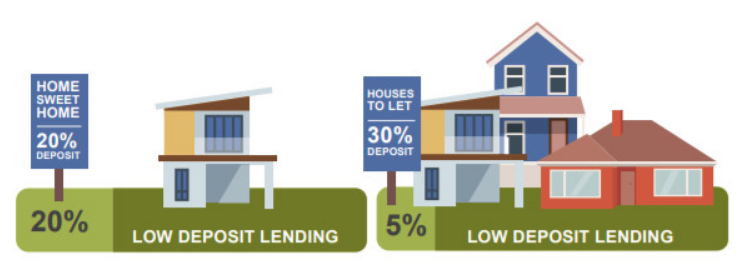
But first, to refresh memories, these are the rules as explained on the RBNZ's website:
Owner-occupier loans – 20 /20
This is borrowing secured with a mortgage against residential properties that the borrower lives in or uses as a holiday house. High-LVR loans are defined as those loans that are more than 80% of the property’s value (20% deposit). High-LVR loans can make up no more than 20% of a bank’s total new lending in this category.
Investor loans – 30 / 5
LVR lending restrictions are tighter for loans secured by investment property, in response to the growing housing market risks in that area. High-LVR loans in this category are those loans that are more than 70% of the property’s value (30% deposit). High-LVR loans can make up no more than 5% of a bank’s total new lending in this category.
It's worth remembering that those are the rules as they were at the time the LVRs were removed in May. There's been a few iterations along the way since these things were originally introduced.
At the very beginning of the LVR regime in 2013 the rule was applied across the board; banks were restricted to just 10% (known as the 'speed limit') of new lending on loans that were more than 80% of the property's value.
House prices did moderate considerably in the 2013-14 period. But I don't think it should be forgotten that in addition to the impact of the LVRs, there was also the not trivial matter that between March and July 2014 the RBNZ hiked the Official Cash Rate from 2.5% to 3.5%. As we see in 2020 with such incredibly low interest rates, it's interest rate levels that really make all the difference in the housing market. Low rates are catnip. Rate hikes are a cold shower.
So, anyway, by May 2015, with house prices in Auckland very much on the rampage again the RBNZ made a substantial tweak to the LVRs. It introduced a 30% deposit rule specifically for investors in Auckland. In Auckland the 'speed limit' was retained at 10% for owner-occupiers. However outside of Auckland the 'speed limit' was actually loosened, whether you were an investor or not, to 15%.
I might say, I thought these moves were great at the time - but they turned out to be the opposite of great. Oh yes. In reality the voracious Auckland investors started marauding the countryside outside of the Auckland region for new investments. The upshot was the market in Auckland kept bubbling away anyway, but now the rest of the country started coming to the boil as well.
So, then we had what looked at the time like a desperate move. In mid-2016 the RBNZ took out the blunderbuss and aimed it at all investors throughout the country. A 40% deposit rule. That's it. No arguments.
As I say, this one I thought was desperate. This one worked.
And it allowed the RBNZ to gradually ease the restrictions from 2018 onwards to the point where we finished up with the settings that were in place early this year.
My point of contention then is; will a 30% deposit rule on investors rein in a heated market?
It's hot out there
The reality is there were plenty of signs the housing market was really starting to heat again early this year just before everything went Covid crazy - although it is true that at that point the investors were not strongly re-emerging from their slumber.
However, since the February/March period and the lockdown both fixed and floating rates on new mortgages are anything from 0.75 percentage points to over a percentage point lower. And they were already low.
As cannot be stressed enough, such super low interest rates apply a push-pull dynamic to housing investment. Investors get rubbish returns on deposits at the bank so they are 'pushed' into housing investment where the yields will be (they hope) better. And, of course, super low rates for borrowed money make it that much easier to buy a house. So, this 'pulls' them into the housing market. The result is the investors are on the rampage again.
Which is all my way of saying that while a 30% deposit requirement on investors may have seemed okay at the time the LVR limits were removed, it might well not be enough to dampen the ardour once the LVRs return.
I hope the RBNZ will keep its options open in terms of raising that deposit requirement quite quickly if there are not reasonably quick signs of the housing market cooling somewhat.
Bring on the DTIs
I think it is also well overdue that the LVRs had some more 'friends' in the RBNZ 'macro-prudential toolkit' - well at least one more friend anyway. It is high time the RBNZ had the option of some kind of debt-to-income control measure.
We know that in this country our debt to income levels on house buying are getting pretty elevated.
In fairness, I thought the latest (September) quarterly DTI data produced by the RBNZ suggested that New Zealand's most stratospheric DTI ratios - in Auckland - were at least plateauing if not falling slightly. Is this borrowers reaching their own limits? Or is it the banks applying some handbrakes? Either way, I thought there was some encouragement in the latest figures, given that they were figures compiled amid a very fast rising market.
Still though, some further measure of control for housing lending for the RBNZ could only be good. So, here's hoping this Government is amenable to the idea of at least having DTI controls available for the RBNZ.
This leads me to a final thought that should be stressed, but probably isn't stressed enough.
Not my job
It is not the RBNZ's job to control house prices. Or to ensure that young first home buyers can 'get on the ladder'.
The RBNZ is there to preserve financial stability. To very much simplify the position: The RBNZ wants to avoid a situation where too many people take too many financial risks with their house purchases and get themselves into trouble. And the trouble forces them to sell (or forfeit) their property. Which means a lot of property goes on the market at once. Which means prices go down sharply. Which means the banks start to look at making big losses on their loans. Which leads the banks to start sharply reining back on credit. Which leads to disorder...
That's kind of roughly what the RBNZ is trying to avoid. You being able to afford a house is not down to the central bank.
Ultimately the New Zealand love affair with housing and the whole question of whether those who want to buy houses are ever able to do so is down to the Government.
Hopefully the reintroduction of LVRs will get some sense of order back into the housing market next year.
But any long term fix to the ongoing housing problem in this country is going to have to come from this Government and future governments.
We welcome your comments below. If you are not already registered, please register to comment
Remember we welcome robust, respectful and insightful debate. We don't welcome abusive or defamatory comments and will de-register those repeatedly making such comments. Our current comment policy is here.