
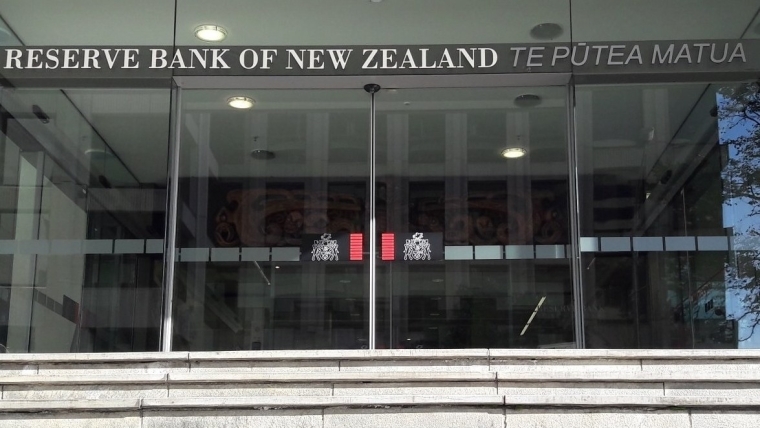
The Reserve Bank has left the Official Cash Rate unchanged at 1%, but says there is still scope for further stimulus if necessary.
The RBNZ said that new information it had received since the last Monetary Policy Statement by the bank in August "did not warrant a significant change to the monetary policy outlook".
It was always seen as most likely the OCR would be left unchanged after the RBNZ stunned the markets with a 50 basis points cut made at the last review on August 7.
However, the statement from the RBNZ was rather more upbeat than the markets were expecting and the odds on a November rate cut have now reduced.
The New Zealand dollar, which had been trading higher on Wednesday, rose further on the news, gaining to about US63.4c from a little over US63.1c before the announcement.
There had been evidence of some heavy 'short selling' of the New Zealand currency ahead of the OCR decision, which suggests some big speculators were taking a punt on there being a further OCR cut.
That being the case, some strengthening of the Kiwi dollar in the short term is quite likely.
Economists still see more rate cuts
ASB chief economist Nick Tuffley said even though the OCR remained steady at this meeting, a lower OCR "remains very much on the cards".
"We continue to expect a 25bp cut in November, which today’s statement and meeting summary leave the door open for. But by itself the statement suggests that a November cut isn’t a dead certainty, even though we think it is the highly likely outcome."
Beyond November Tuffley still saw the risks as being for further easing next year, given the risks remain stacked towards the RBNZ deciding even more stimulus is need to meet its inflation and employment mandates.
Capital Economics Australia and New Zealand economist Ben Udy said he thought the RBNZ remained too optimistic on the outlook for growth in New Zealand.
"The [Monetary Policy Committee] minutes reiterated that the Bank expects a solid pick-up in growth in the second half of 2019. In contrast, we expect economic activity to weaken further. What’s more, business surveys suggest annual employment growth may soon become negative, which is why we think the unemployment rate will rise to 4.4% before long.
"With sluggish economic activity set to restrain inflation and employment growth, we think the Bank will cut rates to 0.75% by early next year."
ANZ chief economist Sharon Zollner said a “watch, worry (in private), and wait” stance for the RBNZ at this point "is very defensible".
"There has been a substantial easing in financial conditions in the past year, and as was noted in the Summary of Meeting, there are 'long and variable lags between monetary policy decisions and outcomes'. Interest rates have fallen substantially and the NZD is lower, and there is time to see what effect this has on confidence and economic activity," she said.
"But nonetheless, forward indicators such as the ANZ Truckometer indexes suggest that growth is going to continue to slide over the remainder of the year at least, weakening the medium-term inflation outlook. And with inflation expectations already low and falling, we suspect the RBNZ will again feel the need to shoot first and ask questions later – unleashing what little conventional firepower it has left by mid-next year.
"We continue to expect 25bp cuts in November, February, and May to take the OCR to 0.25% – around its useful limit."
This is the full statement issued by the RBNZ on Wednesday:
The Official Cash Rate (OCR) remains at 1%. The Monetary Policy Committee agreed that new information since the August Monetary Policy Statement did not warrant a significant change to the monetary policy outlook.
Employment is around its maximum sustainable level, and inflation remains within our target range but below the 2% mid-point.
Global trade and other political tensions remain elevated and continue to subdue the global growth outlook, dampening demand for New Zealand’s goods and services. Business confidence remains low in New Zealand, partly reflecting policy uncertainty and low profitability in some sectors, and is impacting investment decisions.
Global long-term interest rates remain near historically low levels, consistent with low expected inflation and growth rates into the future. Consequently, New Zealand interest rates can be expected to be low for longer.
The reduction in the OCR this year has reduced retail lending rates for households and businesses, and eased the New Zealand dollar exchange rate.
Low interest rates and increased government spending are expected to support a pick-up in domestic demand over the coming year. Household spending and construction activity are supported by low interest rates, while the incentive for businesses to invest will grow in response to demand pressures.
Keeping the OCR at low levels is needed to ensure inflation increases to the mid-point of the target range, and employment remains around its maximum sustainable level. There remains scope for more fiscal and monetary stimulus, if necessary, to support the economy and maintain our inflation and employment objectives.
Meitaki, thanks.
Summary record of meeting
The Monetary Policy Committee agreed the new information since the August Monetary Policy Statement did not warrant a significant change to the monetary policy outlook.
The Committee noted that employment remains close to its maximum sustainable level but consumer price inflation remains below the 2% target mid-point.
The Committee members discussed the initial impacts of reducing the OCR to 1% in August. They were pleased to see retail lending interest rates decline, along with a depreciation of the exchange rate.
The members anticipated a positive impulse to economic activity over the coming year from monetary and fiscal stimulus. The members noted that there remains scope for more fiscal and monetary stimulus if necessary, to support the economy and our inflation and employment objectives.
The Committee noted that, while GDP growth had slowed over the first half of 2019, impetus to domestic demand is expected to increase. Household spending and construction activity are supported by low interest rates, while business investment should lift in response to demand pressures.
The Committee expected increasing demand to keep employment near its maximum sustainable level. Rising capacity pressures and increasing import costs, higher wages, and pressure on margins are expected to lift inflation gradually to 2%.
The Committee discussed the long and variable lags between monetary policy decisions and outcomes.
The members noted several key uncertainties affecting the outlook for monetary policy, where there was a range of possible outcomes.
Global trade and other geopolitical tensions remain elevated and continue to subdue the global growth outlook, dampening demand for New Zealand’s goods and services.
Business confidence remains low in New Zealand, partly reflecting policy uncertainty and low profitability in some sectors, and is affecting investment decisions.
Fiscal policy is expected to lift domestic demand over the coming year. However, any increase in government spending could be delayed or it could have a smaller impact on domestic demand than assumed.
Some members noted that ongoing low inflation could cause inflation expectations to fall. Others noted that this risk was balanced by the potential for rising labour and import costs to pass through to inflation more substantially over the medium term.
The Committee discussed the secondary objectives from the remit and remained comfortable with the monetary policy stance.
The Committee agreed that developments since the August Statement had not significantly changed the outlook for monetary policy. They reached a consensus to keep the OCR at 1% and that, if necessary, there remains scope for more fiscal and monetary stimulus.

We welcome your comments below. If you are not already registered, please register to comment
Remember we welcome robust, respectful and insightful debate. We don't welcome abusive or defamatory comments and will de-register those repeatedly making such comments. Our current comment policy is here.