
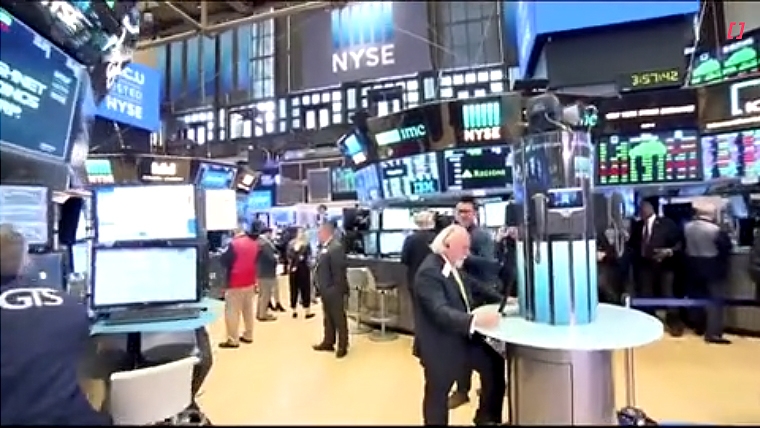
After a weak Asian session for risk-sensitive assets yesterday - with South Korea’s high-beta KOSPI triggering circuit breakers after falling 8% - the S&P 500 has recovered overnight and is close to flat in afternoon trading. Concerns about the durability of the AI investment cycle persist, however, prompting a rotation out of technology, the worst-performing sector. By contrast, the equal-weighted S&P 500 gained around 1%. Treasury yields have held at lower levels despite firm producer prices. The US dollar was broadly stable, while Brent crude rebounded to US$106 per barrel.
US producer prices rose in September at the fastest pace in more than four years, driven by higher energy costs. Underlying inflation was also firm, with core PPI increasing 0.7% - well above consensus - and the annual rate rising to 5.0%. Following the stronger-than-expected core CPI reading, the PPI data are likely to lift estimates for the Fed’s preferred core PCE measure. Pantheon Economics now estimates a 0.36% monthly increase. Headline retail sales also beat expectations, boosted by gasoline sales, although underlying measures were softer. The control-group measure, which feeds into GDP, rose just 0.1%.
US Treasuries rallied sharply during Asian trading yesterday as risk aversion intensified, with the 10-year yield falling towards 5.10%. It briefly reached 5.05% overnight before retracing to around 5.10%, still its lowest level since last month, with position unwinding by systematic investors likely amplifying the move. Front-end yields briefly spiked after the PPI data but quickly reversed, while long-end outperformance flattened the 2s10s curve to +33bp. Market pricing for an October FOMC hike has eased to around 7bp, from as much as 14bp previously. The rally extended to European and Japanese sovereign bond markets.
Australia’s labour market softened in September, with employment falling 39k and the unemployment rate rising to 4.7%, above both consensus expectations and the RBA’s August forecast of 4.5% for Q4. Participation retraced last month’s increase, while trend employment growth eased to a subdued 16k. The data reinforced expectations of a gradual cooling in labour demand, triggering a rally in Australian rates and a weaker AUD. Markets largely unwound the prospect of a November rate hike, having previously assigned around a 40% probability.
The US dollar was little changed against the major currencies overnight, although the AUD underperformed. NZD/USD is marginally softer relative to the local close and broadly stable on the main crosses. The exception is NZD/AUD, which extended towards 0.8120 in offshore trading - a sharp rebound from the 13-year low near 0.8000 reached in the previous session.
NZ swap rates declined in the local session yesterday following the Australian data and lower Treasury yields in Asia, with moves more pronounced further out the curve. Two-year swap rates closed 2bp lower at 3.98%, while 10-year rates fell 5bp to 4.64%. The government curve largely matched the move in swaps. The weekly bond tender, which involved a step-up in duration supply, was well received, with all three lines clearing through prevailing market levels. Separately, the Inter-American Development Bank launched a 7-year Sustainable Development Kauri.
After a quiet few days for domestic data, the September manufacturing PMI and inflation partials are due today. Although the PMI has eased from its mid-year spike, August’s reading of 53.1 remained above the long-term series average of around 52. We will look to the monthly inflation data for support for our 3.8% forecast for Q3 CPI, due next week. Fed Chair Warsh is scheduled to speak alongside IMF Managing Director Georgieva.
Daily exchange rates
Select chart tabs
Stuart Ritson is a senior Markets Strategist at BNZ Markets.
We welcome your comments below. If you are not already registered, please register to comment
Remember we welcome robust, respectful and insightful debate. We don't welcome abusive or defamatory comments and will de-register those repeatedly making such comments. Our current comment policy is here.