
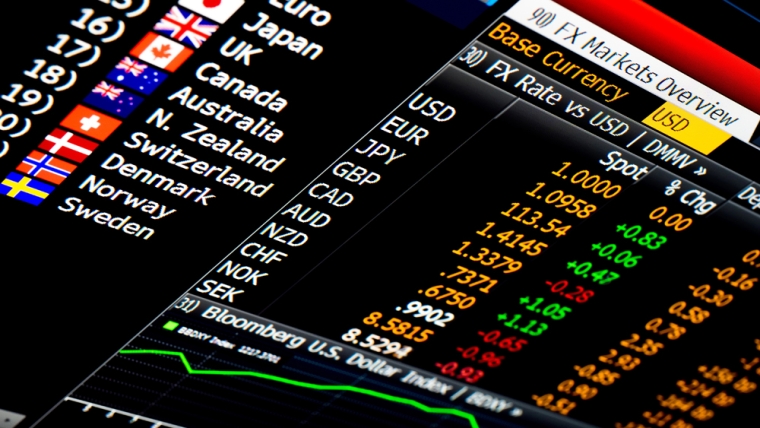
Volatility in US equities has continued, with weaker tech stocks driving the indices lower following yesterday’s surge. US Treasuries have attracted a safe-haven bid, with the 10-year rate falling below 4.9%. The USD has not enjoyed such a bid, falling after reaching an overbought level. The NZD has recovered to 0.5485, while the AUD has underperformed, weighed down by expectations of RBA rate cuts in 2027.
US equities are weaker as yesterday’s sugar rush, from the reappointment of Jensen Huang as CEO of Nvidia, has faded. The S&P500 is down ½% in early afternoon trading, paring an earlier fall of 1.3%. The move has been led by significant falls in IT stocks, which are reflected in a more than 1% fall in the Nasdaq index, although recovering from a much greater loss earlier in the session.
After yesterday’s 31% gain, Nvidia has fallen 7%, while Anthropic is down 8% to $80, recovering from an earlier fall below $76, below its $83 IPO price. Despite Huang’s return, some key issues continue to overhang the AI sector, including whether investment in the sector will provide an adequate return and the threat of regulation under a new administration from next year. Adding to the weak sentiment, Axios reported that Anthropic and OpenAI staff have unreleased models so powerful that many employees no longer believe they can be safely released.
Also weighing on market sentiment, the WSJ reported that the US is preparing to announce this week that it will raise tariffs on goods from China, the EU and more than a dozen other countries. This follows the tariff investigation into industrial subsidies. The final tariff rates are still unclear, but they could be similar to those set in 2025, before the Supreme Court ruled them illegal. The tariffs were said to be no higher than those already agreed in trade deals.
Weaker risk sentiment has produced a safe-haven bid for US Treasuries. The 10-year rate fell to an overnight low of 4.88% and is currently 4.9%, down 4bps for the day and down slightly from the NZ close.
There was little market reaction to news that the Conference Board measure of US consumer confidence for November was much stronger than expected, rising to 103.3 from 91.9. This is its highest level since January 2025, driven by gains in both the present situation and expectations components. The gain may reflect lower uncertainty following the mid-term elections and the recent decline in gasoline prices. Of note, the labour market indicator, which measures the difference between those saying jobs are “plentiful” and those saying jobs are “hard to get”, rose 7.6pts to 12.4, an eighteen-month high.
Despite softer risk appetite, the USD is weaker, following its move into overbought territory for the DXY index on the 14-day technical RSI. Safe-haven currencies sit at opposite ends of the leaderboard, with the Swiss franc the strongest of the majors overnight and the JPY the weakest.
After hovering around 0.5450 for much of yesterday, the NZD recovered to 0.5485 overnight. The AUD’s overnight shows a smaller gain to 0.6640, pushing NZD/AUD up to 0.8260. The overnight recovery in the cross rate looks a little odd but might reflect some readjustment of trading positions by offshore investors. In yesterday afternoon’s trading, Australian rates fell relative to NZ rates as traders increased their bets on the RBA easing monetary policy next year, with around two full cuts now priced.
With decent gains in the EUR and GBP overnight, NZD movements against those currencies have been minimal, but a weaker yen has seen NZD/JPY recover to 87.4.
NZGB and swap rates fell 2-4bps, helped by the tailwind from falling Australian yields. The 2-year swap rate closed down 2bps at 3.71% and the 10-year rate fell 4bps to 4.33%.
On the economic calendar, Australian monthly CPI data for October are released, with consensus expecting headline inflation to rise to 4.7% y/y and the trimmed mean to remain steady at 3.6%. In the US tonight, the core PCE deflator is expected to show a 0.3% m/m gain, taking the annual rate up to 3.2%.
Daily exchange rates
Select chart tabs
Jason Wong is the senior Markets Strategist at BNZ Markets.
We welcome your comments below. If you are not already registered, please register to comment
Remember we welcome robust, respectful and insightful debate. We don't welcome abusive or defamatory comments and will de-register those repeatedly making such comments. Our current comment policy is here.