
Without a certain virus, we might now all be talking about what we should do about New Zealand's rising rate of inflation.
Instead, the 2.5% annual rate of inflation announced by Statistics New Zealand on Monday for the period to the end of March comes across as an ironic, quirky and historic twist. Next quarter inflation will fall off the cliff.
Kiwibank economists have summed it up nicely:
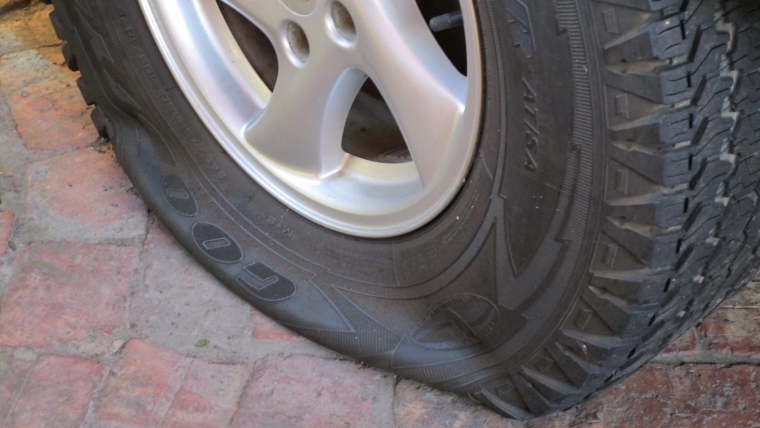
"The tyres of the Kiwi economy are nicely inflated now. But Covid-19 has caused a large puncture = deflation," they say.
"We expect that the current crisis will see annual inflation fall below 1% year-on-year by the end of the year. Inflation expectations have fallen fast, as it will be hard for firms to raise prices in an environment void of demand. The [Reserve Bank] (RBNZ) may need to do more to ensure inflation back sustainably to the 2% target mid-point."
Cigarettes and rentals
Stats NZ said the consumers price index (CPI) rose 0.8% in the March 2020 quarter influenced by rising prices for cigarettes, and rentals for housing.
For the record, the inflation figures for the March quarter were much higher than economists had expected, with most picks being 0.4%-0.5%.
The annual inflation rate was 2.5%, the highest since the September 2011 quarter when it was 4.6%. This was driven by domestic inflation, which remained above 3%.
But economists see the annual rate of inflation tumbling quickly to the bottom of the Reserve Bank's targeted 1% to 3% range following the drastic impact of the coronavirus outbreak and the subsequent lockdown measures employed in New Zealand.
ASB senior economist Mark Smith said on Monday that the "considerably higher" than expected starting point of New Zealand's inflation gave the Reserve Bank more "breathing space".
He said there were few signs of a Covid-19 impact in the March quarter data, with the inflation data consistent with a strengthening economic backdrop.
Without the virus, we could be looking at higher interest rates
"If it was not for Covid-19 [Official Cash Rate] hikes would likely be considered," he said.
"Covid-19 represents a massive deflationary shock for the economy and is likely to push headline and core inflation lower over the next one to two years. The OCR is unlikely to move up from its 0.25% operational low for a while yet. We expect macroeconomic policymakers to remain steadfast in their commitment to prevent outright deflation emerging," Smith said.
ANZ senior economist Miles Workman said the March quarter CPI outcome "feels like ancient history".
"We are now in the midst of the most significant and synchronised economic contraction in a generation. Labour market conditions are loosening, and underlying inflation pressures diminishing. And there’s plenty more to come. Even with extremely accommodative monetary and fiscal policy settings, the current economic crisis will prove difficult to recover from. Household incomes will be weak, and many will look to deleverage where they can. Businesses will remain cautious for some time, with investment and hiring expected to plunge," he said.
"We foresee annual headline inflation decelerating to the bottom of the RBNZ’s 1‑3% target band by the end of the year and remaining below this level throughout 2021, with only a gradual recovery thereafter. Risks to this outlook are skewed to the downside."
Rebutting the inflationary talk
The Kiwibank economists said there have been suggestions that the Covid-19 crisis, policy responses, and its aftermath will be "highly inflationary".
"The argument stems from the fact that the globe has experienced a massive supply shock (the lockdown of non-essential production) at the same time Governments and central banks have put through record support packages.
"We disagree. We believe the near-to-medium term risks are tilted towards deflation. And central banks and governments have their work cut out to reflate their economies," the Kiwibank economists said.
"For one, the shock to the economy is primarily on the demand side. Demand has been hammered by the lockdown. Confidence has crumbled as the reality of job losses and business closures become apparent.
"Sure, some pent-up demand will be released as we move down Covid-19 alert-levels. But over the next year or so the upheaval to the global economy will continue to depress demand. Inflation expectations have fallen rapidly as the coronavirus crisis has unfolded."
Data collected as usual
Stat's NZ's consumer prices senior manager Paul Pascoe said measures to slow Covid-19 by closing non-essential businesses and telling people to stay at home from midnight 25 March, "didn’t impact so much" on the normal collection of prices this quarter.
Only the last week of March required an alternative approach to collect weekly food and fuel prices, he said.
“The CPI is a quarterly measure and not all data is collected weekly. This means that some parts of the CPI may not fully capture Covid-19-related price movements later in the quarter,” Pascoe said.
The annual tobacco tax increase on 1 January 2020 lifted cigarette and tobacco prices 11 percent this quarter. The tax increase is the fourth of four consecutive excise duty increases announced in the 2016 Budget. The Government increased excise tax on tobacco by 11.5% (see Tobacco excise increase on 1 January 2020), but not all products showed the full impact of the tax change in their prices.
“The average price of a pack of 25 cigarettes was $41.89 in March, up from $37.51 in December,” Pascoe said.
$1.70 for a smoke
“One cigarette now costs about $1.70 compared with $1.15 at the start of 2016. Ten years ago cigarettes cost about 54 cents each.”
Rents rose 1.2% in the March 2020 quarter, and 3.7% for the year. Rent accounts for around 9% of household expenditure, making it the highest-weighted item at the subgroup level in the CPI basket.
In the year to March 2020, Auckland rents increased 2.1%, Wellington rents increased 5.7%, and Canterbury rents increased 2.0%. The North Island excluding Auckland and Wellington increased 5.8%, and the South Island excluding Canterbury increased 5.3%.
We welcome your comments below. If you are not already registered, please register to comment
Remember we welcome robust, respectful and insightful debate. We don't welcome abusive or defamatory comments and will de-register those repeatedly making such comments. Our current comment policy is here.