
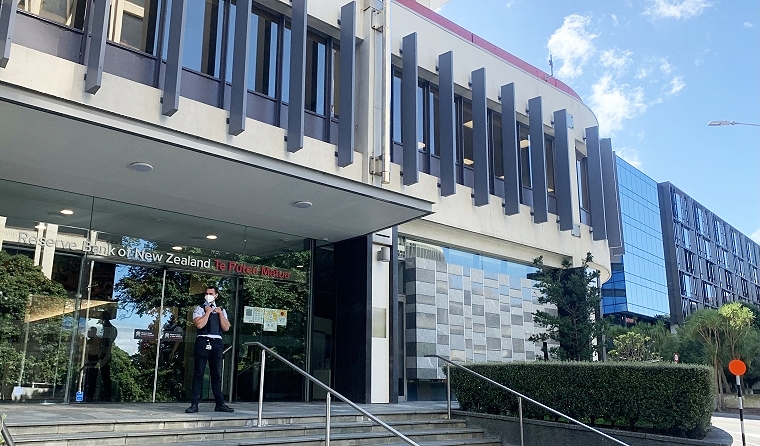
The Reserve Bank (RBNZ) has raised the Official Cash Rate (OCR) by a whopper 50 basis points in a bid to prevent high inflation becoming embedded.
While Wednesday’s move marks the largest OCR hike the RBNZ has made in 22 years, ANZ chief economist Sharon Zollner notes financial markets are pricing in 80% odds of another 50-point hike at the RBNZ’s next review on May 25.
This would raise the OCR from 1.5% to 2% - a “neutral” level, which is deemed neither stimulatory nor contractionary.
Bets are on the RBNZ lifting the OCR in 25-point increments after May.
A ‘dovish hike’
Economists from the country’s main banks maintain the RBNZ’s strategy is to knuckle in now to avoid having to lift the OCR to too high a level in the future.
While the RBNZ wasn’t explicit on Wednesday about what it plans to do in May, it underlined its commitment to combatting high inflation and tightening conditions “at pace”.
Nonetheless, it tempered market expectations around where the OCR might land in the future.
Markets had been pricing in a “terminal” rate north of 4%, however the RBNZ clarified it remains “comfortable” with the OCR outlook it provided in its February Monetary Policy Statement. This only sees the OCR getting to 3.4% by 2024.
Zollner explained, “The market is likely to tame its view of what is needed beyond May. That’s because, encouragingly, the RBNZ has characterised today’s outsized hike as the bringing forward of tightening, buying them optionality in future.”
Indeed, there was a subdued market reaction to Wednesday’s “dovish hike” (in the words of BNZ’s head of research Stephen Toplis), which was already priced in. In fact, the wholesale interest rate curve fell following the announcement.
The pivotal two-year swap rate was down 13bps to 3.5%, and the 10-year fell 10bps to 3.66%, according to Kiwibank economists. The reaction in the NZ dollar was also muted.
How much hiking can we handle?
While there is consensus among bank economists around the RBNZ going hard now to avoid having to lift the OCR too high in the future, there are still question marks over how high interest rates can go while we grapple with a war and pandemic.
Zollner said, “Even though the OCR is still very low, the pace of change in mortgage rates has been rapid, and with the housing market cooling more quickly than the RBNZ anticipated, oversteering the lowdown is a genuine risk.
“On the other hand, not authoritatively moving against broad-based inflation pressures that are miles out of line with the target - and yet to show any signs of turning - would risk giving a further leg up to inflation expectations, making the job of reining in inflation that much harder…
“The uncertainty around where the OCR will (or should) peak could hardly be greater. But promptly getting the OCR closer to neutral - lifting the foot pretty quickly off the accelerator - is a prudent step at this stage.”
Toplis, who unlike Zollner believed the RBNZ would only hike by 25 points on Wednesday, can’t see the OCR going above 3%.
“While we understand why the RBNZ has done what it has done, we are somewhat confused as to how it can justify its actions on a “least regrets basis” when uncertainty is so high,” he said.
“In its very short statement, the Bank referred to “the highly uncertain global economic environment”, “an elevated level of uncertainty created by the persistent impacts of Covid-19”, and “heightened global economic uncertainty”.
“As we said in our previews, uncertainty does not seem consistent with aggression in a least regrets framework, as espoused by the Bank in an important policy framing speech last year.
“We have long refuted the idea that Governor Orr should be boxed as a dove or a hawk. In our opinion he is an activist.”
Effectiveness of rate hikes limited
Toplis also raised a key point, “The concern that dominates is: no matter what central banks do, do they have the right toolkit to deal with a massive negative supply shock?
“Arguably they didn’t do so well through the deflationary period associated with positive supply shocks. Will they fare any better on the flip side?”
We welcome your comments below. If you are not already registered, please register to comment
Remember we welcome robust, respectful and insightful debate. We don't welcome abusive or defamatory comments and will de-register those repeatedly making such comments. Our current comment policy is here.