
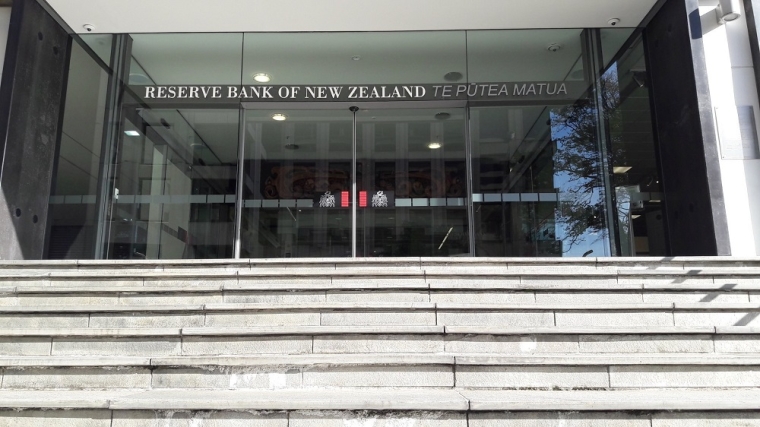
Think tank and lobbyist the NZ Initiative is concerned the Reserve Bank might "morph" into something resembling a sovereign wealth fund and could start aligning itself with the Government's fiscal policy.
It has expressed its concern in a new research note explaining why it believes the RBNZ would need boundaries if it begins to implement unconventional monetary policies.
The Reserve Bank is independent of the Government and operates monetary policy independently.
The RBNZ has acknowledged it may resort to the so-called unconventional policies as the current main instrument of monetary policy the Official Cash Rate rapidly gets closer to zero (it's now 1%).
The RBNZ said last week (when slashing the OCR) that plans were well advanced for unconventional policies though it would not outline its specific thoughts are intentions about any such implementation.
ANZ economists have done a lot of work examining how unconventional policies may look and work.
In the NZ Initiative research note, penned by executive director Oliver Hartwich, chief economist Eric Crampton and Robert MacCulloch from the University of Auckland's Business School, the authors are calling for the Government to rework the terms of the official remit for the RBNZ Monetary Policy Committee to ensure clear differentiation between monetary and fiscal policy.
"Under quantitative easing, the RBNZ could become an alternative to Inland Revenue and the Treasury as it would provide (indirect) funding to the government by purchasing government bonds," the research note says.
"If it went beyond that and started purchasing corporate assets, it could also morph into something resembling a sovereign wealth fund.
"If it chose to fund projects of a certain nature (say bonds with an infrastructure background or related to specific policy areas), it would again be more akin to Treasury."
The research note's authors say that in either of these scenarios, the RBNZ’s original focus on inflation and employment "could be distracted".
"The Bank might feel required to use its fiscal actions to align itself with the Government’s conventional fiscal policy and, almost as badly, market observers may expect that they would.
"The wording in the Remit for the Monetary Policy Committee at least suggests that the Bank should be generally supportive of the Government’s economic policy agenda – and not just of those elements that would typically fall within the realm of monetary policy."
They say that under normal economic circumstances, the commitment to the Government’s other objectives would be "mere prose without consequence".
"Once the nature of the RBNZ changes, however, this prose could be read as part of the Monetary Policy Committee’s mandate. It could mean that the RBNZ should take the Government’s policy aims into account when conducting quantitative easing."
This might mean, for example, the RBNZ might preferentially purchase infrastructure bonds or bonds to finance renewable energy projects.
"If that were to happen, the Bank’s independence could be called into question."
The research note's authors say the "only one certain way to prevent such a perception and such a dilemma" would require the RBNZ Governor and the Minister of Finance to rephrase and clarify the Remit of the Monetary Policy Committee to reflect unconventional monetary policy.
"The easiest option would be to remove the Government’s Economic Objective from the Remit. It sits awkwardly in this document anyway since conventional monetary policy would usually have little to do with achieving the Government’s non-monetary objectives. This is not to say that the Government’s Economic Objective was in any way mistaken but that responsibility for achieving most of the goals enumerated lies with other government agencies."
Regardless of whether the Minister and the Bank are willing to reword the Remit to provide that clarity, the research note says "it would be very helpful" if RBNZ Governor Adrian Orr made very clear that, in the pursuit of any fiscal or quasi-fiscal policies, the RBNZ shall only be guided by its two monetary policy objectives: maintaining a stable general level of prices over the medium term and supporting maximum sustainable employment.
"...There need to be clear rules to govern the RBNZ’s conduct in unconventional circumstances and there must not be the hint that any of the RBNZ’s asset purchases are guided by anything other than its monetary objectives."
We welcome your comments below. If you are not already registered, please register to comment
Remember we welcome robust, respectful and insightful debate. We don't welcome abusive or defamatory comments and will de-register those repeatedly making such comments. Our current comment policy is here.