
By Gareth Vaughan
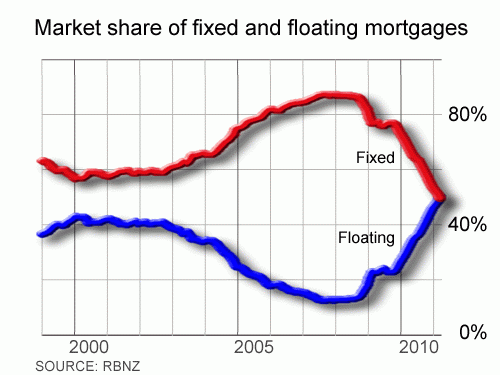
The percentage of New Zealand's NZ$168.2 billion worth of mortgages on floating, or variable, interest rates has popped up above half for the first time since the Reserve Bank started collecting the data on floating versus fixed-term rates in June 1998.
Figures out from the central bank on Friday afternoon show NZ$84.6 billion, or 50.29%, worth of mortgages on floating interest rates and NZ$83 billion, or 49.34%, on fixed-term interest rates. A small sum is recorded as unallocated.
It's both the highest percentage and highest dollar amount floating since Reserve Bank records began 13 years ago and comes at a time when floating rates have been lower than fixed rates for a sustained period of time. The move to just over half mortgages by value being on floating rates compares to a peak of 87% on fixed-term rates as recently as January 2008.
The Reserve Bank last Thursday left the Official Cash Rate (OCR) unchanged at 2.5%, and most economists don't expect the OCR to be increased until early 2012, meaning floating rates are unlikely to rise any time soon.
Of all the major banks only two, Kiwibank and HSBC, advertise a fixed rate that's lower than their floating rate. Kiwibank is currently running a six-month 5.4% "special" rate that is due to expire next Monday. HSBC offers a six-month rate of 5.49%, or 4.99% with insurance, for its Premier customers, and a 5.99% floating rate. HSBC's Premier customers must have mortgages worth NZ$500,000 or savings of NZ$100,000 to qualify for a loan. See all bank mortgage rates here.
Of the NZ$83 billion worth of fixed-term mortgages, more than half - NZ$47.6 billion - is on a term with less than a year to run.
Bottom line boost
Banks do better out of floating mortgages because the margin between the variable rate and short end of the yield curve, such as three month bank bills, is higher than the margin between the swap rate and fixed rate mortgages. Interim results from ANZ, BNZ and Westpac this week should show continued benefit to their bottom lines from mortgage customers switching to floating rates from fixed-term rates.
The Reserve Bank's ability to control consumer spending and inflation through OCR hikes is also boosted by having more people on floating mortgages. Because the OCR's biggest influence is on short term interest rates, a hike or cut in the OCR quickly flows through to floating interest rates. A borrower on a floating mortgage is, for example, generally hit by a 25 basis point hike when the Reserve Bank lifts the OCR by the same amount.
This means the borrower is forced to spend more on interest payments, giving them less discretionary money to spend elsewhere.
Meanwhile, the customer shift to floating from fixed rate mortgages is helping push up margins at the banks. ANZ New Zealand's margins rose 7 basis points in the December quarter and ASB's net interest margin rose 0.4% to 2% at December 31 from 1.6% at December 31, 2009.
Big switch
ANZ said 49% of its NZ$53.9 billion mortgage portfolio was on variable mortgages as of December 31, nearly double the 26% at the end of 2009 and 37% at September 30 last year. And ASB said about half its NZ$37.5 billion worth of home loans were floating at December 31. That's an increase from just 25% within 24 months.
ANZ Group CEO Mike Smith said in February he expected both ANZ and National Bank mortgage customers to continue switching to floating mortgages with ongoing margin benefits for the group.
Kiwibank's December quarter General Disclosure Statement, released in February, showed the value of its floating mortgages almost doubled in the year to December 31, 2010 to NZ$5.5 billion from NZ$2.8 billion a year earlier. Over the same period the value of the bank's fixed-term mortgages dropped by NZ$487.4 million to NZ$4.6 billion. That's a rise to almost 54% of mortgages by value on floating rates from 35% a year earlier.
This article was first published in our email for paid subscribers this morning. See here for more details and to subscribe.
We welcome your comments below. If you are not already registered, please register to comment
Remember we welcome robust, respectful and insightful debate. We don't welcome abusive or defamatory comments and will de-register those repeatedly making such comments. Our current comment policy is here.