
Risk sentiment has soured overnight as investors focus on the widening conflict in the Middle East. Global equity markets have tumbled, and oil and gas prices have surged further. US Treasury yields are a little higher while European rates are much higher on inflation concerns. The USD is broadly stronger, and the NZD has fallen more than 1% to below 0.59.
After initial caution, investors are taking a more pessimistic view of the conflict in the Middle East, seeing less chance of a quick resolution. Iran continues to fire missiles and drones across the region, with the US embassy in Riyadh being hit by two drones, with limited damage. The embassy said there was a threat of imminent missile or drone attacks in Dhahran, where Saudi Aramco’s headquarters and biggest oil fields are located.
An advisor to Iran’s Islamic Revolutionary Guard Corps commander told state TV that forces “will set fire to any ship attempting to pass through” the Strait of Hormuz. Iraq started shutting down oil production at its biggest oil fields as storage tanks fill up and transporting oil through the Strait of Hormuz remains restricted. Bloomberg sources noted that the hit to production could therefore extend to 3mn barrels per day in coming days.
President Trump has continued his barrage of media interviews. Trump told Politico that Tehran’s military capacity is being steadily degraded, even as Iranian forces are expected to “keep lobbing missiles for a while.” “They’re running out and they’re running out of areas to shoot them, because they’re being decimated…they’re running out of launchers.” In response to some claims that the US is also running out of firepower, on social media Trump said “US munitions stockpiles have, at the medium and upper medium grade, never been higher or better…wars can be fought ‘forever’ and very successfully”.
Brent crude has risen to as high as USD85 per barrel, and currently sits 6% higher at US82.50. European gas prices surged 22% on top of yesterday’s 39% gain. Fertiliser prices most exposed to the conflict are surging, with urea rising to its highest level since 2022. In the overnight GDT dairy auction, the price index surged 5.7%, reflecting the wider lift in commodity prices. It was the fifth strong auction in a row, extending the sharp recovery seen following the tumble in prices during the second half of last year. All roads lead to higher inflation.
On that note, its was unfortunate that euro area CPI inflation for February came in two-tenths stronger than expected on both the headline and core measures, rising by 1.9% y/y and 2.4% respectively, with some impact of the hosting of the Winter Olympics in Italy adding to inflation pressure. The market repriced ECB rate expectations, seeing a greater chance of a possible hike later this year. The European rates curve flattened, with Germany’s 2-year rate up 6bps and 10-year rate up 4bps, but larger moves were seen across the rest of Europe, given backdrop of weaker risk appetite, pushing up rate spreads to Germany.
In the US, the Treasury market continues to trade with more concern about the inflation rather than growth outlook. The 10-year rate rose to a high of 4.115% before reversing course and currently sits at 4.06%, up a few basis points from the NZ close. The market now prices less than two full rate cuts by the Fed this year.
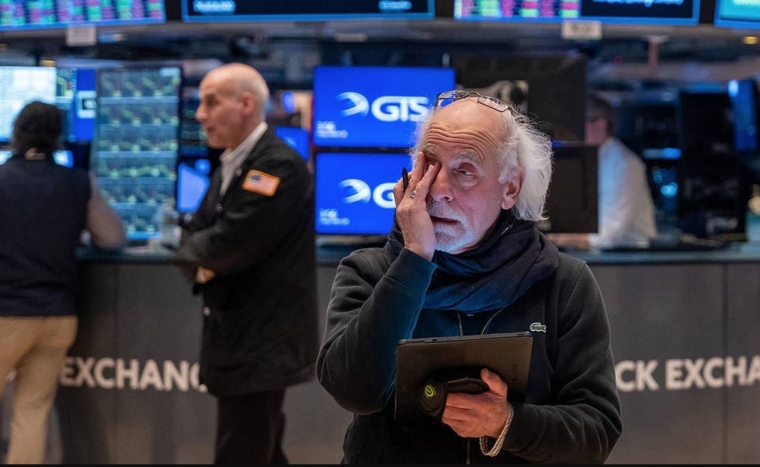
Global equity markets have tumbled. Japan’s Nikkei closed down 3.1% and Korea’s Kospi plunged 7.2%, albeit it is still the best performing equity market this year. The Euro Stoxx 600 index closed down 3.1%. The US S&P500 was down as much as 2½% in early morning trading before recovering and is currently down 1.3% in early afternoon trading.
The USD has extended its gains this week, as investors pare short-dollar positions and helped by its safe haven status and position as a net exporter of oil and gas. After a flat session during local trading hours, the NZD has fallen more than 1% overnight to 0.5880, after briefly trading below 0.5840.
The AUD tumbled below 0.71 overnight, trading briefly below 0.6950 before recovering to 0.7025. Yesterday, RBA Governor Bullock’s speech reiterated recent comments about the economy but when asked whether people are underestimating the prospect that the Bank could move at consecutive meetings, she said that March would be ‘a live meeting’ and that the Board would be actively looking at whether they need to move more quickly. This comment triggered higher Australian rates and a stronger AUD, sending NZD/AUD lower. NZD/AUD fell to a fresh multi-year low below 0.8350 but has since recovered to 0.8370.
Underperformance of the NZD sees it lower on the other key crosses. Against the backdrop of higher oil prices, NZD/CAD has fallen over 1% to 0.8040. Despite higher rates, the euro has struggled, given the surge in gas prices, with EUR at 1.16, but well off its low, while NZD/EUR is only slightly weaker at 0.5070.
In the domestic rates market, during times like these, the NZ market is well off the radar, making it a lower beta play compared to other markets. That was the case yesterday, with more a moderate lift in rates compared to other markets. NZGB yields rose only 3-5bps across the curve. The swaps curve saw a 3bps lift in the 2-year rate to 2.98% and a 4bps lift in the 10-year rate to 4.01%. Australia’s 10-year bond future rose as much as 12bps in yield terms overnight, before reversing course and the yield is currently up 4bps from the NZ close.
On the economic calendar today, NZ Q4 terms of trade and Australian GDP will be released this morning. The consensus sees a robust gain of 0.8% q/q for the latter, taking annual growth to 2.3%. China PMI data are released this afternoon, ahead of US ADP private payrolls and the ISM services survey tonight.
Daily exchange rates
Select chart tabs
Jason Wong is the senior Markets Strategist at BNZ Markets.
We welcome your comments below. If you are not already registered, please register to comment
Remember we welcome robust, respectful and insightful debate. We don't welcome abusive or defamatory comments and will de-register those repeatedly making such comments. Our current comment policy is here.