
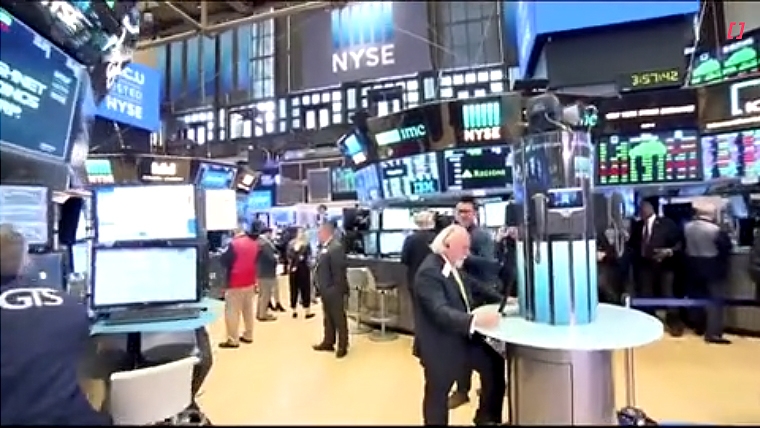
Risk sentiment is weaker, as investors lose hope of any speedy resolution to the Iran conflict. Global equity markets are weaker, global rates are higher, oil prices are higher and the NZD and AUD have underperformed, probing fresh lows since the conflict began.
Market attention remains focused on the Middle East, with investors questioning the chance of a diplomatic solution to end the war. Media reports convey a sense that President Trump wants a quick end to the war, sticking to his original plan of the conflict lasting 4-6 weeks. Iran still seems to be in no mood to negotiate, rebuffing reports that any negotiating is taking place. In response to a 15-point peace plan proposed by the US, Iran has responded with its own 5-point plan to end the conflict and the two sides are miles apart. Whether one calls that a negotiation is debateable, although in an official capacity, Pakistan is relaying comments by both sides to each other.
The chance of a deal ahead is remote, ahead of Trump’s deadline for the end of this week before he “obliterates” Iran energy infrastructure. Questioned about whether he would extend the deadline, Trump responded “I’ll announce it, we’ll see”.
The so-called “present” that Trump claimed was a gift given by Iran as a sign of good faith in talks, was Iran allowing 10 oil tankers to pass through the Strait of Hormuz earlier this week – eight Pakistani-flagged oil tankers followed by two others.
In a Truth Social post overnight, Trump claims Iran is “begging” to make a deal and “they better get serious soon, before it is too late, because once that happens, there is NO TURNING BACK, and it won’t be pretty!”
Iran’s Parliament is drafting a new law allowing a fee to be charged in exchange for security for ships to pass through the Strait of Hormuz. This law would face significant pushback from neighbouring Gulf nations and is widely considered a non-starter.
The US Maritime Administration has issued a new warning to ships about risks in the Bal El Mandeb Strait from the Houthis. The significance of this is that Saudi Arabia has been able to direct 4m barrels of oil per day via its East-West pipeline, facilitating increased shipping of oil via the Red Sea. If Houthis start firing at ships in this area, then that would cut off another vital source of oil supply to the world.
The OECD sharply increased its inflation forecast for major economies, now seeing an average of 4% this year. It left its global growth forecast unchanged at 2.9%, but said without the conflict it would have revised the figure 0.3ppts higher. US initial jobless claims increased 5k to 210k last week, but is settling at some of the lowest levels seen in the last year, consistent with a “low-firing” environment. Continuing claims have fallen to their lowest level in nearly two years, questioning the extent of labour market weakness evident in confidence surveys.
In central bank news, Norway’s Norges Bank held policy unchanged but its guidance pivoted from expected easing to expected tightening. An earlier plan of three rate cuts by the end of 2028 has been replaced by guidance that an increase “at one of the forthcoming monetary policy meetings” will likely be necessary. Norges Bank’s policy rate is already at the higher end of the peer group countries, at 4%. The move by the Norges Bank will be widely seen as indicative of policy guidance ahead for many other central banks as they stare into the face of much higher inflation pressure.
Souring sentiment about the war’s progress has seen a steady lift in oil prices through the Asian trading session, and continuing overnight. Brent crude has traded as high as USD109 per barrel, up 6% for the day. The S&P500 is down 1.3% in early afternoon trading, while the Euro Stoxx 600 index closed down 1.1%.
Global rates are higher across the board. US Treasury yields are up 8-9bps for the day, out to 10-years maturity, with the 10-year rate trading at 4.4.1%, up 6bps from the NZ close. European and UK rates are up 10-13bps across the curve.
Apart from a small lift in NOK, the USD is broadly stronger and the risk-sensitive NZD and AUD have underperformed. The AUD has traded below 0.69 for the first time since the conflict began. The NZD has fallen to close to 0.5760, also a fresh low since the conflict began and consistent with our prevailing view that the NZD will grind steadily lower for every week that the Strait of Hormuz remains closed.
Apart from NZD/AUD remaining steady around 0.8360, other key NZD crosses are all lower. NZD/EUR has had a peek below 0.50, NZD/GBP has fallen to 0.4325 and NZD/JPY has converged towards 92.
In the domestic rates market, in contrast to the recent volatility, trading conditions were subdued and there were minimal changes in rates across the NZGB and swaps curves. The overnight rates market selloff will see NZ rates higher from the open today. The Australian 10-year bond future is up 6bps in yield terms since the NZ close.
There are only second tier economic data releases to end the week. Consumer confidence data, including in NZ, will give an early read on the Iran conflict and these should all show an initial dip.
Daily exchange rates
Select chart tabs
Jason Wong is the senior Markets Strategist at BNZ Markets.
We welcome your comments below. If you are not already registered, please register to comment
Remember we welcome robust, respectful and insightful debate. We don't welcome abusive or defamatory comments and will de-register those repeatedly making such comments. Our current comment policy is here.