
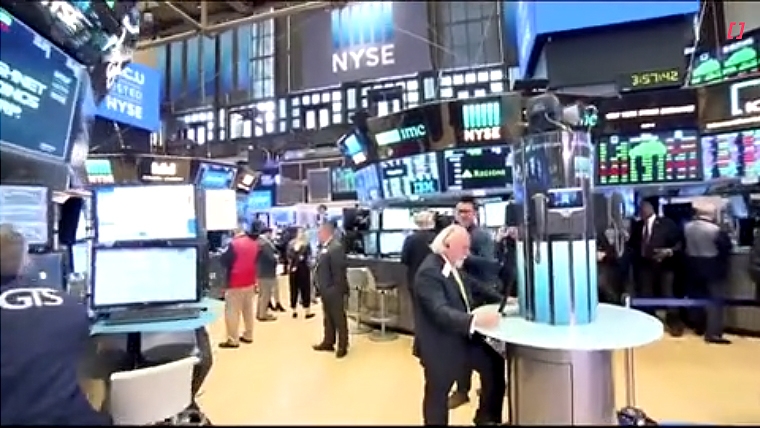
US equities continue their record-breaking run, supported by retail sales data showing signs of a resilient US consumer. US Treasuries have traded a tight range. There were no immediate market implications from the first day of the Trump-Xi summit. Oil prices are relatively steady. The US is broadly stronger overnight, with GBP underperforming on political developments that will ultimately see PM Starmer lose his leadership.
The first day of talks between Presidents Trump and Xi concluded with media headlines focused on their discussion of Taiwan. China’s foreign ministry quoted Xi saying, “Handled well, relations between the two countries can maintain overall stability…If handled poorly, the two countries will collide or even clash, putting the entire US-China relationship in an extremely dangerous situation”. On trade, Xi said the two sides “reached a generally balanced and positive outcome, which is good news for the people of both countries and for the world”.
A White House official relayed a discussion on Iran, saying China agreed that the Strait of Hormuz should remain a free waterway and agreed that Iran shouldn’t have a nuclear weapon. The readout from China was only that the two sides exchanged views on the Middle East.
Bloomberg reported the number of supertankers hauling unsanctioned oil through the Strait of Hormuz has shown signs of rising in recent days. There has also been an increase in crossings of all types of vessels. Iran said it is now allowing Chinese ships to pass through following discussions with the country’s foreign ministry. Ship crossings remain a fraction of pre-conflict levels. Oil prices have consolidated with Brent crude flat around USD106 per barrel.
US equities continue their record-breaking run. The S&P500 is currently up 0.7%, on track for an eighth consecutive weekly gain. In addition to the usual positive influence from the strong IT sector, macro forces are playing a supporting role, with US retail sales data painting a picture of a resilient US consumer.
Sales growth figures of 0.5% m/m in April across the key indicators – headline, ex autos and gas and the control group measure – were broadly in line with consensus but came with net positive revisions. This suggests a modest upward revision to private consumption for Q1 and a stronger base as Q2 began, without a notable impact from surging gasoline prices. Gains in sales were broadly based across storetypes and analysts note support from higher than usual tax refunds and the backdrop of the strong sharemarket. The Atlanta Fed’s GDP Nowcast estimate for Q2 pushed up to a strong 4% annualised rate.
US Treasuries have traded tight ranges overnight, with the 10-year rate tracking between 4.435%-4.47%. Although Kansas Fed President Schmid is a known hawk, his comments that inflation is the most pressing risk to the US economy, added to the number of Fed Presidents indicating similar views since the last FOMC meeting.
In the UK, a path has been cleared for Andy Burnham to challenge Keir Starmer for the PM role, with a Labor MP planning to step down from his Manchester seat to make way for a by-election. The hope is that this would see the popular Burham win the seat and enter the race to replace Starmer. Earlier in the day, Wes Streeting resigned as health secretary, paving the way for him to also challenge the PM job.
The market fears that any replacement for Starmer would result in an easing of fiscal policy, with higher deficits and debt levels. The UK 10-year rate fell 6bps to 5.00% but the market was closed before the events around Burnham and gilt futures fell after the close, signalling higher rates. GBP has been the weakest of the majors overnight, falling 0.9% to near 1.34, driving NZD/GBP back up through 0.44.
UK GDP grew 0.6% q/q in Q1, as expected, a strong figure to start the year. However, there are suspected issues around seasonal adjustment that inflate apparent growth at the start of the year, only for the figures to weaken through the rest of the year.
While GBP has been a notable underperformer, the USD has been broadly stronger overnight albeit with only modest gains against the other majors. The NZD has weakened below 0.5920, while the AUD has fallen to 0.7225. Apart from a stronger NZD/GBP, other NZD cross movements are not significant.
Yesterday, the domestic rates market was influenced by lower rates in Australia, seeing NZGB yields down 2-4bps across the curve. Lower rates heading into the weekly tender didn’t seem to hinder demand and bid-cover ratios were strong at around 4 for the three lines on offer. In the swaps market, the 2-year rate fell 3bps to 3.62% while the 10-year rate fell 1bp to 4.39%.
On the economic calendar, NZ’s manufacturing PMI and monthly CPI indicators for April are released this morning. They are expected to be influenced by the conflict in the Middle East, with signs of weaker activity and higher inflation. Only second tier global data are released tonight, including the first of the Fed’s regional manufacturing surveys for May and industrial production for April..
Daily exchange rates
Select chart tabs
Jason Wong is the senior Markets Strategist at BNZ Markets.
We welcome your comments below. If you are not already registered, please register to comment
Remember we welcome robust, respectful and insightful debate. We don't welcome abusive or defamatory comments and will de-register those repeatedly making such comments. Our current comment policy is here.