
Oil prices are lower following confirmation of increased supply through the Strait of Hormuz. Reports of a downed US military helicopter had only a modest impact. The tech-related sell-off in US equities has resumed. Lower oil prices supported US Treasuries, with yields drifting lower. FX movements have been modest, with the NZD at 0.5820 while NZD/AUD has pushed higher.
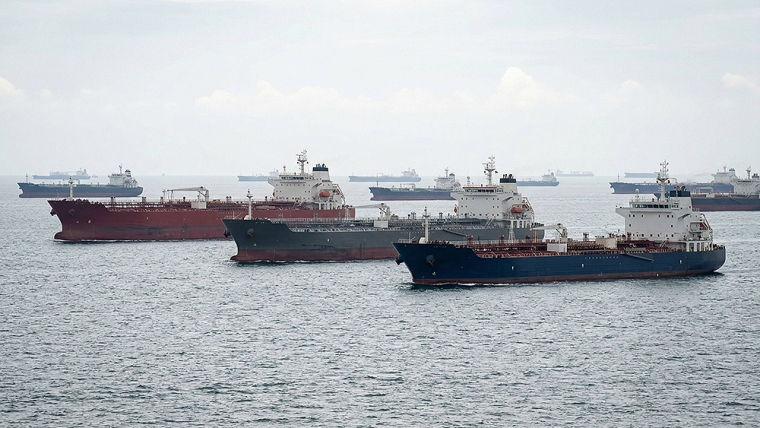
In Middle East developments, oil traders have reported that Kuwait is offering to sell at least 4m barrels of crude oil to refiners in Asia for the first time since the war began. This adds to the evidence we noted last week of increased oil and gas supply moving through the Strait of Hormuz, with transponders turned off and under the protection of the US Navy, via a route hugging the Omani coast. US Energy Secretary Wright said oil flowing through the Strait over the past week or two was “rising very meaningfully”, while adding that it would take many months for flows to fully recover.
Brent crude traded 5% lower, briefly dipping below USD90 overnight, before reports emerged that two US military personnel had been rescued after a drone attack on a helicopter. Trump posted on Truth Social: “I have just been informed by our Great Military that last night the Iranians shot down one of our highly sophisticated Apache Helicopters while patrolling over the Strait of Hormuz. There were two pilots involved, both are safe and uninjured. Nevertheless, the United States must, of necessity, respond to this attack.” Oil prices jumped to as high as USD93 before easing back to trade at USD91.50 as we go to print.
In the US equity market, selling pressure returned to semiconductor stocks, spilling over into the broader tech sector and wider market. This comes ahead of the SpaceX IPO at the end of the week and a further significant ramp-up in equity supply from tech companies taking advantage of elevated share prices and strong demand for exposure to the sector. The Philly SOX semiconductor index is down 3½%, the Nasdaq is down 1.3%, and the S&P 500 is down 0.6% in late afternoon trading, after paring much larger falls earlier in the session.
US Treasuries have traded in line with movements in oil prices, with yields down 3-4bps across the curve for the day. The 10-year rate is at 4.53%. Economic data did not move the dial, with the narrowing in the US trade deficit to USD56bn driven by a surge in oil exports, offset by an ongoing increase in imports of equipment supporting data centre investment. Existing home sales extended the run of stronger-than-expected activity data, rising 3.2% m/m in May to a five-month high.
Yesterday, China’s trade data were stronger than expected, with exports in USD terms up 19.4% y/y in May, fuelled by continued demand for AI-related hardware, and imports up 27.4% y/y, also driven by tech-related goods. Chips and computers accounted for about half of the growth in both imports and exports. China’s trade surplus was stronger than expected at USD105bn in May, supporting the case that the yuan remains significantly undervalued. The Chinese government also outlined a plan to spend USD295bn over the next five years on building data centres across the country.
Currency movements have been modest overnight and over the past 24 hours. The NZD strengthened yesterday, recovering towards 0.5850 before falling in line with US equities to trade at a low just above 0.58. It currently sits at 0.5820.
The AUD has modestly underperformed, with lower Australian rates acting as a drag. Our colleagues at NAB removed a final 25bps tightening from their projections and brought forward slightly the timing of easier policy next year. The AUD is currently at 0.7030 and NZD/AUD has edged higher to 0.8280. Earlier this week, we published a note on NZD/AUD reaffirming our positive outlook for the cross, based on expectations of rising NZ-Australian short-end rate differentials and a convergence of macroeconomic forces between NZ and Australia over the year ahead.
USD/JPY continues to trade with a 160 handle, amid speculation that the MoF will not intervene ahead of the BoJ’s widely expected rate hike next week, thereby keeping some powder dry depending on the market reaction to that policy update. NZD/JPY has drifted up to 93.3 for a modest gain, while movements in other NZD crosses have also been modest.
In the domestic rates market, global forces supported lower yields across the curve, and there was also a sense that rates had risen too much on Monday in illiquid conditions while Australia was on holiday. NZGB yields were 4bps lower across the curve. The 2-year swap rate fell 5bps to 3.50%, while the 10-year rate fell 3bps to 4.25%.
Business financial data released yesterday enabled us to finalise our Q1 GDP estimate at 0.9% q/q, with evident strength across manufacturing, wholesale, and services data. The figures suggest some decent economic momentum ahead of the Middle East conflict, after which growth likely fell back considerably in Q2.
In the day ahead, inflation data for China and the US are due for release. Annual headline US CPI inflation is expected to rise to 4.2% y/y in May, while core inflation is expected to edge up to 2.9%. The monthly core figure is expected to be 0.3% m/m, although there appears to be a greater chance of a downward surprise to 0.2% than an upward surprise to 0.4%. The Bank of Canada meets and is universally expected to leave its policy rate unchanged at 2.25%. The focus will be on the tone of the policy outlook, with the market fully pricing in a rate hike later this year.
Daily exchange rates
Select chart tabs
Jason Wong is the senior Markets Strategist at BNZ Markets.
We welcome your comments below. If you are not already registered, please register to comment
Remember we welcome robust, respectful and insightful debate. We don't welcome abusive or defamatory comments and will de-register those repeatedly making such comments. Our current comment policy is here.