

ANZ economists are warning of the dangers that the country may begin 'indexing' wage rises to the previous year's level of inflation.
If that happens, they say, then beating inflation will likely require a sustained period of higher interest rates and slower economic growth.
In an NZ Insight publication, ANZ economist Finn Robinson and chief economist Sharon Zollner have taken a deep dive into how we got where we are, with inflation having hit an annual 7.3% as of the June quarter. The economists will be following up this publication later with an outline of their new inflation forecasts and where they see the balance of risks from here.
But in terms of how we got to where we are, and applying the benefits of hindsight, the economists say inflation pressures "have now spread into every nook and cranny of this overheated economy", including the labour market.
They note that private sector wage growth hit 7.0% year-on-year in the June quarter, with extremely low unemployment, overstimulated demand, and the rising cost of living "creating the perfect backdrop for a potential wage price spiral".
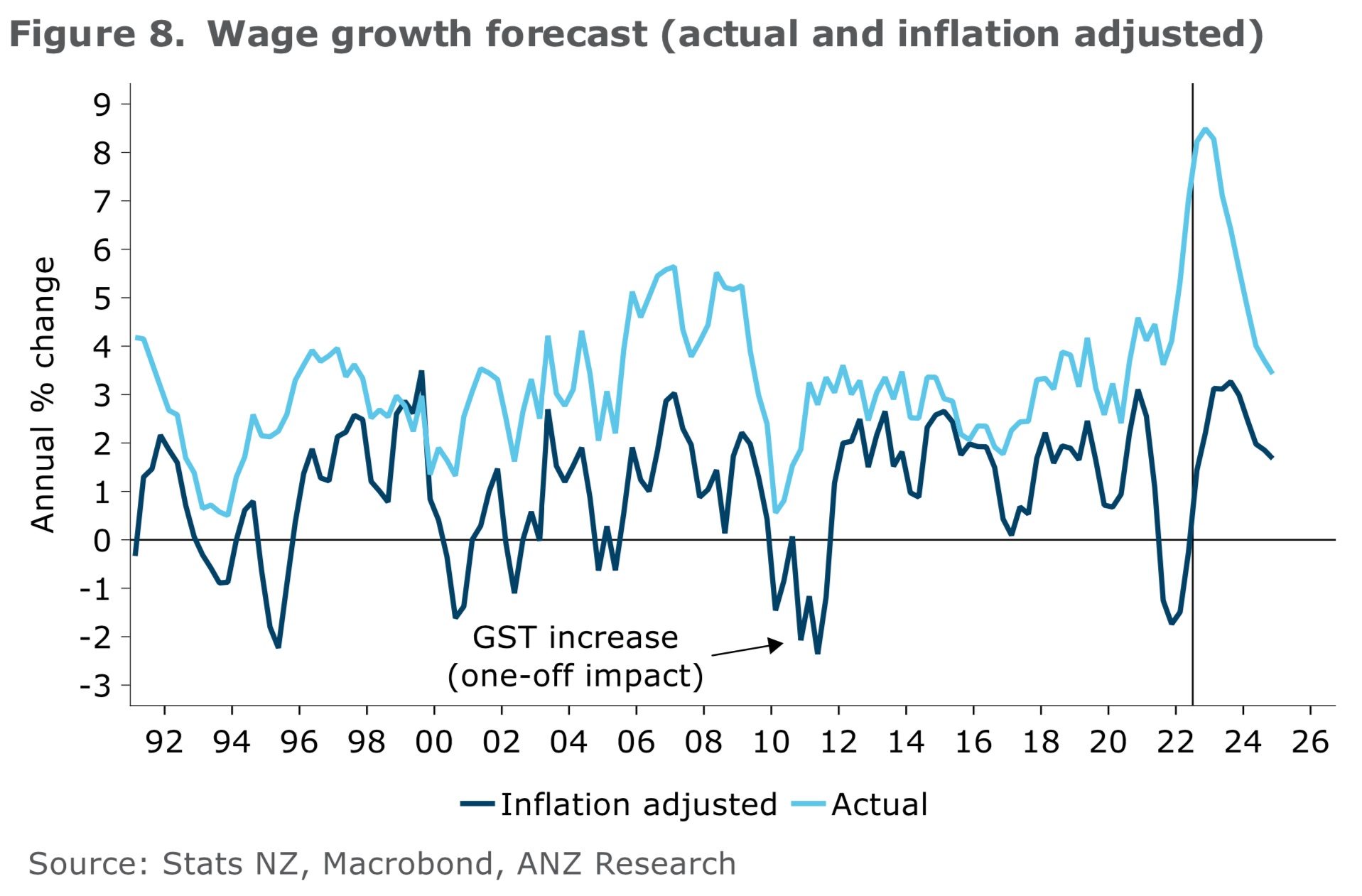
"Wage growth is expected to exceed inflation imminently, sending real wage growth back into positive territory."
Robinson and Zollner say rising wages are not inflationary if they reflect rising productivity.
"But the challenge for businesses is that while they’re paying much higher labour costs (and other input cost as well), on balance Covid has been a negative productivity shock, for example due to worker illness or social distancing and cleaning requirements.
"So firms are paying more for workers and other inputs to production, but are not getting a commensurate increase in output (similar to the productivity impacts of climate change). And that means that at some point those higher costs have to be passed on to consumers (ie generating more inflation)."
This "cycle" of high inflation driving high wages driving high inflation can be hard to break, particularly as firms and workers realise "which way the wind is blowing" in a tight labour market and change their behaviour accordingly, the economists say.
"This results in things like indexation of wages to previous years’ inflation, which might seem only fair and reasonable, but which builds more persistence (‘stickiness’) into the inflation process.
"If that kind of dynamic gets entrenched, beating inflation will likely require a sustained period of higher interest rates and slower economic growth."
The Reserve Bank (RBNZ) began hiking the Official Cash Rate in October last year from the emergency Covid setting of 0.25% and now, after a serious of four consecutive 50 point hikes the OCR is standing at 3.0%, with the general expectation in the market place that if will hit 4.0% by the end of this year.
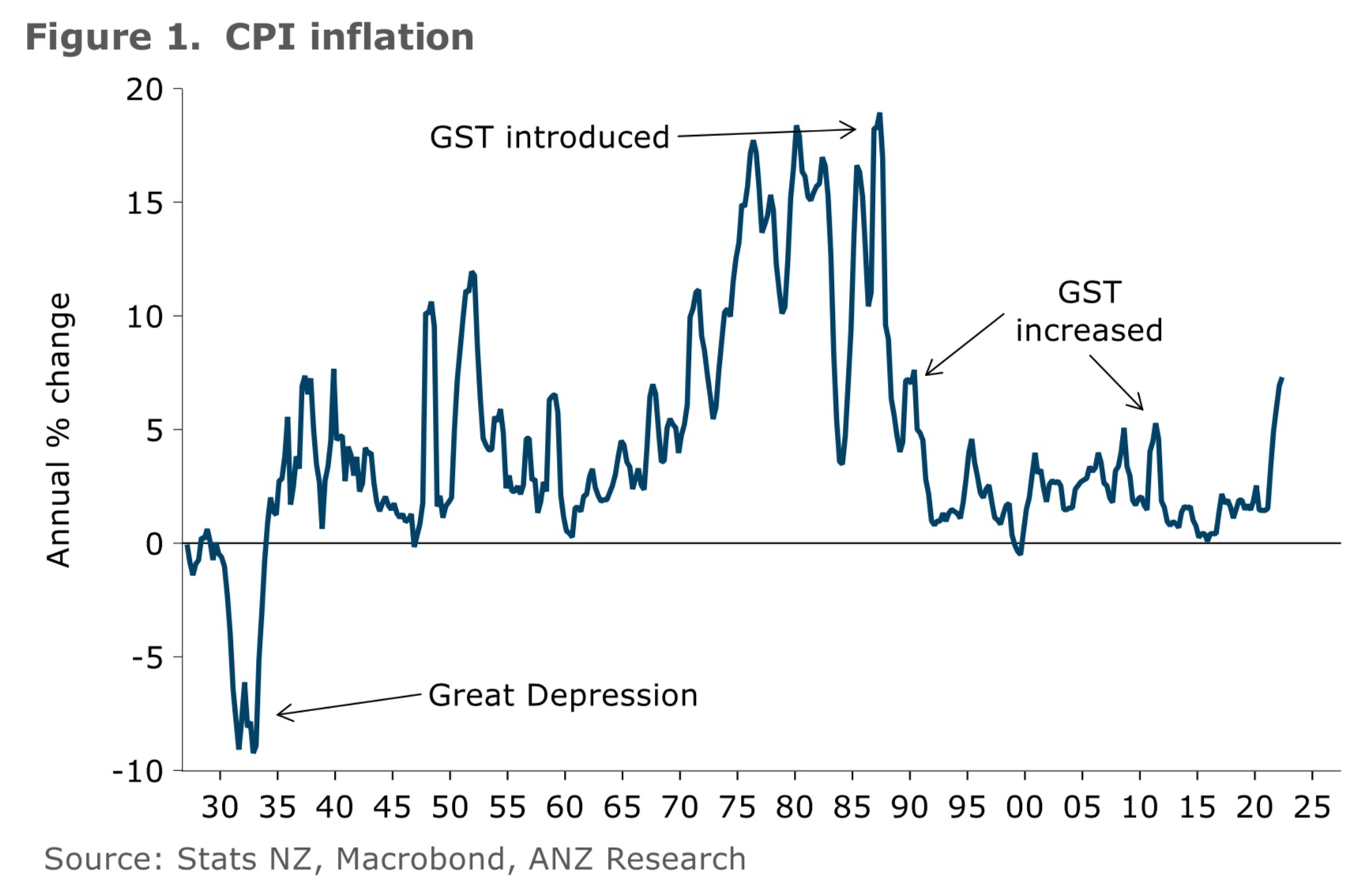
Robinson and Zollner say the economy has been hit by a sequence of "extraordinary" supply shocks (Covid, war, and ongoing intensification of climate change impacts), while demand has been overstimulated by a policy response to Covid that "with 20/20 hindsight", was too powerful.
"That’s an incredibly inflationary mix of factors," they say.
"In over-simplified terms, we’ve been hit by a perfect storm of supply-side constraints largely relating to the pandemic, while demand has been overstimulated by what in hindsight was an overly powerful policy response."
They say there are many competing explanations for high inflation, including Covid, global supply disruptions, geopolitical tensions, high government spending, tight labour markets (partly related to the closed border), and central bank policy stimulus.
"All of these explanations have a part to play, and there is no one single factor that can explain the inflation that we now see."
We welcome your comments below. If you are not already registered, please register to comment
Remember we welcome robust, respectful and insightful debate. We don't welcome abusive or defamatory comments and will de-register those repeatedly making such comments. Our current comment policy is here.