

KiwiSaver has now been with us for 16 years - which is probably long enough for us to sit down and have another proper think about what we want from it and what it is really there for.
Along with another initiative of the late Michael Cullen, the NZ Super Fund, KiwiSaver can I think be seen as something that goes some way to solving our ageing population/retirement condundrum, but doesn't do the whole job.
That's no criticism at all of Cullen. You might have noticed it is virtually impossible to ever get our politicians to agree on matters relating to retirement and indeed taxation. Cullen, I think recognised that some progress was better than no progress at all. And he's to be applauded for that.
About 3.2 million of us are in KiwiSaver and the funds under management are now around $100 billion. So, it's really become quite a big thing.
However, according to the most recent KiwiSaver annual report from the Financial Markets Authority, for the March 2022 year, the average balance at that time was only around $28,000. You're not going to retire on that. Indeed there are some bon vivants out there who might regard $28,000 as a good night out!
But of course, that's just an average figure and people who haven't been in long would drag that figure down. Around a million members are under the age of 30. And the average figure would be higher now, given that the figure quoted above was from well over a year ago.
Still though, you've got to say it doesn't look as though many people regard KiwiSaver as the prime method for saving for retirement.
All of which leads us into the question of what we really want from KiwiSaver. And here's where I think we would benefit from a Government-level re-appraisal of what it is for and how it is best structured to achieve that.
The National Party's idea of allowing the under 30s to cash out KiwiSaver funds and use them for rental bonds, therefore turning KiwiSaver into a sort of slush fund, I think highlights the kind of ambiguity KiwiSaver has as a vehicle.
As far back as seven years ago I commented on the then rising trend of young people using ostensibly retirement funds (IE KiwiSaver funds) as deposits for first homes. And then as this trend continued, I had another go four years ago.
Just as a matter of curiosity, I checked out the most recently available withdrawal stats from the IRD.
These show that withdrawals for a first home purchase peaked at around $1.6 billion in the June 2021 year. That was of course right at the peak of that crazy pandemic housing market surge. In the June 2022 year the figure dropped to around $1.2 billion.
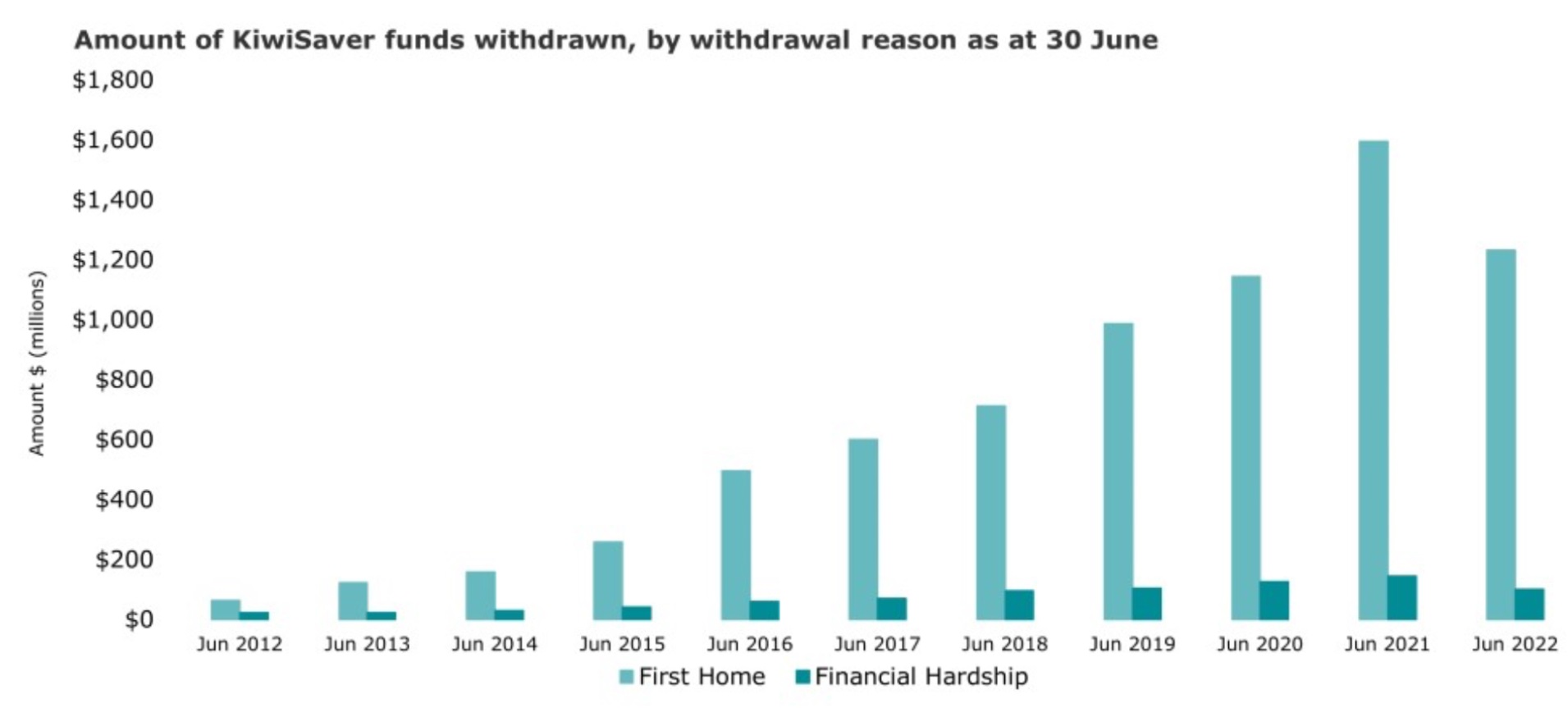
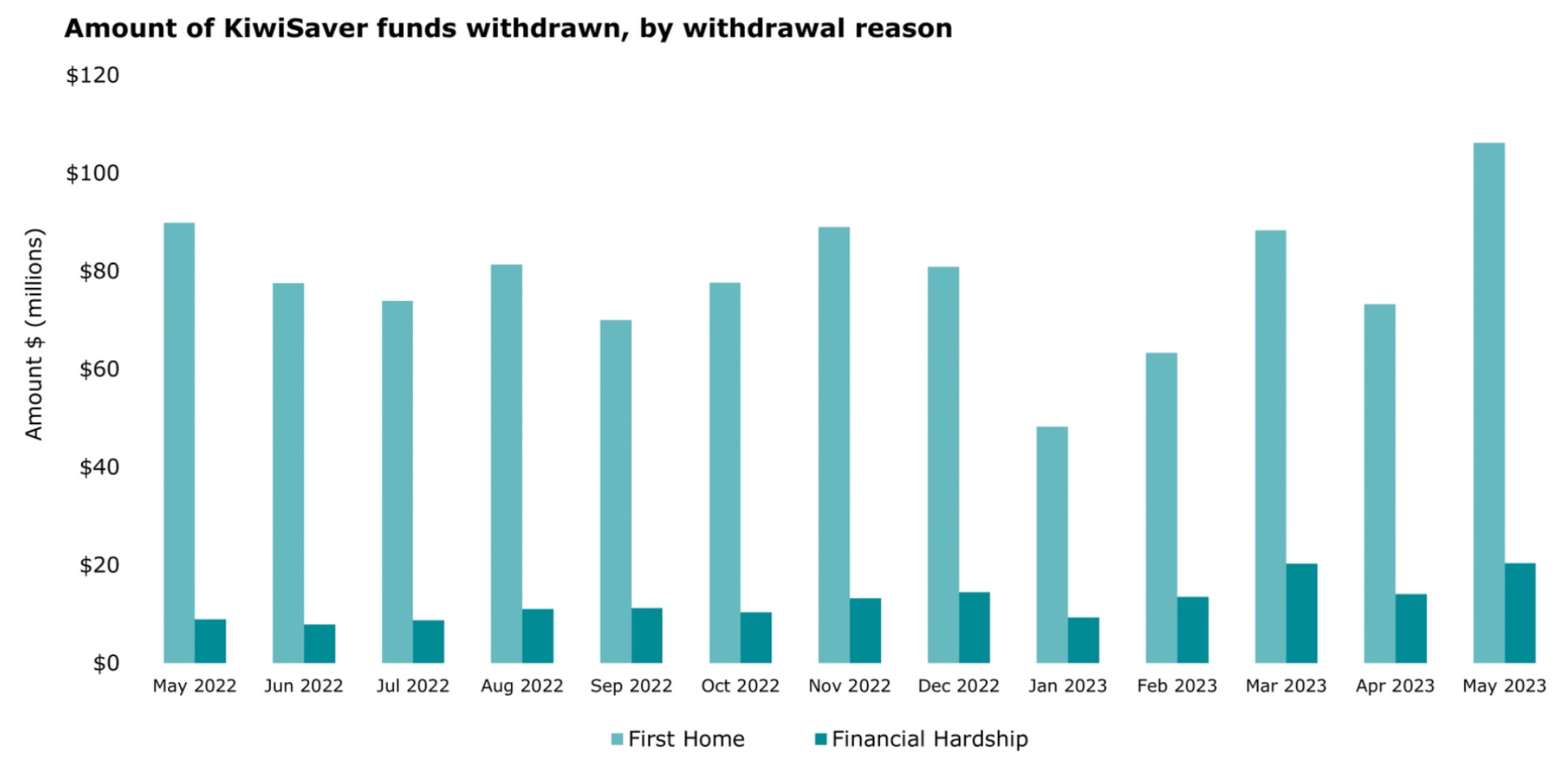
Figures for the year to June 2023 aren't yet available, but in the 12 months to May about $930 million was withdrawn for houses. What a difference a down house market makes. Interestingly though, the withdrawal for May 2023 was $106 million, which was the biggest such withdrawal in over 12 months.
Also of note in May 2023 was that the withdrawal for financial hardship was over $20 million - which was more than double the amount withdrawn for this purpose in May 2022.
Okay, so with all this money sloshing around, why not tip some into a rental bond as well? And how about the new mobile phone you need?
Well, why not? It is your money!
But it just goes back to the point of why have a retirement savings scheme at all if you are just going to turn the whole thing into open slather and then have people retire with a pile of IOUs in their KiwiSaver accounts.
Former colleague Jenée Tibshraeny made an erudite argument for why younger KiwiSaver members should be entitled to withdraw funds for house purposes - in her case with the intention of buying a house to rent it out.
I've never tried to argue with the New Zealand philosophy that buying houses is a good way to provide for retirement. Just look around. It clearly works for people.
What it comes back to, however, is that KiwiSaver cannot optimally be ALL things. It cannot be a piggy bank and a retirement savings provider.
If for example a young person signs up for KiwiSaver with the thought that they will buy a house in five years' time and use their KiwiSaver funds for the deposit, what do they do?
Well, what they SHOULD do under those circumstances is get themselves into a fund with a reasonably cautious approach. After all, it would be no good to get into a fund that's investing in a load of 'high growth' stocks and then find that the market slumps big time - round about when the young person is wanting to take that deposit out. But a cautious approach, with a conservative fund, would be anathema to good retirement planning - albeit that it would be eminently sensible in a five year house-buying timeframe.
So, instead of a 40-45 year timeframe, perhaps, in which they could and indeed SHOULD be very bold with their choice of investments, our young person would be cautious and actually potentially lose the potential for greater returns in the long run. The short term need for a house trumps long term retirement planning. How many people have done this?
Yes, okay, hopefully the house is going to work out well - but my point here is why not have the best of both worlds? Why not be able to buy a house and stash cash with a long term focus? Is there anybody out there who seriously thinks they could have TOO MUCH money to retire with?!
There have over the years been suggestions that it would be a good idea for provision within KiwiSaver of a rainy day fund. And I think maybe this is the kind of direction in which we should be looking.
Maybe we do need to look at a split-fund or two-fund arrangement for members. One fund is targeted for buying a house and maybe the odd incidental like a bond, and therefore has a shorter term investment focus. The other fund is a 'don't touch at all' fund with that 40-45 year timeframe. KiwiSaver would be genuinely filling a role as a vital component of retirement planning if we took this approach.
Now, yes, the immediate question is how far can you stretch the member contributions? Well, maybe we would need to look at increasing the minimum contribution. And yes, I concede that could be contentious.
Really, it is up to us what we want. But with all the talk about a future crisis with the ageing demographic and with successive groups of politicians vacillating around retirement ages and the like, surely taking some decisive action around deciding just what KiwiSaver is and can accomplish, would be one positive thing we could do.
These issues around KiwiSaver have been bouncing around for years now and nobody has applied a firm hand to them.
If we keep having a bob each way with KiwiSaver then yes, we will leave ourselves open to politicians trying to win an election, spying a bit of cash sitting around in KiwiSaver funds, and saying, yes, okay, I've got a great idea what that money could be used for...
Either we are serious about planning for the long term or we are not.
We welcome your comments below. If you are not already registered, please register to comment
Remember we welcome robust, respectful and insightful debate. We don't welcome abusive or defamatory comments and will de-register those repeatedly making such comments. Our current comment policy is here.