

Borrowers are heading to the Banking Ombudsman with their qualms, as they’re flocking to the banks with their loan applications.
The Banking Ombudsman Scheme, in its 2015/16 Annual Report, shows there’s been an uplift in the portion of lending-related cases it has dealt with from 28% to 31% this year.
Ombudsman Nicola Sladden says the increase is a symptom of our low interest environment encouraging more borrowing than saving.
Accordingly, the report shows the portion of bank account related cases the scheme dealt with fell from 23% to 19% over the year, as “falling interest rates made savings accounts less appealing”.
“There aren’t the same opportunities in the low interest rate environment,” Sladden says.
She notes there was a spike in the number of cases the Scheme received related to early loan repayment charges between September and November last year.
Bank clients complained about the costs associated with getting out of fixed term agreements early, how these fees were calculated, the terms and conditions of fixed term agreements, the quality of banks’ communication and disclosure.
Borrowers suffered from “post-fixing dissonance” as they sought to break their fixed term contracts early and opt for loans with lower interest rates.
This issues were largely at the forefront of the cases the scheme dealt with in the 2014/15 year.
Yet as interest rates have stopped falling so rapidly, the scheme has seen a drop in these sorts of complaints over the last nine months.
“We think that there is better information out there about early repayment charges and a better understanding about the risks associated with getting out of your loans early,” Sladden says.
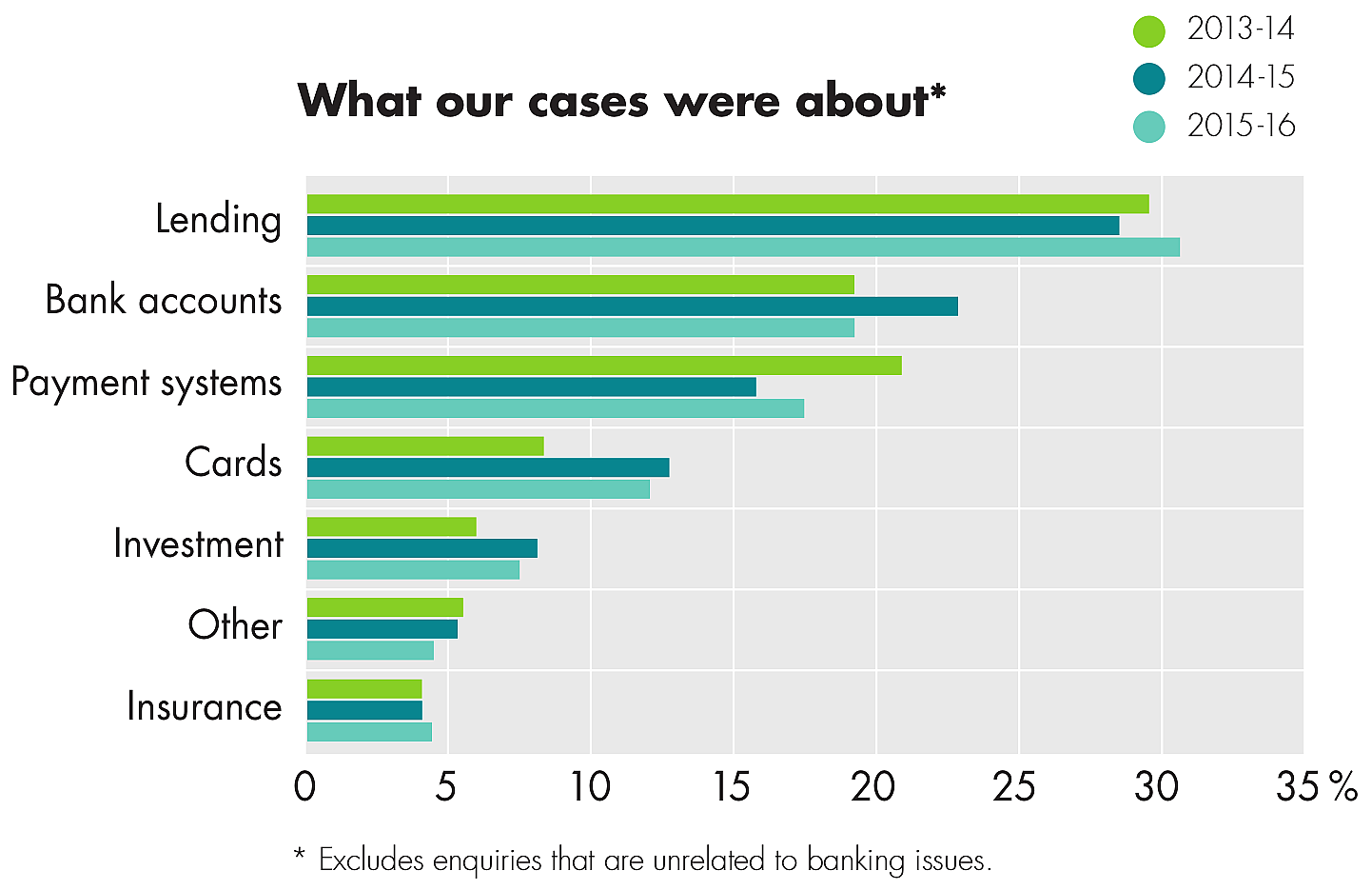
The Ombudsman Scheme’s other lending-related complaints have stemmed from customers’ dissatisfaction with the services they receive.
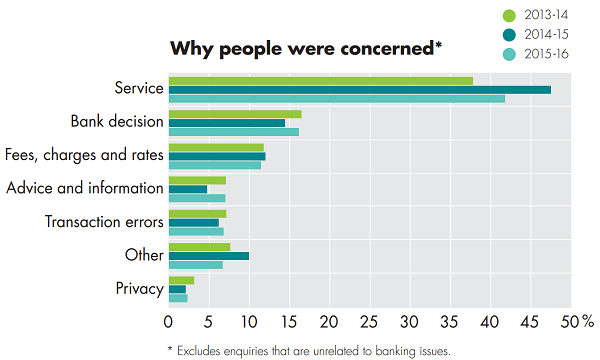
Clients were concerned with bank staff’s failure to act as instructed or promised. They were also unhappy with the how banks collected debts.
Across all complaint types, the underlying causes were as follows:
KiwiSaver withdrawals and switches an issue
Asked about emerging trends in the nature of enquiries dealt with by the scheme, Sladden mentions there’s been an uptick the number of people with KiwiSaver issues.
These relate to investors’ abilities to withdraw funds, as well as miscommunication or concerns around disclosure when they switch funds.
“Sometimes people feel the switch may have been made without proper and full information,” Sladden says.
She is also aware of cases where people have raised concerns around banks’ KiwiSaver sales practices.
The Scheme hasn’t dealt with a significant number of KiwiSaver fees-related enquiries, despite the Financial Markets Authority, Ministry of Business Innovation and Employment and Commission for Financial Capability pushing for providers to detail these more clearly in dollar cent terms in investors’ statements.
While Sladden notes the prevalence of KiwiSaver related enquiries, it’s worth noting banks are continuing to capture market share in the KiwiSaver space, as shown in this FMA graph:
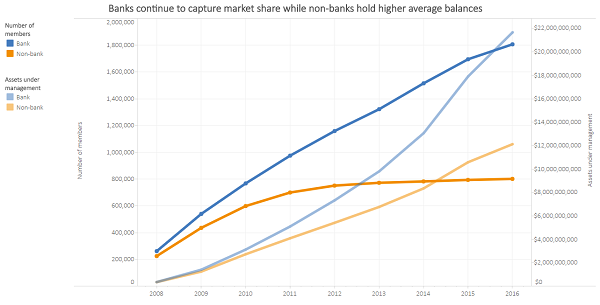
The FMA’s KiwiSaver Annual Report also shows the level of switching between KiwiSaver providers has spiked in the past year.
Fraud becoming more sophisticated
Sladden also pinpoints increasingly sophisticated fraud as an emerging trend.
The report says: “This year, 66 bank customers contacted us about scams by third parties. Most commonly, these involved buying or selling transactions with scammers, investment scams or the scamming of customers’ personal information.
“Customers were unhappy because banks had declined to compensate them for their losses. Banks are not responsible if customers’ actions enabled (even if unintentionally) a scam to succeed.”
Asked to provide more comment on the instances in which banks would be responsible for compensating scam victims, Sladden says: “A bank is liable for making transactions that aren’t properly authorised by the customer.
“However often the customer has unwittingly authorised the transaction, whether it’s by way of providing password or pin information, or not being aware the recipient of the funds is a fraudster.
“And in those circumstances, unless the bank knows about risk of fraud, it is very difficult to hold the bank responsible in those circumstances.
“If a bank is aware of some red flag or any other risks or fraud or exploitation, they do have an obligation to act and as a minimum, alert the customer to that risk.”
Proportionately high number of cases relate to medium-sized banks
Looking at the bigger picture, the Ombudsman Scheme’s report notes: “The number of cases we received about small banks generally corresponded with their market share (as estimated by assets).
“Medium-sized banks used the scheme more (22% of all cases compared to 12% of market share), while the four main banks – ANZ, ASB, BNZ and Westpac – used the scheme correspondingly less.”
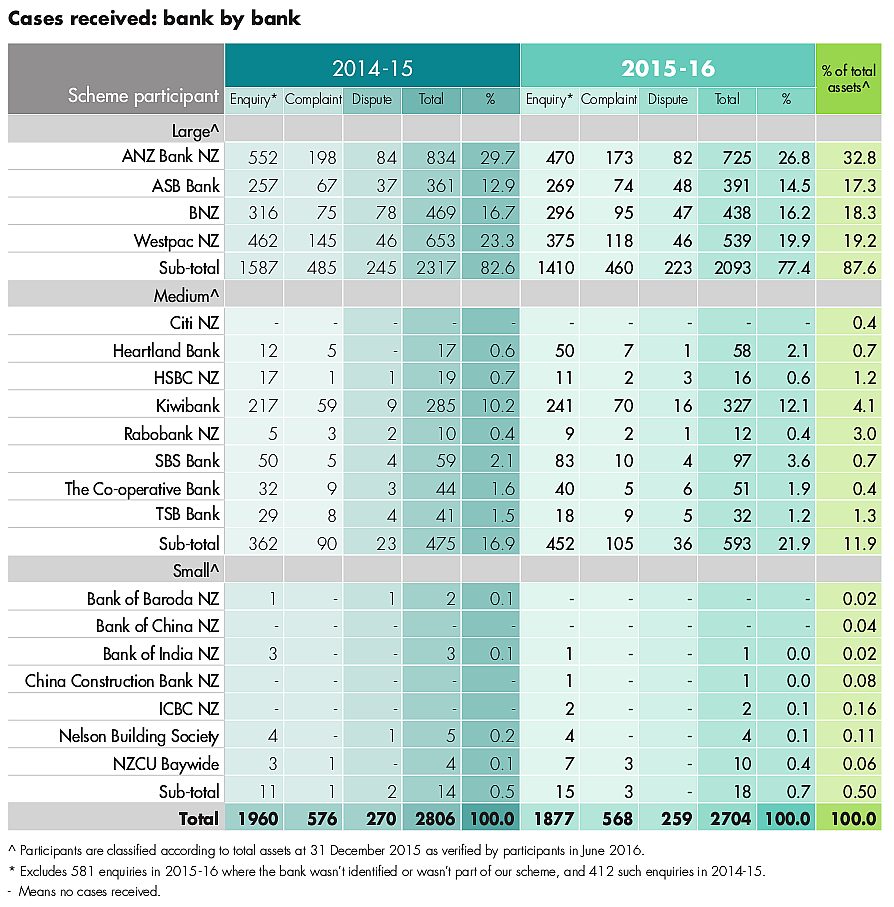
Sladden says the overall number of cases the scheme received over the year rose only slightly compared with the year before – from 3,213 to 3,323 cases – but their make-up changed noticeably.
“Over-the-phone-type enquiries made up a growing share of our work, and simpler complaints were unchanged. The big shift was in disputes, which shrank in number but grew in complexity.
“I attribute this to two factors: greater determination by banks themselves to resolve problems before their customers come to the scheme – leaving us with the frequently difficult or protracted cases – and greater emphasis by us on education to prevent disputes in the first place,” Sladden says.
She says visitor numbers to the scheme’s website had risen more than 60% in the year.
We welcome your comments below. If you are not already registered, please register to comment
Remember we welcome robust, respectful and insightful debate. We don't welcome abusive or defamatory comments and will de-register those repeatedly making such comments. Our current comment policy is here.