
Risk sentiment has improved further, with Israel scaling back its bombing of Lebanon, improving the chance of a peace deal and an eventual reopening of the Strait of Hormuz. US equities are stronger, US Treasury yields have range traded and the USD is broadly weaker, seeing the NZD recover further.
Yesterday, the US-Iran ceasefire agreement was looking fragile, with conflicting information about whether Israel’s attacks on Lebanon were part of the deal. Israel intensified its bombing campaign and PM Netanyahu said he would continue to strike Hizbollah wherever required. Trump called Netanyahu asking him to scale back the strikes, with the result being Netanyahu agreeing to direct talks with Lebanon as soon as possible. However, Netanyahu still denies there is a ceasefire in Lebanon and said “we won’t stop until Northern Israel is secure”.
The Strait of Hormuz remains effectively closed, with only eight Iran-linked ships passing through since the ceasefire deal. Iran’s Ports and Maritime Organization published two safe routes for shipping, to avoid the potential presence of various anti-ship mines in the usual sailing routes. Reports suggest that ships still require permission from Iran to cross the strait.
The combination of hope that the Strait of Hormuz will eventually reopen, however long that takes, minimal reports of strikes on Arab gulf nations since Wednesday, and scheduled US-Iran peace talks in Pakistan this weekend is enough to encourage investors to adopt a more positive attitude toward developments. In the last hour or so, Iranian’s Supreme Leader Mojtabo Khamenei issued a statement, calling on people to remain in the streets and “we did not seek war, do not seek it”. He added that Iran is moving to a new stage in managing the Strait of Hormuz and reiterated Iran is seeking compensation for war damages.
Brent crude was rallying back towards USD100 per barrel before headlines about Israel agreeing to direct talks with Lebanon drove a sharp correction below USD95, before picking up again to the current level around USD97.
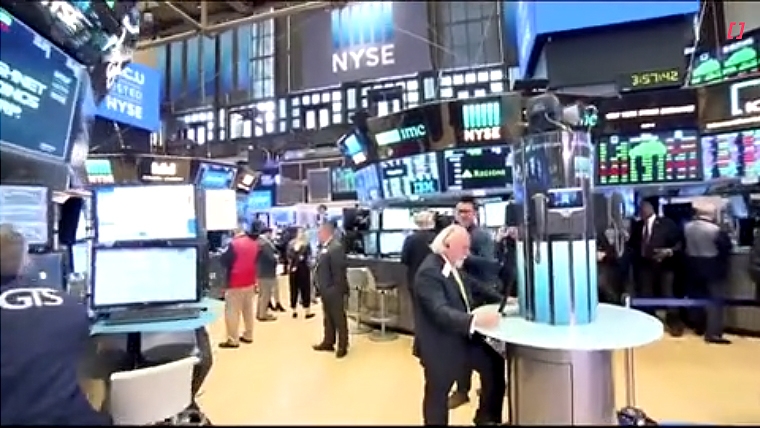
US equities reversed an early decline and are up for a seventh consecutive day, with the S&P500 up 0.5% in mid-afternoon trading and now just over 1% lower since the conflict began. The US 10-year rate traded as high as 4.32% before the turnaround in sentiment hit the market, seeing it fall to 4.26%. It currently trades at 4.29%, little changed from the NZ close.
US economic data showed real consumer spending barely rose in February, up 0.1% m/m, ahead of the conflict, with a weaker trend from late last year and heading into 2026. The core PCE deflator rose 0.4% m/m for a second consecutive month, as expected, with more interest in March CPI data due tonight. Jobless claims remain low, consistent with a low-firing environment, with continuing claims falling to their lowest level since June 2024.
In currency markets, the USD is broadly weaker, continuing to pare its gains since the conflict began. The NZD and AUD have outperformed. The NZD currently trades at 0.5855 and the AUD is at 0.7080. NZD/AUD traded at an overnight high of 0.8300 before paring its gain and is back around 0.8275. Other NZD crosses are modestly higher, with NZD/JPY up through 0.93, NZD/CAD around 0.81, NZD/EUR up through 0.50 and NZD/GBP at 0.4360.
In the domestic rates market there was some follow-through price action in response to the RBNZ’s more hawkish than expected policy update on Wednesday. There was a sharp re-pricing of short-end rates that saw bill futures rise 11-14bps for the Sep-2026 through to the Mar-2027 contracts. The OIS market closed with the first rate hike for the cycle almost fully priced by the July meeting, and with essentially three rate hikes cumulatively priced through to the end of the year.
The 2-year swap rate closed the day up 11bps to 3.49% while 5 and 10-year swap rates rose 9-10bps. NZGBs showed similar moves, with rates up 7-11bps across the curve with a flattening bias.
On the economic calendar, NZ manufacturing PMI and China inflation data are due today. Tonight sees the release of US CPI data for March, where the first direct impact of the Iran conflict is expected to show the CPI up 0.9% m/m, driving a leap in annual inflation from 2.4% to 3.4%.
Daily exchange rates
Select chart tabs
Jason Wong is the senior Markets Strategist at BNZ Markets.
We welcome your comments below. If you are not already registered, please register to comment
Remember we welcome robust, respectful and insightful debate. We don't welcome abusive or defamatory comments and will de-register those repeatedly making such comments. Our current comment policy is here.