
sign up log in
Want to go ad-free? Find out how, here.

BNZ economists think the Reserve Bank will start to raise interest rates in the third quarter of this year but won't want to signpost that yet in its first Official Cash Rate review for the year next week

Economy / news
BNZ economists think the Reserve Bank will start to raise interest rates in the third quarter of this year but won't want to signpost that yet in its first Official Cash Rate review for the year next week
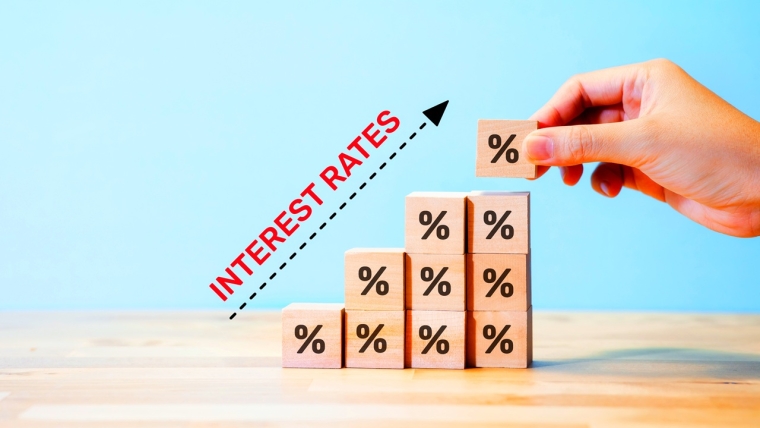
interest-rate-riserf1.jpg
Source: 123rf.com

BNZ economists think the Reserve Bank will raise the Official Cash rate in September but won't express that intent when it holds its first OCR review for the year next week.

The economists think the RBNZ will remove any vestiges of an 'easing' bias from forward projections, but will incorporate just modest potential hiking, with the projected track of the OCR being about 10 basis points higher than  when the central bank made its last set of forecasts (page 47) at the time of the last OCR review for 2025 on November 26.

The OCR is currently at 2.25%. Financial markets  are pricing in about a 75% chance of a 25 basis-points rise (to 2.5%) by September.

In a preview of the first OCR decision for 2026, which is on Wednesday, February 18, BNZ head of research Stephen Toplis, said there is now little doubt the economic recovery is gaining momentum although "major headwinds" for the recovery mean the pace of expansion is likely to be constrained.

"But even with only modest growth, there are worrying signs that inflation is not as dead as one might expect it to be begging the question as to how low New Zealand’s potential growth rate might be. This will be the overarching conundrum the RBNZ faces into as it puts together its February 18 Monetary Policy Statement."

Toplis says the RBNZ's view of where the country's potential growth is, will be key to how it views the inflation outlook.

"The fact that inflation has not settled near 2.0% during a nasty recession suggests [growth] potential might be lower than expected. Additionally, the Bank [RBNZ] has assumed that labour force supply will be bolstered by rising migration but there is no sign of this."

On balance, Toplis thinks the RBNZ will be able to "get on top of inflation" and is forecasting annual CPI growth to move back to the 2% mid-point of the central bank's 1% to 3% target band.

"Nonetheless, taking everything into consideration, we still believe the Bank needs to reduce the extent of the current stimulus provided a little earlier than previously forecast.

"We believe the RBNZ will raise rates in September 2026 but, given current uncertainty, we do not predict it to express that intent at the upcoming meeting. We do expect it to acknowledge the pick up in growth and higher starting point for inflation but to still express confidence that inflation will come back to the mid-point of the target band but it is still expected to push back on market pricing which has a 25 points hike priced by October.

"Specifically, we expect the possibility of an easing to be removed from the Bank’s published interest rate track such that the low remains at 2.25% through to the December quarter. From there on in we would expect the track to be around 10 basis points higher than previously published," Toplis said.

He notes that the upcoming OCR review will be the first opportunity for new RBNZ Governor Anna Breman to "show her true colours".

"We should all be a lot wiser about her monetary policy thoughts, and those of a monetary policy committee no longer influenced by [former Governors] Adrian Orr or Christian Hawkesby, once the February MPS is published.

"Given this, the potential for commentator thought recalibration is probably larger than usual," Toplis said.

"Over time, given Anna Breman’s background, we would expect to see conservative, consistency benchmarked to whatever is delivered next week."

We welcome your comments below. If you are not already registered, please register to comment

Remember we welcome robust, respectful and insightful debate. We don't welcome abusive or defamatory comments and will de-register those repeatedly making such comments. Our current comment policy is here.

14 Comments

The ironic thing is that mortgage rates would probably be lower now had the RBNZ not made the last 0.25% cut and instead projected no change in 2026. 

Up
1

Why I was saying it was a mistake. Equally in 2022 - 2025 it could be said that interest rates would probably be lower then had the RBNZ not cut so insanely low for so long 2020-2021.

A lot of the time, the best thing the RBNZ can do is nothing. But they can't help themselves. 

Up
5

Inflation is a society wide economic poison. It must be stopped at all costs. If that reduces bank profits thru less frenzied property speculation to bad.

Up
5

But housing price inflation at 7% p.a. endlessly (or decades) is worthy of celebration!! Not caution or restraint or sensibility. Its a sign of success. But anything else that goes up at that rate must be controlled very carefully.

Up
4

Especially if you can leverage it and gains are tax free, happy days!!!


Up
0

Happy days depending upon birth year and wealth status of parents!!

Up
4

It does however bring about the discussion of parents. Some will have made a mint on property and blown a lot of it, or lost much of the joint equity via divorce. Not all parents invest enough into their children, and wish them to go out and make it all on their own, believeing the world is still as it was when they were the same age.

Up
0

Bank lending inflation really

Up
0

For the big 4 Banks it is business as usual.

Forget the OCR. They just want their profit margin regardless

Up
1

Possible but wholesale rates were indicating last year that this was the most probably outcome. 

Up
0

I know leading indicators are popping up a bit but if you look at the current environment:

if J Foe is correct the rise in participation of the workforce was older people meaning their cost of living is hammering them so much they need a surrogate income, rents receding due to oversupply whereby weighing on property prices this year along with mortgage rates now rising again, and inflation is high on necessities so actually crimping spending power for the average kiwi, further depressing spending in services and consumables:

With consumption being 60% of the economy where on earth is this recovery going to come from? 

Up
1

"BNZ head of research Stephen Toplis, said there is now little doubt the economic recovery is gaining momentum although." A myriad of contradictory qualifications follow.

However,I  don't see where the economic recovery is going to come from. I also hear the talk about "green shoots".

Every economists prediction about the economic direction either bank linked or independent thus far has been wide of the mark.The real hard data, runs contrary to the vested interests wishful thinking and tells us whats Up: Inflation, Unemployment, Company and Business Liquidations, Interest Rates, Council Rates, Insurance, Electricity, Overall Cost of Living,  Compliance Costs for doing things, Government intervention through increasing laws and regulation, Taxes and Levies. Combined with our Best and Brightest leaving for Australia. 

What's going down: Housing Prices, Rental Returns, Construction activity, Wages, Returns on Investments, and Hillsides.

The reporting season starts Thursday and its going to be ugly, even now the predicted bad results are being spun that they reflect the period for late 2025 and it will get much better in 2026. 

I dont accept the spin that economic recovery  is well underway. Every metric is  getting worse not better. 

Up
8

How about spinning the other way. Be positive. if negative it will surely happen.

What do Economist know anyway/ Green shoots are a growing.

Up
0

There's being positive, and then there's reading the data. Just because one holds their head up on a slow sinking ship doesn't change the rate of sinking. 

Up
0