
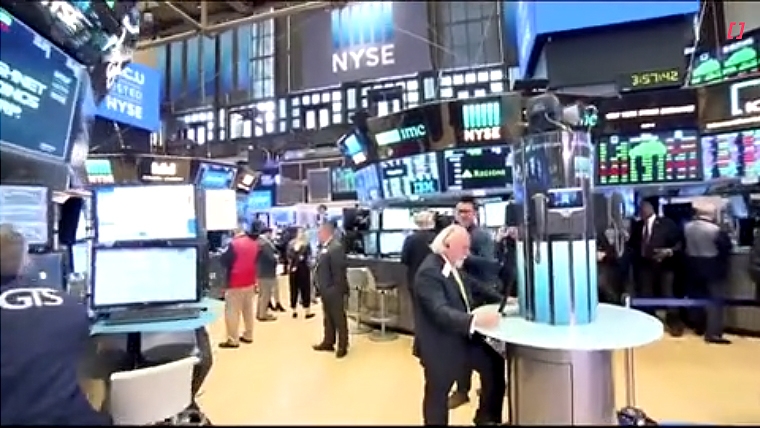
There was a risk-off tone across global equity markets led by US technology stocks. Microsoft reported higher-than-expected spending on AI infrastructure, reigniting investor concerns about the vast capital expenditure by large US technology companies. The S&P is down 1% in afternoon trading having rebounded from a larger decline. News of a potential de-escalation in the Ukraine conflict contributed to the recovery off the session lows. There were limited moves for government bond markets while the US dollar is broadly firmer against G10 currencies. The AUD and NZD had large swings and traded in a wide range.
Brent crude futures traded above US$71, and to the highest levels since the middle of last year, after President Trump increased threats against Iran. He said a range of options are being considered, including strikes against the country’s leadership, though no final decision had been taken. Precious metals were volatile. Gold surged to a record high just below $5,600 per ounce before a sharp retracement that corresponded with the fall in equity markets.
Earlier yesterday, the US Federal Reserve kept rates steady as expected. The central bank highlighted continued improvement in underlying economic conditions while signalling a more measured stance toward prospective policy adjustments. The decision was not unanimous, with Governors Waller and Miran dissenting in favour of a 25bp reduction. Chair Powell noted that the economic outlook has strengthened relative to the previous meeting and that labour‑market conditions have stabilised. However, he also acknowledged emerging evidence of ongoing cooling across several activity indicators, reinforcing the FOMC’s cautious posture.
US treasury yields are marginally lower set against the weak risk backdrop. The market is pricing around 50bp easing by the Fed which is little changed following the FOMC. There was limited economic data to provide the market with direction. Initial jobless were in line with consensus estimates.
A relaxation in property regulations in China provided support to pro-cyclical exposures. China is no longer requiring regular reporting on the ‘3 red lines’ policy imposed on property developers in 2020. The news contributed to large gains in the stocks of Chinese property developers and supported base metals. Iron ore prices rallied and copper futures traded to a record high.
The US dollar is marginally firmer against the majors in offshore trade while the AUD and NZD have made larger declines amid the volatility in commodity markets. The AUD had gained initially following the developments in China and rally in base metals which saw NZD/USD trade up towards 0.6090. However, both the AUD and NZD dropped sharply alongside equities and the retracement in metals. The NZD is weaker on the major crosses since the local close except for NZD/AUD which has rebounded towards 0.8630.
An initial offshore rally in NZ fixed income which saw 2-year rates dip towards 3.10% retraced with swap rates ending the local session 1bp higher across the curve. The rebound from the session lows corresponded with a move higher in the Australian market. 2-year rates closed at 3.15% and back at the recent peak. Government bonds outperformed swaps at the margin and there was a flattening at the long end of the government curve. The NZGB 10y/30y curve is back at the December lows after the flattening move through this month.
ANZ consumer confidence is released today. Confidence has been moving higher in recent months. A further improvement is required to be consistent with our outlook for spending growth. Preliminary CPI data for Germany is scheduled ahead of the Eurozone release on Monday. Inflation is benign, which relates to a variety of factors, and risks coming in below ECB forecasts in Q1. The advanced reading of Q4 GDP is expected to show the economy expanded 0.2%.
Daily exchange rates
Select chart tabs
Stuart Ritson is a senior Markets Strategist at BNZ Markets.
We welcome your comments below. If you are not already registered, please register to comment
Remember we welcome robust, respectful and insightful debate. We don't welcome abusive or defamatory comments and will de-register those repeatedly making such comments. Our current comment policy is here.