
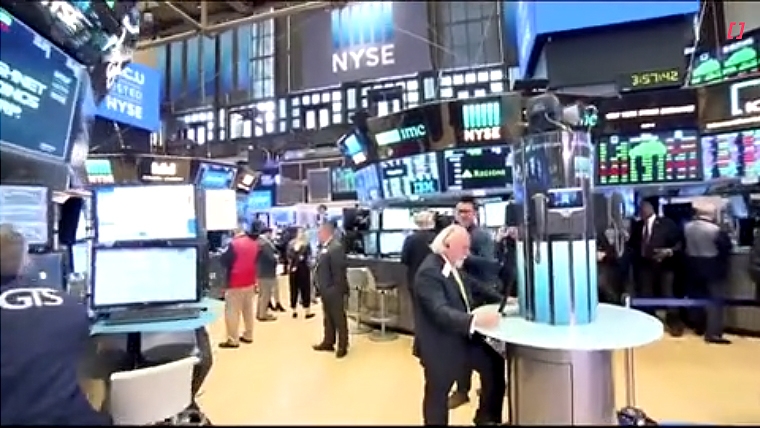
Markets are trading cautiously ahead of the weekend, with oil prices up nearly 5%, US Treasury yields a little higher and the USD a little stronger overnight. The NZD has slipped back below 0.59. US equities continue their record-breaking run, although the S&P500 is only just holding up in positive territory for the day.
The US-Iran two-week ceasefire still seems to be holding and there has been talk of a two-week extension when it expires early next week. President Trump continues to talk up the prospect of a US-Iran deal, telling reporters he didn’t believe he would have to extend the ceasefire deadline as he predicted a resolution “fairly soon”. Bloomberg reported some Gulf Arab and European leaders believe that a US-Iran peace deal will take about six months to be agreed and that the warring sides should extend their ceasefire to cover that timeframe.
Of course, the Strait of Hormuz will need to reopen well ahead of any peace deal agreement, should it take that long. The Head of the International Energy Agency continues to highlight the dire situation, saying Europe has “maybe six weeks or so” of remaining jet fuel supplies. The market is trading as if the Strait reopens within a couple of weeks, not months. The US naval blockade of Iranian-linked ships remains in force and seems to be operating largely as intended, while Iran is keeping the Strait effectively closed for most other ships.
President Trump said Israel and Lebanon had agreed to a 10-day ceasefire and a Hezbollah lawmaker said it would respect the ceasefire if Israeli attacks on the group stopped.
Risk sentiment has weakened somewhat overnight, and oil prices are up 4-5% for the day, with Brent crude back up just below the USD100 market.
US Treasury yields have pushed higher, with the 10-year rate up 4bps from the NZ close, to 4.31%. NY Fed President Williams said that “given all the different things that keep changing day to day, week to week, it doesn’t make sense for us to try to be giving strong forward guidance”, though his outlook still includes rate cuts in the long term.
US equities continue their record-breaking run, with the S&P500 piercing 7050 intraday, before fading, and showing a small 0.1% gain as we go to print.
In currency markets, the USD is broadly stronger. While the NZD returned to 0.5920 in NZ afternoon trading, it has slipped to 0.5885 overnight. The AUD rose to its highest level since June 2022 just shy of 0.72 yesterday afternoon and has fallen back to 0.7160, with NZD/AUD modestly weaker at 0.8225. Other NZD crosses are slightly weaker. Australian labour market data were in line with expectations, with the unemployment rate steady at 4.3%.
In other economic news, UK GDP rose 0.5% m/m in February alongside a one-tenth upward revision to January to 0.1% m/m, the combined effect being the economy running much stronger than consensus so far in Q1. Growth was broadly based and will lead to significant upward revisions for Q1. There was little market reaction, with more focus on the weak outlook than these historical figures.
In the US, industrial production, fell 0.5% m/m in March, dragged down by a 2.3% fall in utilities output, due to unseasonably warm weather. Manufacturing production was down only 0.1% m/m and net revisions were positive. Q1 growth rebounded strongly after a weak Q4. The Philadelphia Fed business outlook index rose to a 15-month high while higher commodity prices drove a surge in the prices paid index to 59.3. Jobless claims data remained low, consistent with a low-firing environment.
China GDP picked up to 5.0% y/y in Q1, two tenths higher than consensus. There were unders and overs for the monthly activity indicators, but broadly consistent with the view that domestic demand remained soft, with tepid growth in retail sales of 1.7% y/y, while industrial production remained relatively stronger, at 5.7% y/y.
In the domestic rates market, the short end of the curve outperformed, with 2-year NZGB and swap rates down 4bps, against a 1bp lift in 10-year yields, resulting in some notable curve steepening. The scramble for short-end exposure resulted in $1.3b of bids for $225m of 2031 bonds on offer at the weekly tender, which were taken out at a 2bps premium to the prevailing mid-rate. Other lines on offer weren’t as strong.
In the day ahead, NZ monthly CPI indicators will help us finalise our Q1 CPI estimate, which currently sits at 0.8% q/q and 3.0% y/y, with the impact of the Iran conflict making its presence felt mainly in the following June quarter. Card spending data for March are also released, which will be positively impacted by higher spending on fuel for the month. There is nothing of note on the global economic calendar.
Daily exchange rates
Select chart tabs
Jason Wong is the senior Markets Strategist at BNZ Markets.
We welcome your comments below. If you are not already registered, please register to comment
Remember we welcome robust, respectful and insightful debate. We don't welcome abusive or defamatory comments and will de-register those repeatedly making such comments. Our current comment policy is here.