
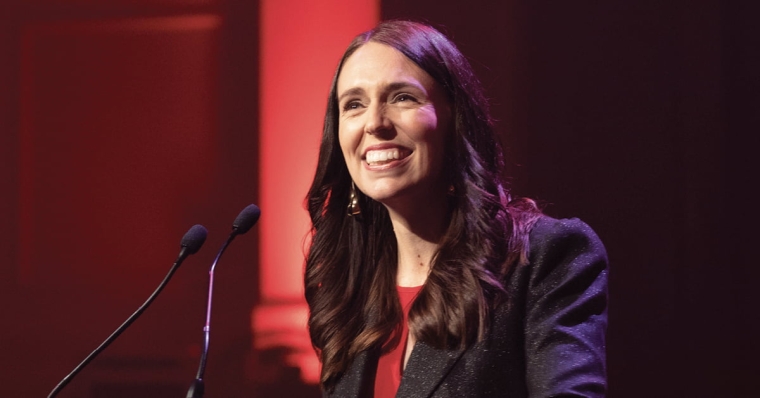
Labour’s majority in government has resulted in a hefty shake-up of ministerial roles.
Here’s a rundown of some of the key changes in areas interest.co.nz will be following closely:
Finance
Grant Robertson has, and will continue to, carry a heavy load in this term of government as Finance Minister.
He will need to consider how to keep the domestic economy buoyed, with the borders closed for the foreseeable future and the Reserve Bank’s economic revival strategy contributing to bubble-like asset price inflation.
Given the new role of Infrastructure, Robertson will become the Government’s de facto ‘Minister of Delivery’.
Speaking on RNZ’s Morning Report, he said Prime Minister Jacinda Ardern had specifically asked him to ensure the government delivered on what it has promised. It’s no secret Labour’s weakness in the previous term of government was under-delivering on a couple of ambitious promises - KiwiBuild and the Auckland light rail.
Upgrading housing, transport and water infrastructure are of course vital to ensuring people have roofs over their heads, traffic doesn’t curb productivity and ageing water infrastructure doesn’t make us sick.
But front-loading infrastructure projects in the pipeline is central to the government’s medium to long-term Covid-19 economic recovery plan.
In some respects, Robertson had the easy task of issuing debt and allocating billions of dollars to various projects. The hard part is ahead, ensuring New Zealand has the capability and capacity to pull these projects off.
It’s no longer just a matter of getting people to the airport faster. It’s a matter of creating jobs and ensuring the debt being issued is stimulatory and spent wisely.
While other ministers will oversee individual projects, Robertson will be responsible for the big picture.
There's no room for under-delivery in the current environment. The pressure’s on Robertson.
Housing
Megan Woods retains the Housing portfolio, taken off Phil Twyford in 2019.
One of her key focuses will be ensuring a new underwrite of housing developments successfully helps increase the supply of housing.
Woods is concerned risk-averse banks will stymie development, so is putting the Crown up to buy houses developers struggle to sell. A similar underwrite is key to the KiwiBuild programme.
However, with Twyford’s Urban Development portfolio disestablished, there’s a question mark over what will come of the work he set in motion.
The National Policy Statement on Urban Development, which he was responsible for, took effect on August 30. This is a powerful document that sets the objectives and policies for urban development under the Resource Management Act. Local councils must give effect to it. The statement will enable more densification.
While Twyford’s work here is done, Woods will need to get schooled up on the wide-ranging and powerful new tools Twyford gave the housing agency he set up, Kāinga Ora.
Twyford’s Urban Development Act sets out a new streamlined process for large-scale public or private urban development projects to go through. It gives Kāinga Ora a range of powers to make it easier for approved projects to get funded, consented and acquire privately-owned land if necessary.
Meanwhile Twyford’s Infrastructure Funding and Financing Act creates a user-pays infrastructure financing model based on a pilot used at the Milldale subdivision in Auckland. This enables developers to levy property owners over several years, making them cover some of the cost of the infrastructure they use.
While both of these pieces of legislation were enacted in August, neither the Government nor private developers have committed to using the powers they provide.
Their architect is arguably needed to help bring them to life.
But with Twyford kicked out of Cabinet, either Ardern doesn’t have faith in what he has done, and/or she believes he’s too politically toxic to front key pieces of work.
Woods, when interviewed by interest.co.nz before the election, showed little interest in the Urban Development Act.
Robertson referenced the Infrastructure Funding and Financing Act when talking to media on Monday, so could take over work in this area.
But it will be interesting to see how much weight both he and Woods put on the building blocks for development that Twyford spent three years creating.
Transport
Twyford lost his Transport portfolio too. The role is a big one for his successor, Michael Wood, who was Senior Whip in the last term of government.
Living in Mt Roskill and having worked for Auckland Council, he might be well-placed to lead the Auckland light rail project.
With Robertson actively overseeing infrastructure, the Cabinet newbie presumably won’t be left entirely to his own devices.
Economic/business portfolios bundled
Ardern has bundled up a number of the other economic and business-related portfolios and given them to Stuart Nash and David Clark.
Nash keeps Small Business, through which he’ll continue to oversee the Small Business Cashflow Loan Scheme. This could evolve and be a vehicle through which the Robertson provides businesses with further support, should it be necessary.
Nash also gets Economic and Regional Development, Tourism and Forestry. He loses Police and Revenue.
As for Clark - the former Health Minister - he gets Commerce and Consumer Affairs, State Owned Enterprises, Statistics, the Earthquake Commission, and a new portfolio - Digital Economy and Communications.
These portfolios might be better suited to the former Treasury analyst than Health was.
Through his Commerce and Consumer Affairs role, Clark will be responsible for following through on Labour’s pledge to regulate merchant fees charged to retailers and other small businesses by their banks.
He will also have an opportunity to put pressure on banks to push ahead more quickly with open banking and open data.
With conduct and culture reviews into banking and insurance wrapped up, Clark will need to ensure new conduct regulation is adhered to, particularly at a time banks’ margins are squeezed and investors in search of yield increase their risk appetites.
RMA
As for the Minister for the Environment, David Parker’s role repealing and replacing the Resource Management Act (RMA) will be crucial.
Labour has committed, on a high level, to implementing the Randerson review recommendations to replace with the RMA with a Natural and Built Environments Act and Strategic Planning Act, and introduce a Managed Retreat and Climate Change Adaptation Act.
With Parker losing Trade and Export Growth, he is well-placed to focus on this complex body of work.
While he gets Revenue, this portfolio will carry a lighter workload with major tax reform off the agenda.
Health
Ardern has created a new role - Minister for Covid-19 Response - given to Chris Hipkins. Hipkins took on the Health portfolio when Clark came under fire over a lack of testing at the border. He has proven to be a safe pair of hands.
The role will see Hipkins take responsibility of managed isolation facilities from Woods. Border management and flights will also fall under his remit, as will testing.
Separating out the Covid-19 response will free up the new Health Minister, Andrew Little, to focus on the enormous task of improving the system across the board, as per the recommendations of the Heather Simpson review.
Infectious diseases expert, Ayesha Verrall, has also been thrust into Cabinet as Associate Health Minister before she’s been sworn in as an MP. Having someone with her expertise in Cabinet during a global pandemic can only be a good thing.
Foreign Affairs and Trade
Nanaia Mahuta will take over Foreign Affairs from Winston Peters. Mahuta is an experienced politician who Ardern has credited for being an effective consensus builder.
Tensions between China and the US, protectionism, the Pacific's health and economic vulnerabilities in the face of Covid-19, and access to vaccines will be on Mahuta’s agenda.
Ardern’s high profile on the world stage may also see her play a greater role in foreign affairs.
As for the Trade and Export Growth portfolio, this has gone to Damien O’Connor.
It fits in with his other portfolios - Agriculture, Biosecurity, Land Information and Rural Communities.
Minimising disruptions to supply chains, and maintaining and building new relationships with suppliers and clients offshore without travel will be among the issues O’Connor will have to contend with.
Social Development
The Social Development portfolio remains with Carmel Sepuloni.
All eyes will be on the extent to which she implements Welfare Expert Advisory Group recommendations made in the previous term of government, particularly as unemployment and inequality are expected to increase.
Climate
With Parker remaining Environment Minister, he'll be able to see through the implementation of major water reforms - particularly affecting the agricultural sector - made in the last term of government.
Likewise, with James Shaw keeping Climate Change, he'll be able to build on the work he got in motion via the Climate Change Response (Zero Carbon) Amendment Act, which saw the establishment of the Climate Change Commission in 2019.
We welcome your comments below. If you are not already registered, please register to comment
Remember we welcome robust, respectful and insightful debate. We don't welcome abusive or defamatory comments and will de-register those repeatedly making such comments. Our current comment policy is here.